
Origins & Discovery

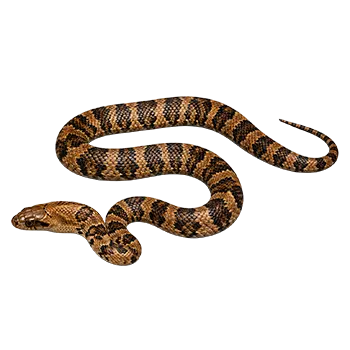
The False Water Cobra (Hydrodynastes gigas) is a large, semi-aquatic rear-fanged colubrid native to the lowland wetlands, river systems, and flood plains of South America. Its range extends across a vast swath of the continent, encompassing much of Brazil, particularly the Pantanal and Cerrado biomes, as well as significant portions of Bolivia, Paraguay, northern Argentina, and parts of Uruguay. The species inhabits marshy grasslands, seasonally flooded savannas, riparian forests, and the margins of slow-moving rivers and lakes, displaying a strong ecological association with water that underpins both its common name and much of its behavioral repertoire.

The species was first formally described by the French zoologist Andre Marie Constant Dumeril, along with his colleague Gabriel Bibron and their assistant Auguste Dumeril, in 1854 as part of their monumental multi-volume work on herpetology, the Erpetologie Generale. The original description placed the snake in the genus Xenodon before subsequent taxonomic revisions relocated it to Hydrodynastes, a genus name derived from Greek roots meaning roughly water lord or water ruler, an apt reflection of the animal's aquatic habits. The type specimens were likely collected from Brazil, though the exact locality data from mid-nineteenth-century expeditions was often imprecise by modern standards.

Prior to its formal scientific description, the False Water Cobra had been observed and documented in a fragmentary fashion by European naturalists exploring the river systems of South America. Accounts from the late eighteenth and early nineteenth centuries mention large, hooded water snakes encountered along the Paraguay and Parana river drainages, though these descriptions were often too vague to be definitively attributed to Hydrodynastes gigas. The species' dramatic defensive display, in which it flattens its neck into a broad hood reminiscent of a true cobra, made it particularly memorable to early explorers, even as it contributed to widespread confusion about the snake's actual taxonomic relationships.

The common name False Water Cobra reflects this history of misidentification. Early observers, encountering a large aquatic snake that spread a hood when threatened, naturally drew comparisons to the cobras of Africa and Asia. In reality, the species belongs to the family Colubridae and is not closely related to the elapid cobras at all. Its hood-spreading behavior evolved independently as a defensive mechanism, representing a striking example of convergent evolution in threat display across distantly related snake lineages.

Indigenous Knowledge & Ecological Roles

The indigenous peoples of the South American lowlands accumulated extensive practical knowledge of the False Water Cobra long before European naturalists arrived to catalog the continent's reptile fauna. Communities living along the rivers, marshes, and floodplains that constitute the species' primary habitat developed detailed understandings of its seasonal movements, feeding habits, and behavioral patterns, knowledge that was transmitted orally across generations and woven into broader ecological frameworks governing human relationships with the wetland environment.

Among the Guarani peoples, whose traditional territories overlap significantly with the False Water Cobra's range across Paraguay, southern Brazil, and northern Argentina, large water snakes held a recognized place in the ecological order of the wetlands. The Guarani understood the role that these snakes played in controlling populations of frogs, toads, fish, and small mammals along waterways, and this practical appreciation was reflected in traditional land-use practices that generally tolerated the presence of non-threatening snake species near human settlements. The False Water Cobra's preference for feeding on amphibians and fish, rather than poultry or livestock, reduced the potential for conflict with agricultural communities compared to larger constrictors.

The indigenous communities of the Brazilian Pantanal, one of the world's largest tropical wetland systems and a core part of the False Water Cobra's range, developed particularly nuanced relationships with the wetland snake fauna. The Pantanal's dramatic seasonal flooding cycles create a dynamic environment in which animal populations shift across the landscape in predictable patterns, and local communities learned to read these movements as indicators of broader ecological conditions. The appearance and behavior of water snakes, including the False Water Cobra, served as one of many biological signals that informed decisions about fishing, planting, and seasonal camp relocation.

The species' dramatic hood display, while startling to the uninitiated, was generally well understood by indigenous communities as a defensive bluff rather than an indication of serious danger. This cultural knowledge contrasted sharply with the alarm that the behavior provoked in European colonists and settlers unfamiliar with the species, a divergence in perception that illustrates the depth and specificity of indigenous herpetological knowledge in the Neotropical lowlands.

Cultural Symbolism & Regional Folklore

Throughout the wetland regions of South America, serpents occupy a prominent place in the mythological and symbolic traditions of both indigenous and mestizo cultures, and the False Water Cobra contributes to this rich tapestry of snake-related folklore. While it does not hold the singular mythological status of some larger and more dangerous South American species, the False Water Cobra's dramatic appearance and distinctive behaviors have earned it a recognizable place in regional storytelling traditions and popular belief systems across its range.

In the folklore of the Pantanal region of Brazil, large water snakes are frequently associated with the spirits of rivers and wetlands. Stories of enormous serpents dwelling in deep pools, guarding river crossings, or causing floods when disturbed are common across Pantaneiro oral tradition, and while these tales most often reference anacondas or mythical creatures, the False Water Cobra's conspicuous presence along waterways and its impressive hood display have contributed to the general cultural association between water snakes and supernatural power. The species' habit of basking openly along riverbanks and canal edges makes it one of the most commonly encountered large snakes in the Pantanal, ensuring its visibility in everyday rural life.

The broader South American mythological tradition includes several powerful serpent figures that reflect the cultural importance of snakes in the continent's indigenous cosmologies. The Boiuna or Cobra Grande of Amazonian and Pantanal mythology is a colossal water serpent said to inhabit the deepest rivers and reshape the landscape with its movements. While the False Water Cobra is not the direct inspiration for these mythological figures, its real-world presence as a large, hooded aquatic snake reinforces the cultural resonance of serpent imagery in communities where such stories are told and retold.

In rural communities across the species' range, the False Water Cobra is often known by regional common names that reflect local perceptions of its character. In Brazil, it is frequently called boipevacu or boipeva, names of Tupi-Guarani origin that reference flat or broad snakes, an allusion to the flattened hood that the species displays when agitated. In Argentina and Paraguay, local names similarly emphasize the snake's most striking behavioral feature. These regional naming conventions document a long history of human familiarity with the species and its distinctive threat display.

Scientific Classification & Taxonomic History

The taxonomic history of the False Water Cobra reflects the broader challenges that nineteenth-century herpetologists faced in classifying the enormous diversity of South American snake species. Following its initial description by Dumeril, Bibron, and Dumeril in 1854, the species underwent a series of taxonomic reassignments as researchers worked to resolve the relationships among the large, semi-aquatic colubrids of South America. The genus Hydrodynastes has been the subject of periodic revision, and the placement of gigas within it has been supported by morphological and, more recently, molecular phylogenetic analyses.

The genus Hydrodynastes currently contains two recognized species. Hydrodynastes gigas, the False Water Cobra, is the larger and more widely distributed member of the genus, while Hydrodynastes bicinctus, a smaller and less commonly encountered species, occupies a partially overlapping range in northern South America. The two species differ in size, coloration, and certain aspects of scalation, but share the semi-aquatic habits and rear-fanged dentition that characterize the genus. Molecular studies conducted in the early twenty-first century have confirmed the monophyly of Hydrodynastes and clarified its position within the broader colubrid radiation.

One of the most scientifically significant aspects of the False Water Cobra's biology is its venom delivery system. As a rear-fanged colubrid, the species possesses enlarged teeth at the back of the upper jaw that are associated with Duvernoy's glands, modified salivary structures that produce secretions with mild toxic properties. This venom delivery mechanism is less efficient than the front-fanged systems of vipers and elapids, but research on the composition and function of Duvernoy's gland secretions in Hydrodynastes and related genera has contributed substantially to scientific understanding of the evolution of venom systems across the snake phylogeny. Studies have revealed that the secretions contain a cocktail of proteins with varying biological activities, supporting the hypothesis that venom evolved multiple times independently among snake lineages.

The False Water Cobra has also attracted research interest for its hood-spreading behavior, which represents one of the most vivid examples of convergent evolution in defensive displays among snakes. Detailed anatomical and behavioral studies have revealed that the mechanism by which the False Water Cobra flattens its neck differs structurally from the hood mechanism of true cobras in the family Elapidae, confirming that the two systems evolved independently. This convergence has provided valuable material for evolutionary biologists studying the selective pressures that drive the repeated evolution of similar defensive strategies in distantly related taxa.

Rise in Herpetoculture

The False Water Cobra's emergence as a species of interest in herpetoculture began in earnest during the 1990s and has accelerated considerably in the twenty-first century. Unlike many popular pet snake species whose captive histories stretch back decades, the False Water Cobra came to the attention of the broader reptile-keeping community relatively recently, driven by a combination of increased availability through captive breeding, growing keeper interest in colubrids as an alternative to the more commonly kept boids and pythonids, and the species' undeniably charismatic behavior and appearance.

Early captive-keeping efforts were hampered by limited information about the species' specific husbandry requirements. Keepers accustomed to the relatively standardized care protocols established for Ball Pythons, Corn Snakes, and Boa Constrictors had to adapt their approaches to accommodate the False Water Cobra's semi-aquatic habits, its need for larger enclosures with significant water features, and its active and inquisitive temperament. The species' rear-fanged venom delivery system also presented a novel consideration for hobbyists, as bites from agitated individuals could produce localized swelling and discomfort, a factor that required keepers to develop handling protocols appropriate to a mildly venomous species.

As captive breeding programs matured during the 2000s and 2010s, breeders began producing the species in increasing numbers and documenting the range of natural color and pattern variation present in the species. Several selectively bred color morphs and locality-specific variants entered the market, expanding collector interest and driving further investment in breeding programs. The development of these captive-bred lines also reduced pressure on wild populations by providing a reliable domestic source of animals for the hobby.

The False Water Cobra's personality in captivity has been a major factor in its growing popularity. Keepers consistently describe the species as alert, curious, and interactive, with individuals often approaching the front of their enclosures to observe activity in the room and readily accepting food from tongs. This behavioral engagement, combined with the species' dramatic hood display and its impressive adult size, has earned it a devoted following among experienced keepers who prize character and behavioral complexity over the more passive temperaments typical of many commonly kept constrictors.

The Species Today

Today the False Water Cobra occupies a growing niche in both the scientific community and the global herpetoculture hobby, while continuing to thrive across much of its native South American range. In the wild, the species benefits from its association with wetland habitats that, while increasingly threatened by agricultural expansion and hydrological alteration, remain extensive across the Pantanal, the Chaco, and the river systems of central South America. The False Water Cobra is not currently classified as threatened by the International Union for Conservation of Nature, though comprehensive population assessments are lacking and localized declines may be occurring in areas subject to intensive land-use change.

In Brazil, the Pantanal ecosystem that supports some of the densest populations of False Water Cobras faces ongoing pressure from cattle ranching, soybean cultivation, and infrastructure development. Changes in the seasonal flooding regime caused by upstream dam construction and water diversion projects have the potential to alter the wetland habitats on which the species depends, and conservation biologists have identified the maintenance of natural hydrological cycles as critical to the long-term viability of the Pantanal's reptile communities. The False Water Cobra's ecological role as a mesopredator in these systems, consuming large quantities of frogs, fish, and rodents, underscores the broader ecological consequences of habitat degradation in South American wetlands.

Within herpetoculture, the species has established itself as one of the most popular and rapidly growing segments of the colubrid market. Dedicated online communities, social media groups, and specialty forums have developed around the species, facilitating the exchange of husbandry knowledge, breeding data, and veterinary information among a global network of keepers. Reptile expos and specialty breeders now regularly feature False Water Cobras alongside more established pet snake species, and the animal's striking appearance and engaging personality continue to attract new enthusiasts to the hobby.

The False Water Cobra's trajectory from obscure South American colubrid to internationally recognized herpetoculture species illustrates the dynamic nature of human-animal relationships in the modern era. Scientific research continues to reveal new aspects of the species' biology, from the biochemistry of its Duvernoy's gland secretions to the biomechanics of its hood display, while the growing community of keepers and breeders generates practical knowledge that complements academic inquiry. The challenge going forward lies in balancing the legitimate interests of the herpetoculture community with the conservation imperatives facing the wetland ecosystems that sustain wild populations, ensuring that this remarkable snake continues to flourish both in captivity and across the South American landscapes it has inhabited for millions of years.

Always consult a qualified professional before making any health-related decisions. This content is provided for informational reference only and should not replace professional guidance specific to your animal.