
Field Guides & Print Literature

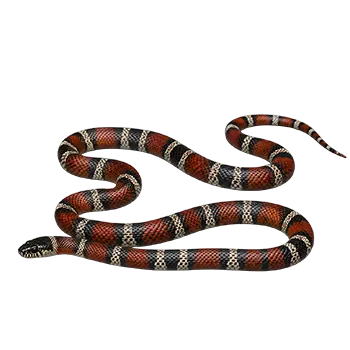
The Eastern Milk Snake holds a distinctive position in the canon of North American field guide literature, where it has served for more than a century as both an identification challenge and a teaching opportunity. Beginning with the earliest popular reptile guides published in the late nineteenth and early twentieth centuries, the milk snake appeared prominently as an example of a harmless species frequently confused with venomous counterparts. Authors consistently devoted substantial space to distinguishing the Eastern Milk Snake's brown or reddish saddle-shaped blotches from the hourglass-shaped crossbands of the Copperhead, a comparison that became one of the most frequently reproduced identification exercises in American herpetological publishing.

Roger Conant's landmark A Field Guide to Reptiles and Amphibians of Eastern and Central North America, first published in 1958 as part of the Peterson Field Guide series, featured the Eastern Milk Snake with detailed range maps and color plates that introduced generations of amateur naturalists to the species. Conant's treatment emphasized the remarkable variability of the milk snake complex across its range, using the Eastern form as the baseline against which the more vividly colored southern and western subspecies could be compared. This approach cemented the Eastern Milk Snake's role as a gateway species in the field guide tradition, the familiar local animal that opened a door onto the broader diversity of the genus.

Beyond field guides, the Eastern Milk Snake has appeared regularly in natural history books, regional wildlife compendiums, and popular science writing about North American reptiles. The species' association with the milk-stealing myth has made it a perennial favorite of authors seeking to illustrate the gap between folk belief and scientific reality, and accounts of the superstition appear in works ranging from serious herpetological texts to general-interest nature writing. The enduring appeal of the story, with its vivid image of a snake wrapped around a cow's udder in a darkened barn, has ensured that the Eastern Milk Snake receives more literary attention than many other small colubrid species of comparable ecological importance.

The species has also featured in more specialized academic literature devoted to reptile taxonomy, biogeography, and conservation. The extensive taxonomic revisions of the Lampropeltis triangulum complex have generated a substantial body of published research that frequently references the Eastern Milk Snake as the nominate form and the anchor point for phylogenetic analyses. While this academic literature reaches a narrower audience than popular field guides, it has shaped the understanding of the species among the professional herpetologists and advanced amateurs who in turn influence how the milk snake is presented to the broader public.

Television & Documentary Appearances

The Eastern Milk Snake's television career has been shaped primarily by its utility as an educational subject rather than by the kind of dramatic spectacle that earns screen time for larger or more dangerous species. While venomous snakes and massive constrictors tend to dominate the reptile segments of mainstream nature programming, the Eastern Milk Snake has carved out a consistent niche in documentary content focused on the ecology of temperate North America, the biology of snake mimicry, and the challenge of human-wildlife coexistence in suburban and agricultural landscapes.

Nature documentary series covering the wildlife of the eastern United States have featured the Eastern Milk Snake in segments exploring the ecological communities of deciduous forests, rocky hillsides, and agricultural margins. The species' secretive habits present a filmmaking challenge, as milk snakes are primarily nocturnal or crepuscular and spend much of their time concealed beneath cover objects, but skilled camera operators have captured compelling footage of the snakes hunting rodents, navigating rocky terrain, and engaging in the defensive behaviors, including tail vibration and body flattening, that they deploy when disturbed.

The Eastern Milk Snake's resemblance to the Copperhead has made it a regular subject in television segments and short-form video content devoted to snake identification and safety. Local news programs in the northeastern and mid-Atlantic United States frequently run segments during the warm months advising viewers on how to distinguish harmless snakes from venomous species, and the milk snake's superficial similarity to the Copperhead makes it one of the most commonly used examples in these broadcasts. While the educational value of such segments varies, they represent a significant source of public exposure to the species and contribute to the broader cultural conversation about how people should respond to encountering snakes near their homes.

The growth of streaming platforms and online video has expanded the range of documentary and educational content in which the Eastern Milk Snake appears. Independent wildlife filmmakers, herpetology educators, and nature-focused content creators have produced material ranging from short identification guides to longer natural history profiles that explore the species' ecology, behavior, and conservation status in greater depth than traditional broadcast television typically allows. This democratization of nature content production has created new opportunities for the Eastern Milk Snake to reach audiences who might never encounter the species in a traditional documentary context.

Wildlife Photography & Visual Arts

The Eastern Milk Snake presents a distinctive set of opportunities and challenges for wildlife photographers. Its attractive pattern of warm brown or reddish-brown dorsal blotches bordered in black against a lighter gray, tan, or cream ground color photographs beautifully when properly lit and composed, but the species' secretive and largely nocturnal habits mean that finding and photographing wild individuals requires patience, fieldcraft, and a willingness to work in the dim conditions beneath rocks, logs, and building foundations where milk snakes are most often encountered.

Among herpetological photographers, the Eastern Milk Snake is valued as a subject that rewards careful attention to detail. The interplay of warm and cool tones in the snake's coloration, the smooth glossy texture of the scales, and the elegant proportions of the relatively slender body all contribute to images that are visually compelling without relying on the shock value of size or danger that drives much popular snake photography. Skilled photographers working with the species have produced portfolio images that showcase the subtle beauty of a temperate colubrid in ways that challenge the common perception of North American snakes as drab or uninteresting compared to their tropical counterparts.

The Eastern Milk Snake has also served as a subject for scientific illustration, a tradition that stretches back to the hand-colored lithographs and engravings of nineteenth-century natural history publications. Artists working in the meticulous tradition of herpetological illustration have depicted the species in taxonomic plates, field guide artwork, and interpretive displays at nature centers and museums. These illustrations, which often emphasize diagnostic features such as scale arrangement, head shape, and the specific geometry of the dorsal blotches, represent a form of visual communication that bridges the gap between art and science and that remains relevant even in the age of digital photography.

In the broader world of visual arts, the Eastern Milk Snake appears occasionally in works that draw on the symbolism and folklore associated with serpents in American culture. Regional artists working in the folk art tradition have depicted milk snakes in the context of rural farm life, barn interiors, and pastoral landscapes, often incorporating elements of the milk-stealing legend into their compositions. These artworks, while not as culturally prominent as the snake-themed art of traditions with stronger serpent iconography, represent a distinctly American contribution to the visual culture surrounding snakes and reflect the unique place that the milk snake occupies in the rural heritage of the eastern United States.

Educational Programming & Ambassador Animals

The Eastern Milk Snake has established itself as one of the most frequently used ambassador animals in reptile education programming across the northeastern United States and beyond. Nature centers, zoos, museums, wildlife rehabilitation facilities, and independent environmental educators routinely include milk snakes in their live animal presentations, taking advantage of the species' manageable size, generally tolerant disposition, and strong connection to a compelling piece of American folklore. The combination of a visually attractive animal and a memorable story about milk-stealing gives educators a powerful tool for engaging audiences who might otherwise be indifferent or hostile toward snakes.

In classroom settings, the Eastern Milk Snake serves multiple pedagogical functions simultaneously. It provides a concrete example for lessons on adaptation, predator-prey relationships, and the ecological role of reptiles in controlling rodent populations. Its resemblance to the Copperhead opens discussions of Batesian mimicry and the evolutionary pressures that drive the development of warning coloration in harmless species. Its association with the milk-stealing myth offers an accessible case study in the scientific method, critical thinking, and the process by which folk beliefs can be tested against empirical evidence. Few individual species pack as much educational utility into a single animal encounter.

The role of captive Eastern Milk Snakes in education programming extends beyond formal classroom instruction. Reptile expos, county fairs, scouting events, and community festivals throughout the eastern United States frequently feature live milk snakes as part of outreach efforts aimed at increasing public tolerance and appreciation for native wildlife. These informal encounters provide many people with their first opportunity to see a live snake up close and to handle one under supervised conditions, and the positive associations formed during these experiences can have lasting effects on attitudes toward snakes and other reptiles.

Wildlife rehabilitation centers also encounter Eastern Milk Snakes with some regularity, as the species' tendency to enter basements, garages, and other human structures leads to frequent removal calls during the active season. Many rehabilitation and wildlife control organizations use these encounters as educational opportunities, explaining the snake's ecological benefits to homeowners and demonstrating humane methods for excluding snakes from buildings without harming the animals. This practical, encounter-driven education represents one of the most direct and personally relevant forms of media exposure that the Eastern Milk Snake receives, even though it takes place outside the traditional channels of broadcast or print media.

The species' utility as an educational subject has also extended into the digital realm, where nature centers and educators produce blog posts, social media content, and short videos featuring their resident milk snakes. These digital assets reach audiences far beyond the geographic range of any individual education program and contribute to a growing body of accessible, accurate content about the Eastern Milk Snake that counterbalances the misinformation and fear-based narratives that still circulate in some online spaces.

Social Media & Online Communities

The rise of social media platforms and online reptile-keeping communities has created new and rapidly evolving channels through which the Eastern Milk Snake reaches public attention. Instagram, YouTube, TikTok, Facebook groups, and dedicated reptile forums host active communities of milk snake enthusiasts who share photographs, husbandry advice, breeding updates, and field observations with audiences that range from a handful of fellow hobbyists to hundreds of thousands of followers. This decentralized and participatory media landscape has fundamentally changed the way information about the species is produced, distributed, and consumed.

On image-centric platforms, the Eastern Milk Snake benefits from the visual appeal that has always been central to its cultural profile. High-quality photographs showcasing the species' banded pattern, the smooth luster of freshly shed scales, and the alert expression of its face attract engagement from both dedicated reptile enthusiasts and casual viewers who encounter the images through algorithmic recommendations or viral sharing. Captive-bred color morphs have expanded the visual vocabulary available to milk snake content creators, with hypomelanistic, anerythristic, and other selectively bred variants generating particular interest among the morph-oriented segment of the online reptile community.

Video platforms have enabled a new form of milk snake media that combines elements of nature documentary, personal narrative, and interactive education. Content creators produce videos documenting feeding responses, enclosure setups, breeding projects, and the day-to-day experience of living with milk snakes, creating an intimate and ongoing portrait of the human-snake relationship that traditional media rarely captured. Unboxing videos of newly acquired captive-bred specimens, feeding demonstrations, and time-lapse footage of enclosure construction have become recognizable content formats within the reptile-keeping corner of the video ecosystem.

The online space has also become an important venue for wild Eastern Milk Snake encounters. Field herping, the recreational pursuit of finding and photographing wild reptiles and amphibians, has grown into a popular outdoor activity with a robust online presence. Social media accounts and forums dedicated to field herping regularly feature Eastern Milk Snakes found beneath cover objects, crossing roads, or basking at the edges of rock outcrops, and the identification discussions that follow these posts serve as a form of crowd-sourced naturalist education. The Eastern Milk Snake's frequent confusion with Copperheads makes it one of the most commonly submitted species in online identification groups, where experienced members patiently and repeatedly explain the distinguishing characteristics that separate the harmless milk snake from its venomous lookalike.

The democratization of media production has had both positive and negative consequences for the Eastern Milk Snake's public image. On the positive side, the sheer volume of content produced by knowledgeable and passionate hobbyists and naturalists has made accurate information about the species more accessible than ever before. On the negative side, the same platforms host misinformation, sensationalized content, and posts that depict irresponsible handling or keeping practices, creating a media environment in which the quality of milk snake content varies enormously and in which critical evaluation of sources is an essential skill for consumers.

Cultural Footprint & Broader Influence

The Eastern Milk Snake's broader cultural footprint, while modest compared to the outsized reputations of species like the Rattlesnake or the King Cobra, is woven into the fabric of American natural history in ways that extend beyond any single medium. The species' common name itself has become a linguistic artifact, a permanent reminder of a vanished era of American rural life preserved in the everyday vocabulary of herpetology. Few other animal names carry such a specific and vivid cultural narrative within them, and the milk-stealing legend has been retold in so many contexts, from children's books to university lectures to casual conversations on hiking trails, that it has achieved a kind of folkloric immortality independent of any particular medium.

In the world of reptile keeping and herpetoculture, the milk snake complex as a whole has achieved a level of cultural recognition that reflects its decades-long presence in the hobby. The Eastern Milk Snake's position as the original and historically foundational member of that complex gives it a particular resonance among keepers who appreciate the history and tradition of American herpetology. While the more flamboyantly colored tropical milk snakes may command higher prices and more visual attention in the marketplace, the Eastern form retains a loyal following among keepers who value authenticity, regional connection, and the satisfaction of working with a species that has deep roots in the landscape and culture of eastern North America.

The species has also contributed to broader public conversations about the value of common wildlife and the importance of coexistence between humans and the animals that share their environments. In an era when conservation messaging frequently focuses on charismatic megafauna and critically endangered species, the Eastern Milk Snake represents a different kind of conservation narrative, one centered on the familiar, the local, and the underappreciated. Educators and communicators who work with the species emphasize that conservation is not only about saving distant and exotic creatures but also about understanding and protecting the wildlife that lives in our own backyards, basements, and barns.

The Eastern Milk Snake's media presence, taken as a whole, reflects the broader trajectory of human attitudes toward snakes in American culture. From the fear-based superstitions of the colonial era through the specimen-collecting enthusiasm of nineteenth-century natural history, the hobby-driven appreciation of twentieth-century herpetoculture, and the digital-age democratization of nature content, the milk snake has been a constant if quiet presence in the American cultural relationship with serpents. Its story is not one of dramatic headlines or blockbuster appearances but of steady, incremental influence, a snake that has changed minds one barn visit, one field guide page, one social media post, and one classroom presentation at a time.

Always consult a qualified professional before making any health-related decisions. This content is provided for informational reference only and should not replace professional guidance specific to your animal.