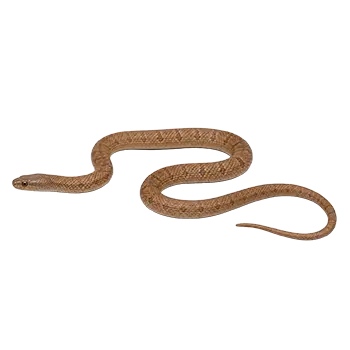

Early Appearances in Natural History Literature

The Eastern Egg-Eater first entered the broader cultural consciousness through the detailed illustrations and descriptions found in European natural history publications of the eighteenth and nineteenth centuries. Scientific works that catalogued the reptile fauna of Africa frequently included the egg-eating snakes as objects of particular curiosity, owing to their extraordinary dietary specialization and the anatomical modifications that supported it. Engravings and lithographs depicting the Dasypeltis skull, its reduced teeth, and the remarkable vertebral projections that serve as an internal egg-cracking mechanism appeared in anatomical atlases and zoological compendia, introducing educated European audiences to one of the natural world's most ingenious feeding strategies.

The French herpetological masterwork Erpetologie Generale by Auguste Dumeril and Gabriel Bibron, published in serial volumes during the mid-nineteenth century, featured descriptions of the egg-eating snakes that helped establish their reputation as anatomical marvels within the scientific community. These detailed accounts, written in the formal prose style of the era, conveyed a sense of wonder at the species' ability to consume intact eggs far exceeding the apparent diameter of its own head. The meticulous anatomical illustrations that accompanied such texts set a standard for scientific visualization and ensured that the egg-eater's feeding apparatus became one of the most frequently cited examples of extreme specialization in comparative anatomy.

As popular natural history publishing expanded during the Victorian era, the Eastern Egg-Eater migrated from specialist scientific literature into more accessible formats aimed at general readers. Natural history magazines, encyclopedias, and compendiums of animal curiosities routinely included entries on the egg-eating snakes, often accompanied by dramatic illustrations showing the snake in the act of swallowing an egg. These popular accounts tended to emphasize the sensational aspect of the feeding behavior while simplifying or omitting the finer anatomical details, but they served an important role in building public awareness of and interest in African herpetofauna among audiences far removed from the species' native habitat.

The tradition of featuring the Eastern Egg-Eater in natural history writing has continued into the modern era, with the species appearing regularly in field guides, reptile identification manuals, and popular science books about snakes and reptile biology. Contemporary authors benefit from advances in photography and imaging technology that allow them to illustrate the egg-eating process with a clarity and detail that earlier generations of natural history illustrators could only approximate, yet the fundamental sense of fascination that the species inspires in writers and readers alike has remained remarkably consistent across more than two centuries of publication.

Documentary & Television Presence

The Eastern Egg-Eater has become one of the most reliably featured snake species in wildlife documentary programming, owing to the inherently visual and dramatic nature of its feeding behavior. The spectacle of a slender snake progressively engulfing an egg several times the diameter of its own head, followed by the audible cracking of the shell within the throat and the subsequent regurgitation of compressed shell fragments, provides filmmakers with a compelling sequence that requires no narration to hold an audience's attention. This visual impact has ensured the species a recurring presence in television nature series from the earliest days of wildlife filmmaking.

British natural history programming, long a dominant force in the global wildlife documentary landscape, has featured the Eastern Egg-Eater in numerous productions over the decades. The species has appeared in episodes of major series exploring African wildlife, reptile biology, and the theme of extreme animal adaptations. These productions typically devote several minutes to the egg-eating sequence, using macro photography and slow-motion techniques to reveal details of the process that are invisible to the casual observer, such as the precise movements of the jaw bones, the rhythmic muscular contractions that advance the egg down the throat, and the subtle vibrations that accompany the internal shell-cracking process.

American wildlife programming has similarly embraced the Eastern Egg-Eater as a subject, featuring the species in cable network series devoted to reptiles, unusual animal behaviors, and the natural history of Africa. These productions have reached large audiences and have played a significant role in shaping popular perceptions of snakes by presenting a species that is demonstrably harmless to humans engaging in a behavior that is both spectacular and entirely non-threatening. For many viewers, encountering the egg-eater on television represents their first exposure to the idea that snakes can be fascinating without being dangerous.

The advent of high-definition and ultra-high-definition filming technology has further elevated the Eastern Egg-Eater's status as a documentary subject. Modern camera systems capable of extreme close-up work and dramatically slowed playback have allowed filmmakers to capture the egg-eating process in unprecedented detail, revealing the biomechanical elegance of a feeding strategy that has been refined over millions of years of evolution. These visually stunning sequences have become signature moments in the documentaries that contain them, frequently excerpted for promotional materials and widely shared on digital platforms.

Photography & Visual Media

Wildlife photography has been instrumental in bringing the Eastern Egg-Eater to public attention beyond the reach of television programming. Professional nature photographers working in sub-Saharan Africa have long recognized the species as an exceptionally rewarding photographic subject, and images of Dasypeltis scabra in the act of consuming an egg rank among the most widely published and exhibited reptile photographs in the genre. The combination of dramatic action, accessible scale, and the inherent visual tension of watching a small snake attempt what appears to be an impossible feat makes for images that resonate with viewers regardless of their prior interest in herpetology.

The technical challenges of photographing the egg-eating process have driven innovation in macro and close-up wildlife photography techniques. Capturing the full sequence, from the snake's initial approach and mouth-gaping over the egg's surface through the progressive engulfment and eventual shell ejection, requires patience, careful lighting, and an intimate understanding of the animal's behavior. Photographers who have specialized in Dasypeltis imagery have developed approaches involving custom lighting rigs, remote triggering systems, and extended observation periods that allow them to document the complete feeding cycle without disturbing the animal.

The Eastern Egg-Eater has also become a popular subject for scientific illustration and infographic design. Its feeding mechanism, with its clearly defined stages and its reliance on identifiable anatomical structures, lends itself to step-by-step visual explanation in a way that few other animal behaviors can match. Museum exhibits, textbook illustrations, and online educational resources frequently include diagrams showing the internal mechanics of egg consumption in Dasypeltis, using cutaway views and annotated photographs to reveal how the vertebral hypapophyses puncture the shell and how the esophageal muscles compress and expel the fragments.

In the realm of fine art and nature illustration, the Eastern Egg-Eater has inspired works that range from meticulously accurate scientific plates to more interpretive and artistic renderings. Contemporary wildlife artists have been drawn to the species as a subject that combines biological precision with visual drama, and egg-eater images have appeared in gallery exhibitions, art books, and juried competitions devoted to natural history art. These artistic representations extend the cultural reach of the species beyond the scientific and educational domains, engaging audiences who might not seek out herpetological content but who respond to the aesthetic and narrative qualities of the imagery.

Educational Media & Outreach

The Eastern Egg-Eater has become one of the most valuable species in the repertoire of reptile educators and conservation outreach professionals, serving as a living teaching tool that can effectively communicate multiple biological concepts to diverse audiences. Its completely harmless nature, manageable size, and spectacular feeding behavior make it uniquely suited to educational presentations in schools, museums, nature centers, and public events. An educator demonstrating an egg-eater consuming a quail egg before an audience of schoolchildren achieves an immediate and lasting impact that no lecture, textbook passage, or video clip can fully replicate.

The species features prominently in educational curricula dealing with animal adaptation, evolutionary biology, and ecological specialization. Teachers and curriculum designers have recognized that the egg-eater's suite of anatomical modifications provides one of the clearest and most accessible case studies of how natural selection shapes organisms to exploit specific ecological niches. The reduced teeth, the flexible skull, the vertebral egg-cracking apparatus, and the ability to regurgitate shell fragments can each be connected to broader biological principles in ways that students at various levels of scientific understanding can grasp and retain.

Museum and zoo exhibits devoted to reptile diversity frequently feature the Eastern Egg-Eater as a centerpiece species, using live animals, preserved specimens, anatomical models, and interactive displays to convey the mechanics and evolutionary significance of egg-eating as a feeding strategy. These institutional presentations reach millions of visitors annually and play an important role in challenging negative stereotypes about snakes by presenting a species that is both fascinating and demonstrably unthreatening. The egg-eater's effectiveness in this role has made it a priority acquisition for educational collections at zoological institutions around the world.

Conservation organizations working in Africa have also leveraged the Eastern Egg-Eater's educational appeal in community outreach programs aimed at reducing the indiscriminate killing of snakes. By presenting the egg-eater alongside genuinely dangerous species and teaching participants to distinguish between them, educators can promote a more nuanced understanding of snake diversity that recognizes the vast majority of snake species as harmless and ecologically beneficial. The egg-eater's mimicry of saw-scaled vipers provides a particularly effective teaching moment, illustrating both the concept of Batesian mimicry and the practical importance of accurate species identification in regions where venomous snakes are a genuine public health concern.

Digital & Social Media

The rise of digital media platforms has dramatically expanded the Eastern Egg-Eater's cultural footprint, transforming a species that was once known primarily to herpetologists and dedicated nature enthusiasts into a subject of widespread online fascination. Video-sharing platforms have proven particularly impactful, as short clips of egg-eaters consuming eggs possess exactly the combination of visual impact, accessible duration, and shareable novelty that drives viral content distribution. Individual egg-feeding videos have accumulated millions of views across major platforms, introducing the species to audiences that would never encounter it through traditional wildlife media channels.

The herpetoculture community's online presence has been a significant driver of Eastern Egg-Eater content across social media. Dedicated keepers and breeders regularly share feeding videos, husbandry updates, and educational posts about their Dasypeltis collections, generating a steady stream of content that reaches both enthusiast and general audiences. These posts frequently spark engagement from viewers who have never encountered an egg-eating snake before, generating comment threads and discussions that function as informal educational exchanges about snake biology, dietary specialization, and the realities of reptile keeping.

The Eastern Egg-Eater has also become a recurring subject in the broader genre of educational science content that has flourished on social media platforms. Science communicators, biology educators, and popular science accounts frequently feature the species in posts about extreme animal adaptations, unusual feeding strategies, and the diversity of snake biology. These posts leverage the species' inherent visual appeal to attract attention before delivering substantive biological information, a format that has proven highly effective at reaching audiences who might not actively seek out science content but who engage with it when it appears in their social media feeds.

The species' digital presence has not been without complications. The viral popularity of egg-feeding videos has occasionally generated spikes in demand for Eastern Egg-Eaters as pets among viewers who are captivated by the feeding spectacle but unprepared for the practical challenges of maintaining an obligate egg-eater in captivity. Responsible members of the herpetoculture community and online reptile education platforms have responded by pairing entertaining content with clear information about the species' specialized dietary requirements and the difficulties of sourcing appropriately sized eggs, working to ensure that viral popularity does not translate into impulse acquisitions by inadequately prepared keepers.

Broader Cultural Impact & Representation

The Eastern Egg-Eater's broader cultural impact, while more modest than that of larger or more dramatically dangerous snake species, reflects a consistent pattern of fascination with biological ingenuity that transcends the boundaries of herpetological interest. The species appears frequently in popular science writing about extreme adaptations, often cited alongside other specialists such as anteaters, vampire bats, and koalas as an example of how evolution can drive organisms toward remarkably narrow ecological niches. In these contexts, the egg-eater functions as a charismatic example of the creative solutions that natural selection produces, accessible to general audiences and effective at conveying complex evolutionary concepts in intuitive terms.

In the broader landscape of snake representation in Western culture, the Eastern Egg-Eater occupies a distinctive position as one of the few snake species that is almost universally perceived as endearing rather than threatening. Its small size, its round-eyed facial appearance, its harmless nature, and the almost comical visual of a slender snake struggling to engulf an oversized egg combine to create an impression that is far removed from the fear and revulsion that snakes more commonly evoke in popular culture. This positive perception has made the species a valuable ally in efforts to rehabilitate the public image of snakes as a group, demonstrating that many serpent species are not only harmless but genuinely engaging to observe.

The species has also contributed to broader cultural conversations about biodiversity and the value of preserving even inconspicuous or non-charismatic wildlife. Conservationists and science communicators have used the Eastern Egg-Eater as an example of how remarkable biological stories can be found among species that lack the size, dramatic coloring, or perceived danger of more traditionally charismatic megafauna. By highlighting the extraordinary within the apparently ordinary, the egg-eater helps build public support for conservation approaches that protect entire ecosystems rather than focusing exclusively on a handful of flagship species.

The cumulative effect of the Eastern Egg-Eater's appearances across natural history literature, documentary film, photography, educational programming, and digital media has been to establish the species as one of the most widely recognized and positively regarded snakes in global popular culture. While it may never achieve the name recognition of a king cobra or an anaconda, the egg-eater has carved out a unique cultural niche defined by wonder rather than fear, by ingenuity rather than danger, and by the quiet demonstration that the natural world's most compelling stories are not always told by its largest or most formidable inhabitants.

Always consult a qualified professional before making any health-related decisions. This content is provided for informational reference only and should not replace professional guidance specific to your animal.