
Origins & Discovery

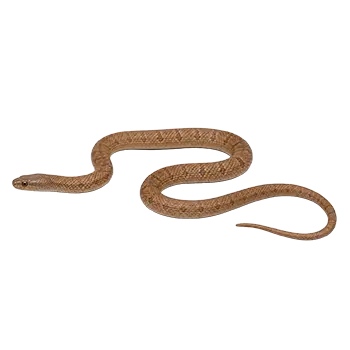
The Eastern Egg-Eater (Dasypeltis scabra) is a non-venomous colubrid snake found across much of sub-Saharan Africa, distinguished by one of the most remarkable dietary specializations in the entire reptile world. This slender, modestly sized serpent feeds exclusively on bird eggs, a dietary niche so extreme that the species has undergone profound anatomical modifications to support it. Its range extends from the savannas and scrublands of Senegal and the Sahel eastward through the Horn of Africa and southward into South Africa, encompassing an extraordinary diversity of habitats including arid bushveld, moist woodland, montane grassland, and the margins of agricultural land.

The species holds a notable distinction in the history of herpetological taxonomy as one of the earliest African snakes to receive formal scientific description. Carl Linnaeus himself described the species in 1758 in the tenth edition of Systema Naturae, assigning it the name Coluber scaber based on specimens that had reached European collections. The epithet scabra, meaning rough, referred to the strongly keeled dorsal scales that give the snake its characteristically textured appearance. The species was later transferred to the genus Dasypeltis, erected by the German naturalist Johann Georg Wagler in 1830, a genus name derived from the Greek words for rough and shield, again referencing the distinctive scalation.

The genus Dasypeltis as a whole has presented taxonomists with persistent challenges. Multiple species within the group are morphologically similar, and the wide geographic range of Dasypeltis scabra across the African continent has led to considerable variation in color pattern, scale counts, and body proportions among regional populations. Throughout the nineteenth and twentieth centuries, various herpetologists described what they believed to be distinct species from different parts of Africa, many of which were later synonymized with Dasypeltis scabra as the true extent of the species' variability became better understood. Modern molecular phylogenetic studies have clarified some of these relationships while revealing that additional cryptic species likely remain to be formally described within what has traditionally been treated as a single widespread species.

The anatomical adaptations that enable the Eastern Egg-Eater to consume eggs attracted scientific attention from the earliest examinations of preserved specimens. European anatomists noted the greatly reduced dentition, the extreme flexibility of the jaw and skull bones, and the presence of unusual bony projections extending ventrally from the cervical vertebrae into the esophagus. These hypapophyses, as the vertebral projections are technically known, function as an internal egg-cracking apparatus, allowing the snake to puncture an eggshell after swallowing it whole and then regurgitate the compressed shell fragments. This suite of adaptations was recognized early on as one of the most elegant examples of anatomical specialization in the snake world.

Indigenous Knowledge & Historical Roles

Across the vast extent of its African range, the Eastern Egg-Eater has been known to indigenous communities for far longer than it has been studied by Western science. Rural and pastoral peoples throughout sub-Saharan Africa developed practical knowledge of this snake's habits, its dietary preferences, and its harmless nature, knowledge that was transmitted orally across generations and embedded in local ecological understanding. In many communities, the Eastern Egg-Eater was recognized as a distinct kind of snake precisely because of its association with poultry nests and wild bird colonies, a behavioral trait that made it one of the most frequently encountered serpents in and around human habitation.

In agricultural communities across East and Southern Africa, the Eastern Egg-Eater occupied an ambiguous position in the human landscape. On the one hand, the snake was understood to be completely harmless to people and livestock, lacking both venom and functional teeth capable of delivering a meaningful bite. On the other hand, its habit of raiding poultry nests made it a minor agricultural nuisance, and its discovery coiled around a clutch of eggs in a henhouse could provoke alarm among those unfamiliar with its identity. The ability to distinguish the egg-eater from genuinely dangerous species was an important piece of practical knowledge in communities where venomous snakes such as puff adders and cobras shared the same habitat.

Several African language groups have specific vernacular names for the egg-eating snakes that reflect this long familiarity. In various Bantu languages, names for the species translate roughly to egg snake or hen-house snake, indicating that the association between this animal and its preferred food source was a defining characteristic in local taxonomy long before Linnaeus assigned a Latin binomial. These indigenous names represent a parallel tradition of biological classification rooted in direct observation and practical interaction rather than the morphological analysis that drove European systematics.

The Eastern Egg-Eater's defensive behavior also attracted attention and generated local knowledge. When threatened, the species performs an elaborate bluff display, coiling its body into a series of C-shaped loops and vigorously rubbing its keeled scales together to produce a rasping, hissing sound that mimics the stridulation of saw-scaled vipers, among the most dangerous snakes in the regions where the two species overlap. Many rural communities were aware of this mimicry, understanding that the egg-eater's threatening display was precisely that, a display, and that the snake itself posed no danger. This knowledge was part of a broader body of indigenous herpetological understanding that enabled people to coexist with a diverse and sometimes hazardous snake fauna.

Cultural Symbolism & Folklore

The Eastern Egg-Eater features in the folklore and symbolic traditions of several African cultures, though its cultural profile is markedly different from that of the larger, more imposing serpents such as pythons and mambas that tend to dominate African snake mythology. Where those species are often associated with power, danger, and the spirit world, the egg-eater more frequently appears in stories and traditions that emphasize cleverness, resourcefulness, and the theme of appearances being deceptive. Its harmless nature combined with its dramatic defensive mimicry made it a natural subject for narratives about trickery and the gap between outward show and inner reality.

In several Southern African storytelling traditions, the egg-eating snake appears as a character that succeeds not through strength or venom but through ingenuity and specialized skill. Stories describe the snake's ability to swallow an egg many times larger than its own head, a feat that impressed observers and lent itself to allegorical interpretations about ambition, capability, and the idea that size alone does not determine what an individual can accomplish. These tales served educational purposes, teaching children about the natural world while conveying moral lessons about the value of unique talents over brute force.

The egg-eater's association with poultry and with eggs themselves connected the species to broader symbolic frameworks surrounding fertility, sustenance, and the domestic sphere. In communities where eggs held particular cultural significance, whether as food, as offerings, or as symbols of potential life, the snake that consumed them could be viewed with a mixture of fascination and mild disapproval. This duality reflected a pragmatic African attitude toward wildlife that recognized animals as complex actors in a shared environment rather than reducing them to simple categories of good or harmful.

The mimicry behavior of the Eastern Egg-Eater also generated cultural commentary. The snake's ability to convincingly impersonate a dangerous viper provided a vivid natural example of deception and self-defense through illusion, themes that resonate broadly in African oral literature. In some traditions, the egg-eater's bluff was cited as evidence of the natural world's ingenuity, while in others it served as a cautionary example about the unreliability of surface impressions. These interpretations reflect the close observational relationship that African communities maintained with their local fauna, deriving philosophical and moral insights from the behaviors they witnessed in the animals around them.

Colonial Encounters & Scientific Classification

The colonial period brought the Eastern Egg-Eater to wider international scientific attention, though the species never commanded the same degree of European fascination as Africa's larger and more dramatic serpents. Colonial naturalists and administrators encountered the egg-eater frequently, as its commensal habits brought it into regular contact with human settlements, but its small size and harmless disposition meant that it rarely featured in the sensationalized accounts of dangerous African wildlife that filled popular European travel literature. Instead, the species attracted primarily scientific interest, particularly from anatomists and comparative zoologists who recognized the extraordinary nature of its feeding adaptations.

During the nineteenth century, several European herpetologists undertook detailed anatomical studies of Dasypeltis specimens, producing meticulous descriptions of the modified vertebral apparatus, the reduced dentition, and the remarkably flexible skull architecture that enables egg consumption. The French zoologist Auguste Dumeril and his colleague Gabriel Bibron included important observations on the genus in their monumental Erpetologie Generale, published between 1834 and 1854, which helped establish the egg-eating snakes as one of the most anatomically distinctive groups within the Colubridae. These anatomical investigations represented some of the earliest detailed functional morphology studies conducted on any snake species.

The collection and classification of Dasypeltis specimens during the colonial era contributed to the taxonomic complexity that would occupy herpetologists for more than a century. Specimens collected from widely separated localities across Africa displayed considerable variation in coloration, pattern, and scalation, leading different authorities to describe numerous species and subspecies. The difficulty of delimiting species boundaries within Dasypeltis reflected a broader challenge in African herpetology, where many widespread species exhibit substantial geographic variation that complicates efforts to define discrete taxonomic units.

Colonial-era observations also documented the Eastern Egg-Eater's ecological relationship with both wild and domestic birds across different African landscapes. Agricultural officers and veterinary personnel recorded the snake's presence in poultry houses and grain stores, noting that while the egg-eater consumed eggs, it posed no threat to adult birds, chicks, or any other livestock. These practical observations, recorded in colonial agricultural bulletins and district reports, provide a valuable historical baseline for understanding the species' interaction with human-modified landscapes, a relationship that has continued to evolve as land use patterns across Africa have changed in the postcolonial era.

The Herpetoculture Movement

The Eastern Egg-Eater entered the international herpetoculture hobby somewhat later than many other African snake species, and its path into captive keeping was shaped by both the unique appeal and the distinctive challenges of its obligate egg-eating diet. While species such as Ball Pythons, corn snakes, and various kingsnakes became staples of the reptile pet trade during the 1970s and 1980s, the egg-eater remained relatively obscure outside specialist circles, largely because its dietary requirements presented practical difficulties that most casual hobbyists were unprepared to manage.

The fundamental challenge of keeping Eastern Egg-Eaters in captivity centers on the reliable provision of appropriately sized bird eggs. Hatchling and juvenile egg-eaters require very small eggs, typically those of finches, button quail, or similarly diminutive bird species, which are not readily available in most commercial pet supply chains. As the snakes grow, they can accept progressively larger eggs, with adults capable of consuming standard chicken eggs, but the transition period between small and medium-sized prey items remains a significant husbandry hurdle. This dietary constraint limited the species' appeal to keepers who could maintain breeding colonies of small birds or who had reliable access to specialty egg suppliers.

Despite these challenges, a dedicated community of egg-eater enthusiasts developed within the broader herpetoculture world, drawn to the species by its fascinating feeding behavior, its gentle disposition, and its suitability for keepers seeking an intellectually engaging captive animal rather than a simple display specimen. These hobbyists shared husbandry techniques, egg sourcing strategies, and breeding observations through specialty forums, herpetological society newsletters, and eventually online communities, building a collective body of knowledge about captive Dasypeltis care that significantly advanced understanding of the genus.

Captive breeding of Eastern Egg-Eaters has been achieved by a number of dedicated hobbyists and institutional collections, though the species has never been bred on a commercial scale comparable to more mainstream reptile pets. Successful breeders have documented the species' reproductive biology in captivity, including courtship behavior, egg deposition, incubation parameters, and the particular challenges of raising neonates through their critical first feedings. These contributions from the herpetoculture community have complemented academic research and have played a meaningful role in advancing overall knowledge of Dasypeltis biology.

The Species Today

Today the Eastern Egg-Eater occupies a position of relative security compared to many of Africa's reptile species, though it is by no means free from the pressures that threaten biodiversity across the continent. Dasypeltis scabra remains widely distributed and locally common throughout much of its historic range, a resilience attributable in part to the species' ecological flexibility, its tolerance of human-modified habitats, and its ability to exploit the nesting activity of both wild and domestic bird species. The International Union for Conservation of Nature currently lists the species as Least Concern, reflecting its broad distribution and apparently stable population trends across most of its range.

Nevertheless, the Eastern Egg-Eater faces localized threats that warrant ongoing attention. Habitat loss through agricultural expansion, urbanization, and deforestation affects populations in regions where natural woodland and savanna are being converted to cropland or settlement. Road mortality is a significant and underappreciated source of losses for this and many other African snake species, as snakes crossing roads to reach nesting sites or seasonal habitats are frequently killed by vehicle traffic. Additionally, despite its harmless nature, the Eastern Egg-Eater is sometimes killed on sight by people who mistake it for a venomous species, a consequence of its effective mimicry of saw-scaled vipers that ironically renders its primary survival strategy a liability in encounters with humans.

The species has taken on an increasingly important role in conservation education across Africa and internationally. Its completely harmless nature, its manageable size, and its spectacular feeding behavior make the Eastern Egg-Eater an exceptionally effective ambassador species for reptile outreach programs. Educators and conservationists frequently use live or preserved egg-eaters to demonstrate the diversity of snake feeding strategies, to challenge widespread assumptions that all snakes are dangerous, and to illustrate the concept of Batesian mimicry in an accessible and memorable way. These educational applications have given the species a cultural significance in the modern conservation movement that extends well beyond its ecological role.

Scientific interest in the Eastern Egg-Eater continues to grow, particularly in the fields of evolutionary biology, functional morphology, and molecular systematics. Researchers studying the biomechanics of egg ingestion and shell processing have used the Dasypeltis system as a model for understanding how extreme dietary specialization drives anatomical evolution. Meanwhile, molecular phylogenetic studies are progressively resolving the species boundaries within the genus, revealing hidden diversity and refining understanding of how egg-eating as a strategy evolved and diversified across the African continent. The Eastern Egg-Eater thus remains a species of active scientific interest, its story still being written as new tools and approaches reveal dimensions of its biology that earlier generations of naturalists could only guess at.

Always consult a qualified professional before making any health-related decisions. This content is provided for informational reference only and should not replace professional guidance specific to your animal.