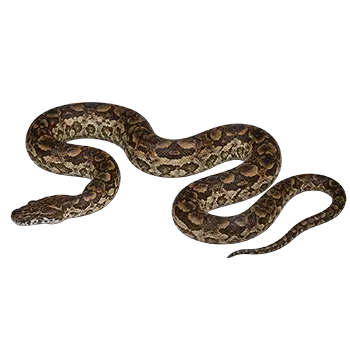

Dumeril's Boa first entered the written record through the scientific publications of nineteenth-century French herpetologists working with specimens collected during colonial-era expeditions to Madagascar. The original description by Auguste-Henri-Andre Dumeril in 1860 was accompanied by the type of detailed morphological illustrations that characterized the best zoological publications of the period. These early lithographic plates, rendered with painstaking attention to scale count, head shape, and dorsal patterning, served both as diagnostic references for taxonomists and as the primary means by which naturalists and educated laypeople outside Madagascar could form a visual impression of the species.
The broader natural history literature of the late nineteenth and early twentieth centuries occasionally featured Dumeril's Boa within comprehensive treatments of Malagasy fauna. French colonial naturalists such as Alfred Grandidier, whose monumental multi-volume work on the natural history of Madagascar remained the definitive reference for decades, included the species in their surveys of the island's reptile diversity. These works circulated primarily within academic and museum circles, and the snake remained largely unknown to the general public outside of specialist herpetological audiences.
English-language natural history writing began to incorporate Dumeril's Boa more regularly during the mid-twentieth century, as herpetological knowledge became increasingly internationalized and English emerged as the dominant language of scientific publishing. Comprehensive reference works on boid snakes by authors such as Sherman and Madge Minton, and later by specialists like John Murphy and Robert Henderson, provided thorough accounts of the species' taxonomy, distribution, and natural history that reached a broader audience of reptile enthusiasts and aspiring herpetologists.
The species also found its way into the illustrated field guides and regional faunal surveys that became popular among birdwatchers and wildlife enthusiasts visiting Madagascar from the 1980s onward. While these guides typically devoted only brief entries to each reptile species, they introduced Dumeril's Boa to a readership of nature travelers and ecotourists who might encounter the snake during visits to the island's western national parks and reserves. The inclusion of color photographs in these guides, replacing the black-and-white plates of earlier decades, allowed readers to appreciate the subtle beauty of the species' intricate camouflage patterning for the first time.