
Origins & Discovery

Dumeril's Boa (Acrantophis dumerili) is a heavy-bodied, non-venomous constrictor endemic to the island of Madagascar, where it inhabits the dry deciduous forests, spiny thickets, and semi-arid scrublands of the western and southern portions of the island. As one of only a handful of large snake species native to Madagascar, it occupies a distinctive ecological niche on an island renowned for its extraordinary levels of biological endemism. The species shares Madagascar with only one close relative, the Madagascar Ground Boa (Acrantophis madagascariensis), which favors the more humid forests of the eastern slopes.

The formal scientific description of Dumeril's Boa was published in 1860 by the French herpetologist Auguste-Henri-Andre Dumeril, whose father, Andre Marie Constant Dumeril, was one of the most influential herpetologists of the nineteenth century. The elder Dumeril had devoted much of his career at the Museum national d'Histoire naturelle in Paris to the classification of reptiles and amphibians, and the species name dumerili honors the family's contributions to the field. Specimens collected from Madagascar during French colonial expeditions formed the basis of the original description, and the species was initially placed in the genus Boa before later taxonomic revisions recognized its distinctiveness and assigned it to Acrantophis.

Madagascar's separation from the African mainland approximately 160 million years ago created the conditions for the independent evolution of its unique reptile fauna. The boid snakes of Madagascar, including Dumeril's Boa, represent an ancient lineage whose ancestors likely arrived on the island via oceanic dispersal from Africa during the Cenozoic era. Molecular phylogenetic studies have confirmed that the Malagasy boas are more closely related to each other than to any mainland boa species, supporting the hypothesis of a single colonization event followed by in situ diversification.

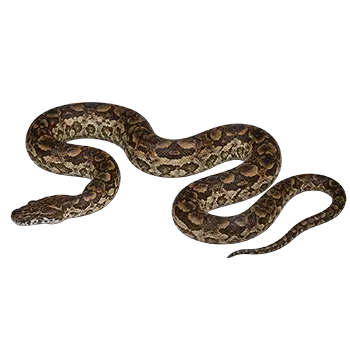
The species reaches a substantial size by Malagasy standards, with adults typically measuring between five and seven feet in total length and some exceptional individuals approaching eight feet. Its robust build, featuring a thick body, broad head, and powerful musculature, reflects its role as an ambush predator that relies on constriction to subdue prey. The dorsal pattern of intricate brown, tan, and gray markings provides highly effective camouflage against the leaf litter of its forest floor habitat, making the snake remarkably difficult to spot in its natural environment despite its considerable bulk.

Indigenous Knowledge & Historical Roles

The Malagasy peoples who have shared the island with Dumeril's Boa for centuries developed a rich body of knowledge and cultural practice surrounding the species long before European naturalists arrived. In many communities across southern and western Madagascar, snakes hold a complex and often ambivalent position within systems of fady, the elaborate network of taboos and sacred prohibitions that governs much of traditional Malagasy social and spiritual life. For Dumeril's Boa specifically, fady designations vary considerably between ethnic groups and individual communities, with some villages regarding the snake as a protected and spiritually significant animal while others view it with pragmatic caution.

Among several Sakalava and Mahafaly communities of western and southern Madagascar, large boas including Dumeril's Boa have been regarded as the physical manifestations or vessels of ancestral spirits. In these traditions, killing a boa is considered a serious transgression that could bring misfortune upon the offender and their family. Villages where such fady are observed often allow boas to move freely through agricultural areas and even into the outskirts of settlements, maintaining a respectful coexistence with the animals based on spiritual obligation and practical understanding of the snakes' role in controlling rodent populations that threaten stored rice and other crops.

The practical ecological knowledge that Malagasy communities hold about Dumeril's Boa extends well beyond its dietary habits. Traditional understanding of the species' seasonal activity patterns, preferred microhabitats, and reproductive timing reflects generations of close observation and represents an invaluable body of ecological data that modern conservation biologists have increasingly sought to incorporate into their research. Local farmers in the snake's range can often identify individual animals by their distinctive dorsal patterning and describe behavioral traits that align closely with observations recorded by professional field biologists.

In regions where fady protections for boas have weakened or been abandoned, often under pressure from economic hardship, deforestation, and the erosion of traditional authority structures, the consequences for local snake populations have been tangible and swift. The decline of fady observance represents not only a cultural loss but a practical conservation setback, as these traditional prohibitions functioned as effective, community-enforced wildlife protection measures long before the establishment of formal legal protections for the species.

Cultural Symbolism & Folklore

In Malagasy cultural traditions, snakes occupy a symbolic space that defies the simple dichotomy of good and evil that characterizes much Western serpent symbolism. Dumeril's Boa, as one of the largest and most conspicuous snake species in its range, figures prominently in the oral traditions and symbolic systems of communities throughout southern and western Madagascar. The snake's patience as an ambush hunter, its ability to survive for extended periods without food, and its capacity to consume prey many times the diameter of its own head have all provided fertile material for storytellers and moral instructors across generations.

In the oral literature of several Antandroy communities of southern Madagascar, large boas appear in tales that emphasize the virtues of patience, stealth, and the strategic conservation of energy. These stories frequently contrast the boa's quiet efficiency with the more dramatic but ultimately less successful hunting strategies of other predators, drawing moral lessons about the superiority of careful planning over impulsive action. The boa's ability to remain motionless for days while waiting for prey serves as a powerful metaphor in a cultural context where patience and endurance are highly valued survival traits in the harsh, drought-prone environment of southern Madagascar.

The shedding of the boa's skin has particular symbolic resonance in Malagasy thought, as it does in many cultures worldwide. The process of ecdysis, in which the snake emerges renewed from its old integument, has been interpreted as a symbol of transformation, renewal, and the continuity of life through successive generations. In some funeral traditions, references to the serpent's renewal serve as comforting affirmations of the cycle of life and the continuation of the ancestral spirit beyond physical death.

The intersection of Dumeril's Boa with the Malagasy concept of hasina, a spiritual force or potency believed to reside in certain people, objects, and animals, adds another layer to the species' cultural significance. Animals that are considered to possess strong hasina command particular respect and are often subject to fady protections. The boa's size, power, and mysterious habits of concealment all contribute to its perception as an animal of considerable spiritual potency, reinforcing the cultural norms that have historically promoted its protection in many communities.

Colonial Encounters & Scientific Classification

The French colonial presence in Madagascar, which began with the establishment of trading posts in the seventeenth century and culminated in the formal annexation of the island in 1896, fundamentally altered both the scientific study and the cultural context of Dumeril's Boa. French naturalists, missionaries, and colonial administrators encountered the species in the field and contributed specimens and observations that expanded European knowledge of Malagasy herpetology. However, these encounters were embedded within a colonial framework that often dismissed or undervalued indigenous knowledge about the animals and their ecological and cultural significance.

The taxonomic history of Dumeril's Boa reflects the broader complexities of nineteenth-century systematic biology. After the younger Dumeril's original description in 1860, the species underwent several reclassifications as herpetologists debated its relationships with other boid snakes. The genus Acrantophis, in which the species is currently placed, was erected to accommodate the distinctive morphological features of the Malagasy boas, including cranial characteristics and scale arrangements that distinguish them from both the true boas of the Americas and the pythons of Africa, Asia, and Australasia. Molecular studies conducted in the late twentieth and early twenty-first centuries confirmed the monophyly of the Malagasy boa lineage and clarified its phylogenetic position within the broader boid radiation.

French colonial natural history surveys of Madagascar produced extensive documentation of the island's reptile fauna, including detailed observations of Dumeril's Boa in its natural habitat. Collectors working for institutions such as the Museum national d'Histoire naturelle gathered specimens from across the species' range, building reference collections that remain scientifically valuable to the present day. These collections, however, were assembled without the consent or involvement of local communities and represent a form of extractive scientific practice that has come under increasing critical scrutiny in the postcolonial era.

The colonial period also brought significant ecological disruption to Dumeril's Boa's habitat. The expansion of slash-and-burn agriculture, known locally as tavy, accelerated the deforestation of the dry deciduous forests that form the species' primary habitat. Colonial-era land use policies, which prioritized export agriculture and resource extraction over ecological sustainability, initiated patterns of habitat loss that have continued and intensified in the postcolonial period. The cultural disruptions of colonization, including the suppression of certain traditional practices and the introduction of new religious frameworks, also weakened some of the fady protections that had historically benefited the species.

The Herpetoculture Movement

Dumeril's Boa entered the international reptile-keeping hobby during the 1980s and 1990s, when a combination of increased interest in exotic reptiles and the availability of imported specimens from Madagascar brought the species to the attention of a growing community of boa enthusiasts. The species' manageable adult size, generally docile temperament, and striking appearance made it an attractive alternative to the larger and often more challenging boa and python species that dominated the large-constrictor segment of the hobby at that time.

Early captive-keeping efforts with Dumeril's Boa were hampered by limited understanding of the species' specific husbandry requirements. Wild-caught imports frequently arrived in poor condition, carrying heavy parasite loads and suffering from the stress of capture and transport. Mortality rates among imported animals were high, and successful captive reproduction was initially rare. Pioneer breeders in the United States and Europe devoted considerable effort to working out the environmental parameters, dietary preferences, and seasonal cycling requirements necessary to maintain the species successfully in captivity and to stimulate breeding behavior.

By the late 1990s and early 2000s, a core group of dedicated breeders had achieved consistent captive reproduction of Dumeril's Boa, establishing self-sustaining captive populations that reduced the demand for wild-caught animals. The species proved to be a reliable breeder once its specific needs were understood, with females producing litters of six to twenty-eight live young following a gestation period of approximately six to eight months. The availability of captive-bred animals improved both the quality of specimens in the hobby and the species' reputation as a rewarding and manageable captive snake.

The captive breeding community has made significant contributions to the understanding of Dumeril's Boa biology. Breeders have documented natural variation in coloration and pattern, identified potential heritable morphological traits, and accumulated detailed data on growth rates, feeding responses, and longevity under controlled conditions. This information, shared through specialty publications, online forums, and reptile expos, has created a comprehensive knowledge base that complements academic research and supports the continued improvement of captive care standards for the species.

Dumeril's Boa occupies a distinctive position within herpetoculture as a species that combines the visual impact and substantial presence of a large constrictor with a temperament that is generally calm and predictable. This combination has earned it a loyal following among keepers who appreciate the experience of working with a big, impressive snake without the heightened management demands associated with species such as reticulated pythons or African rock pythons. The species' relative docility has also made it a popular choice for educational programs and public demonstrations at zoos, nature centers, and reptile shows.

The Species Today

Dumeril's Boa faces an uncertain future shaped by the interplay of habitat destruction, evolving cultural attitudes, international trade regulation, and conservation intervention. Madagascar has lost an estimated ninety percent of its original forest cover, and the dry deciduous forests of the west and south that constitute the species' primary habitat are among the most threatened ecosystems on the island. Ongoing deforestation driven by charcoal production, subsistence agriculture, and the expansion of livestock grazing continues to reduce and fragment the available habitat, placing increasing pressure on wild populations.

Conservation efforts for Dumeril's Boa operate within the broader context of Madagascar's extraordinary biodiversity crisis. The island is home to thousands of endemic species across all major taxonomic groups, and the competition for limited conservation funding and organizational attention is intense. Reptile conservation in Madagascar has historically received less attention and fewer resources than the protection of charismatic mammalian species such as lemurs, although growing recognition of the ecological importance and evolutionary distinctiveness of the island's reptile fauna has begun to shift this balance.

The establishment and management of protected areas within the species' range represent the most direct conservation strategy for Dumeril's Boa. National parks and reserves such as Tsingy de Bemaraha, Kirindy Mitea, and Zombitse-Vohibasia encompass portions of the dry deciduous forest habitat on which the species depends. However, enforcement of protected area boundaries remains challenging in a country where poverty and food insecurity drive continued encroachment on forested land, and the effectiveness of formal protection varies significantly between sites.

International cooperation plays a critical role in the conservation of Dumeril's Boa. The species has been listed on Appendix I of the Convention on International Trade in Endangered Species since 1975, restricting commercial trade in wild-caught specimens and requiring permits for the export of captive-bred animals. This listing has helped to curtail the large-scale collection of wild animals for the international pet trade, though enforcement remains imperfect and illegal trade persists at some level. Captive breeding programs in zoos and private collections outside Madagascar serve as a genetic insurance policy and contribute to public awareness of the species and its conservation needs.

The future of Dumeril's Boa will depend in significant part on the success of community-based conservation initiatives that engage local Malagasy communities as active partners in habitat protection and species management. Programs that link conservation outcomes to tangible economic benefits for local people, through ecotourism, sustainable resource use, and direct payments for ecosystem services, offer the most promising pathway toward the long-term coexistence of human communities and wild boa populations. The revival and reinforcement of traditional fady protections, adapted to contemporary social and economic realities, represents another culturally resonant strategy that could strengthen conservation outcomes while honoring the deep historical relationship between the Malagasy people and this remarkable snake.

Always consult a qualified professional before making any health-related decisions. This content is provided for informational reference only and should not replace professional guidance specific to your animal.