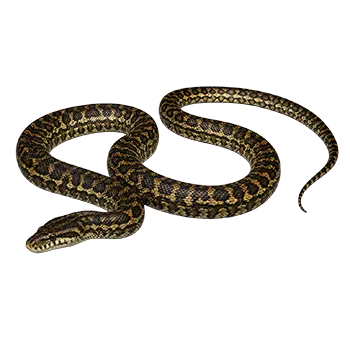

Australian Federal Wildlife Legislation

The legal framework governing the Coastal Carpet Python in Australia operates across multiple jurisdictional levels, beginning with the federal legislation that establishes the overarching principles of native wildlife protection. The Environment Protection and Biodiversity Conservation Act 1999 (EPBC Act) serves as the primary federal instrument for the protection and management of Australia's native fauna and flora, including all native reptile species. Under this legislation, the Coastal Carpet Python, as a native Australian species, is afforded baseline legal protections that prohibit the unauthorized taking, possession, trade, and export of wild specimens from Australian territory.

The EPBC Act's provisions regarding the international trade in wildlife are particularly significant for the Coastal Carpet Python. Australia maintains one of the strictest regimes in the world for controlling the export of native wildlife, and the commercial export of live native reptiles, including Carpet Pythons, is effectively prohibited under federal law. This export ban, which has been in place in various forms since the 1960s, was designed to prevent the commercial exploitation of Australian wildlife for international markets and to ensure that native species are managed primarily for conservation purposes within Australian jurisdiction. The ban has had profound effects on the development of international herpetoculture involving Australian species, as captive populations outside Australia have been established from relatively small founder stocks obtained before the current regulatory framework was fully implemented.

Federal legislation also intersects with Australia's obligations under the Convention on International Trade in Endangered Species of Wild Fauna and Flora (CITES), an international agreement to which Australia is a signatory. The Carpet Python species complex (Morelia spilota) is listed under CITES Appendix II, which means that international trade in specimens, parts, and derivatives is permitted only with the appropriate export permits issued by the management authority of the country of origin. For Australia, this listing reinforces the existing domestic export prohibitions, while for countries outside Australia where captive populations of Coastal Carpet Pythons exist, the CITES listing requires that any international movement of animals between signatory nations be accompanied by valid permits demonstrating legal acquisition and compliance with trade regulations.

The federal government's role in Coastal Carpet Python regulation is primarily one of setting standards and international compliance, while the day-to-day administration of wildlife licensing, possession permits, and captive breeding regulation is delegated to the individual states and territories. This division of responsibility creates a regulatory landscape in which the fundamental protections are nationally consistent but the specific rules governing private ownership, breeding, and intrastate trade vary considerably between jurisdictions.

State & Territory Licensing Frameworks

Each Australian state and territory administers its own wildlife licensing system for the private keeping and breeding of native reptiles, and the specific requirements for legally maintaining a Coastal Carpet Python in captivity vary depending on the jurisdiction in which the keeper resides. This patchwork of state-based regulation reflects the historical development of wildlife management in Australia as a predominantly state-level responsibility, and prospective Carpet Python owners must familiarize themselves with the particular requirements of their own state or territory to ensure full legal compliance.

In Queensland, where the Coastal Carpet Python is most abundant in the wild, the keeping of native reptiles is regulated under the Nature Conservation Act 1992 and administered by the Queensland Department of Environment, Science and Innovation. Queensland operates a tiered licensing system that categorizes reptile species according to their conservation status, ecological sensitivity, and management requirements. The Coastal Carpet Python is classified within the category of species available to holders of a standard recreational wildlife license, meaning that keepers who obtain the appropriate permit and meet the prescribed housing and care standards are legally entitled to acquire and maintain the species. The licensing process in Queensland involves an application, a fee, and an ongoing obligation to maintain accurate records of all animals held, bred, and traded.

New South Wales, the other state that constitutes a major portion of the Coastal Carpet Python's natural range, administers reptile keeping through the Biodiversity Conservation Act 2016 and its associated regulations. The NSW system also employs a tiered licensing structure, with the Coastal Carpet Python classified as a species available on a standard reptile keeper's license. NSW requires license holders to maintain records of acquisitions, disposals, births, and deaths, and the state conducts periodic compliance inspections to verify that licensed keepers are meeting their obligations regarding animal housing, health, and record-keeping.

The regulatory approaches in other Australian states and territories where the Coastal Carpet Python may be kept in captivity present additional variations. Victoria, South Australia, Western Australia, Tasmania, the Australian Capital Territory, and the Northern Territory each maintain distinct licensing frameworks with their own fee structures, species lists, housing standards, and reporting requirements. Some jurisdictions impose restrictions on the keeping of reptile subspecies or populations that are not native to that state, which can affect the legal status of the Coastal Carpet Python in regions outside its natural range. Prospective keepers in any Australian jurisdiction should consult the relevant state or territory wildlife authority directly to obtain current information about licensing requirements, as these regulations are subject to periodic amendment and revision.

The diversity of state-based regulatory approaches has been the subject of ongoing discussion within the Australian herpetological community, with some commentators advocating for greater national harmonization of reptile-keeping regulations to simplify compliance for keepers who move between states, to facilitate legitimate interstate trade in captive-bred animals, and to reduce the administrative burden on state wildlife agencies. However, the constitutional allocation of wildlife management responsibility to the states, combined with the genuinely different ecological and management contexts that exist across Australia's vast geography, has meant that significant regulatory divergence persists.

Captive Breeding & Trade Regulations

The captive breeding and domestic trade of Coastal Carpet Pythons within Australia operates within a regulatory framework designed to ensure that commercial and recreational breeding activities do not compromise wild populations or the welfare of individual animals. Each state's wildlife licensing system includes provisions governing the breeding of licensed reptiles, the sale or transfer of captive-bred offspring, and the record-keeping obligations that attach to these activities. Understanding these provisions is essential for anyone involved in or considering entering the Carpet Python breeding community in Australia.

In most Australian jurisdictions, licensed reptile keepers are permitted to breed their animals and to sell or transfer the resulting offspring to other appropriately licensed individuals. The sale of captive-bred Coastal Carpet Pythons is a significant commercial activity within the Australian reptile hobby, with transactions occurring through licensed reptile dealers, online classified platforms, reptile expos and swap meets, and direct breeder-to-buyer sales. Each of these transaction types is subject to regulatory requirements regarding record-keeping, buyer verification, and in some states, the provision of care information to purchasers. Breeders are generally required to maintain detailed records of breeding events, clutch sizes, hatching dates, and the disposition of all offspring, and to make these records available to wildlife authorities upon request.

The regulatory treatment of selective breeding and morphs within the Carpet Python community has emerged as a nuanced area of policy in several Australian jurisdictions. The production of color and pattern morphs through selective breeding is a major driver of commercial activity within the Carpet Python hobby, and the prices commanded by rare or visually striking morphs can be substantial. Some states have implemented or considered guidelines addressing the welfare implications of selective breeding, particularly where the selection for extreme phenotypic traits raises concerns about the health or viability of the resulting animals. The broader question of how wildlife regulations should interface with the commercial dynamics of the captive reptile market remains an active area of policy discussion.

Interstate trade in captive-bred Coastal Carpet Pythons is legally possible but subject to the regulatory requirements of both the sending and receiving jurisdictions. The transfer of live reptiles between Australian states typically requires the completion of interstate movement documentation, and the receiving state's licensing system must authorize the keeping of the species being transferred. The administrative complexity of navigating two different state regulatory frameworks for a single transaction has been identified as a barrier to the efficient functioning of the national captive reptile market, and it represents one of the practical inconveniences arising from the fragmented structure of Australian wildlife regulation.

Welfare standards for captive Coastal Carpet Pythons are established through a combination of species-specific codes of practice, general animal welfare legislation, and conditions attached to individual wildlife licenses. These standards address minimum enclosure dimensions, thermal gradient requirements, access to water, feeding frequency and prey type, veterinary care obligations, and handling practices. Compliance with welfare standards is monitored through the same inspection and enforcement mechanisms that oversee licensing compliance more broadly, and keepers found to be maintaining animals in substandard conditions face penalties that can include license revocation, fines, and in serious cases, prosecution under animal welfare statutes.

International Legal Landscape

Outside Australia, the legal status of the Coastal Carpet Python varies dramatically between countries and, in federal systems, between subnational jurisdictions within the same country. The regulatory patchwork confronting international keepers reflects the absence of a unified global approach to reptile keeping and the diverse cultural, ecological, and political factors that shape wildlife policy in different nations. Prospective keepers outside Australia must conduct thorough research into the specific laws applicable in their locality before acquiring a Coastal Carpet Python.

In the United States, reptile-keeping regulation is administered primarily at the state and local level, creating a complex mosaic of legal environments. Some states impose no restrictions on the private ownership of non-venomous pythons of the size range represented by the Coastal Carpet Python, while others require permits, impose size limits, or prohibit the keeping of constrictor snakes entirely. The Lacey Act provides a federal framework for regulating the interstate transport and trade of wildlife, and the listing of certain large constrictor species as injurious wildlife under this act has created additional regulatory considerations for python keepers in the United States, though the Carpet Python species complex has not been subject to the same level of federal restriction as some other large python species.

European Union member states operate under a framework of EU-wide wildlife trade regulations that implement CITES obligations across the bloc, supplemented by national legislation that addresses domestic keeping and breeding requirements. The EU Wildlife Trade Regulations require that any import of Carpet Pythons into the EU be accompanied by valid CITES documentation, and member states may impose additional national requirements regarding quarantine, veterinary inspection, and registration of imported specimens. Individual EU countries vary in their approach to domestic reptile keeping, with some, such as Germany and the Netherlands, maintaining relatively permissive regulatory environments for experienced keepers, while others impose more restrictive regimes.

In the United Kingdom, the Coastal Carpet Python falls under the regulatory scope of the Animal Welfare Act 2006 and the Wildlife and Countryside Act 1981, along with more recent regulations governing the commercial sale of animals. The species does not require a Dangerous Wild Animals Act license, as it is not classified as dangerous under that legislation, but commercial breeders and sellers must comply with licensing requirements under local authority animal activity licensing schemes. The UK's departure from the European Union introduced additional considerations regarding the documentation required for the movement of live reptiles between the UK and EU member states.

Asian markets for captive Carpet Pythons have grown substantially in recent years, particularly in Japan, where a well-established and enthusiastic reptile-keeping community supports active trade in a wide variety of python species and morphs. Japanese regulations governing reptile ownership are administered through the Invasive Alien Species Act and prefectural animal welfare ordinances, and the importation of Carpet Pythons requires compliance with both CITES documentation requirements and domestic quarantine and notification procedures. Other Asian nations, including Thailand, Indonesia, and the Philippines, maintain their own regulatory frameworks for reptile keeping that reflect local conservation priorities and cultural attitudes toward reptiles as pets.

Wild Encounter Regulations

The legal framework governing interactions between humans and wild Coastal Carpet Pythons in their native Australian range reflects the species' status as protected native wildlife and the practical reality that encounters between pythons and suburban residents are a routine occurrence in eastern Australia. Understanding the legal parameters of these interactions is important for residents of areas where Carpet Pythons are common, as well as for visitors and tourists who may encounter the species in natural or semi-natural settings.

Under Australian law, it is illegal to kill, injure, capture, or interfere with a wild Coastal Carpet Python without specific authorization from the relevant state wildlife authority. This protection applies regardless of the location of the encounter, meaning that a python found in a residential garden, roof cavity, or commercial premises is afforded the same legal protection as one encountered in undisturbed bushland. Residents who discover a python on their property are expected to either allow the animal to move on of its own accord or to contact a licensed snake catcher or wildlife relocator to have the animal safely removed and released in suitable habitat nearby. Attempting to capture, relocate, or harm a Carpet Python without the appropriate license constitutes an offense under state wildlife legislation and can result in substantial fines.

The profession of snake catching and wildlife relocation in eastern Australia operates within a specific regulatory framework that authorizes licensed individuals to capture and relocate native reptiles, including Carpet Pythons, from private and commercial properties. Snake catchers in Queensland and New South Wales must hold the relevant state-issued licenses and comply with protocols governing the capture, handling, transport, and release of relocated animals. These protocols specify maximum transport times, suitable release sites, handling techniques designed to minimize stress, and record-keeping requirements. The licensing and regulation of snake catchers ensures a minimum standard of competence and welfare compliance in an activity that involves regular interaction with protected wildlife.

Development activities that have the potential to impact Coastal Carpet Python habitat may trigger additional regulatory requirements under both state and federal environmental legislation. Property developers, infrastructure agencies, and land managers proposing activities in areas that support significant python populations may be required to conduct ecological assessments, implement habitat mitigation measures, or obtain specific environmental approvals before proceeding. The extent of these requirements depends on the scale and nature of the proposed development, the conservation significance of the affected habitat, and the specific provisions of the applicable environmental legislation in the relevant jurisdiction.

Public land managers, including national parks agencies and local government authorities, also operate under legal obligations regarding the management and protection of Carpet Python populations within their jurisdictions. Management plans for national parks, nature reserves, and other protected areas in eastern Australia frequently include provisions addressing the conservation of reptile diversity, including the maintenance of habitat features such as hollow logs, rock piles, and basking sites that are important for Carpet Python ecology. These management obligations reflect the broader legal and policy commitment to preserving biodiversity within Australia's protected area network.

Future Regulatory Outlook

The regulatory environment governing the Coastal Carpet Python, both in Australia and internationally, continues to evolve in response to changing ecological conditions, advancing scientific understanding, shifting community attitudes, and the ongoing development of animal welfare policy. Several trends in wildlife regulation are likely to affect the legal landscape for Carpet Python keepers, breeders, and conservationists in the coming years, and stakeholders in the Carpet Python community would benefit from maintaining awareness of these regulatory developments.

Within Australia, there is ongoing discussion about the potential for greater harmonization of state-based reptile-keeping regulations, driven by industry bodies, herpetological societies, and individual keepers who have experienced the practical difficulties of navigating the current patchwork of state requirements. Proposals for a nationally consistent licensing framework, or at minimum for mutual recognition of state licenses and standardization of interstate transfer procedures, have been advanced in various forums, though the political and administrative complexities of achieving such reform remain significant. Any movement toward harmonization would likely require negotiation between state and federal wildlife agencies, input from the herpetological community, and consideration of the distinct ecological and management contexts that have shaped the existing state-level systems.

Animal welfare regulation is another area where policy development may affect the Coastal Carpet Python community. As scientific understanding of reptile cognition, stress physiology, and behavioral needs continues to advance, welfare standards for captive reptiles are being revised to reflect current knowledge. Australian states are periodically updating their codes of practice for reptile keeping to incorporate new research findings, and international standards for reptile welfare, including those promulgated by the World Organisation for Animal Health, are becoming more detailed and prescriptive. Breeders and keepers who invest in meeting or exceeding current welfare standards are likely to find themselves well positioned to comply with future regulatory requirements.

The international regulatory landscape for python keeping faces potential disruption from several directions. Concerns about the potential invasiveness of large constrictor species in regions where climate conditions might support their establishment have prompted regulatory action in several countries, and the Carpet Python complex could be drawn into future restrictions on python keeping even in jurisdictions where it is not itself considered an invasive risk. The increasing attention to zoonotic disease risks associated with wildlife trade has also generated policy discussion about the regulation of live reptile markets, though the actual disease risk posed by captive-bred pythons maintained under hygienic conditions is considered low by most veterinary authorities.

Climate change and its effects on the Coastal Carpet Python's native range present another potential driver of regulatory change. If shifting climatic conditions alter the species' distribution within Australia, expand its range into new jurisdictions, or create new conservation pressures in existing populations, wildlife management agencies may need to revise their regulatory approaches accordingly. The adaptive capacity of the Coastal Carpet Python as a generalist predator with broad habitat tolerances suggests that the species is likely to persist across much of its current range under moderate climate change scenarios, but the interaction between climate change, habitat loss, and other anthropogenic pressures could produce localized conservation challenges that require targeted regulatory responses.

Always consult a qualified professional before making any health-related decisions. This content is provided for informational reference only and should not replace professional guidance specific to your animal.