
Origins & Taxonomic Classification

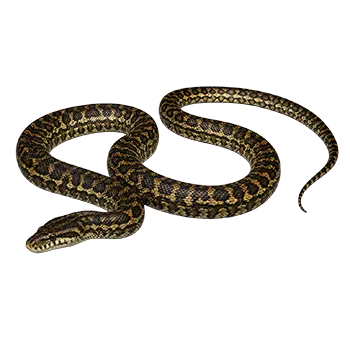
The Coastal Carpet Python (Morelia spilota mcdowelli) is a large, non-venomous constrictor belonging to the family Pythonidae, native to the eastern seaboard of Australia. Its range extends from the northern reaches of New South Wales through much of coastal and hinterland Queensland, occupying a diverse array of habitats that include subtropical rainforest, open eucalyptus woodland, riverine corridors, rocky escarpments, and the fringes of suburban and agricultural land. This ecological versatility has made the Coastal Carpet Python one of the most commonly encountered large snakes in eastern Australia, and its willingness to exploit human-modified environments has placed it in close and sustained contact with Australian communities for thousands of years.

The taxonomic history of the Coastal Carpet Python reflects the broader complexity of Carpet Python classification, which has been revised repeatedly over more than two centuries. The broader species Morelia spilota was first described by the French naturalist Bernard Germain de Lacepede in 1804, based on specimens collected during early European exploration of the Australian continent. However, the recognition of distinct subspecies within this wide-ranging taxon developed gradually as herpetologists accumulated material from across Australia and documented the considerable geographic variation in pattern, coloration, scalation, and body proportions exhibited by Carpet Pythons from different regions.

The subspecific name mcdowelli was formally applied by the American herpetologist Laurence M. Kluge in 1980, honoring Samuel Booker McDowell Jr., a distinguished comparative anatomist who made substantial contributions to the understanding of snake cranial morphology and reptilian systematics. Kluge's description delineated the Coastal Carpet Python from other recognized Carpet Python subspecies on the basis of consistent differences in head scalation, midbody scale row counts, ventral scale counts, and coloration pattern. The designation codified what keepers and field observers had long recognized informally: that the large, boldly patterned pythons of coastal Queensland represented a distinct and recognizable population within the Carpet Python complex.

Phylogenetic studies conducted in the late twentieth and early twenty-first centuries using mitochondrial DNA and microsatellite markers have largely supported the distinctiveness of the Coastal Carpet Python lineage, while simultaneously revealing that gene flow between adjacent Carpet Python populations along contact zones produces natural intergrades. These zones of hybridization, particularly in northern New South Wales where the range of the Coastal form approaches that of other Carpet Python populations, continue to provide material for ongoing research into the mechanisms of speciation and subspecific differentiation in Australian pythons.

Aboriginal Knowledge & Cultural Connections

The Aboriginal peoples of eastern Australia developed sophisticated and multifaceted relationships with Carpet Pythons, including the Coastal Carpet Python, over tens of thousands of years of continuous habitation. For the Kabi Kabi, Butchulla, Yuggera, Jagera, Bundjalung, and other language groups whose traditional lands overlap with the range of this subspecies, the large pythons of the coastal forests and woodlands occupied important positions within systems of ecological knowledge, spiritual belief, and cultural practice that long predated European contact.

In many eastern Australian Aboriginal traditions, snakes feature prominently in creation narratives and Dreaming stories that explain the formation of the landscape and establish the relationships between human communities, animal species, and the physical world. The Rainbow Serpent, one of the most widespread and significant ancestral beings across Aboriginal Australian cultures, is frequently associated with water, fertility, and the shaping of rivers and valleys. While the Rainbow Serpent is not equated with any single biological species, the large pythons of a given region, including Carpet Pythons along the eastern coast, often served as the most tangible living representatives of serpentine creative power within a local cultural context.

Aboriginal ecological knowledge of Carpet Python behavior, seasonal movements, and habitat use was detailed and pragmatic. Communities knew where pythons could be found during different seasons, understood their dietary habits and reproductive cycles, and recognized the role that these large predators played in regulating populations of possums, bandicoots, rats, and other animals within the broader ecosystem. This knowledge was transmitted across generations through oral tradition, ceremonial practice, and direct instruction during activities on country, forming part of the comprehensive environmental understanding that enabled Aboriginal societies to manage and sustain the landscapes they inhabited.

In some communities, totemic relationships with python species carried specific cultural obligations, including prohibitions against killing or consuming the animal by members of the relevant totemic group. These relationships functioned as elements of a broader system of reciprocal responsibility between human communities and the natural world, embedding conservation-like principles within cultural and spiritual frameworks that operated effectively for millennia before the concept of formal wildlife management was articulated by Western science.

Cultural Symbolism & Regional Identity

The Coastal Carpet Python has evolved into something of an unofficial emblem of the subtropical and tropical regions of eastern Australia, particularly in Queensland, where its frequent appearance in backyards, roof cavities, and suburban gardens has made it one of the most recognizable native animals for coastal residents. Unlike many large snake species around the world that are primarily known through documentary footage or zoo exhibits, the Coastal Carpet Python is a genuinely familiar presence in the daily lives of millions of Australians, and this proximity has shaped a distinctive cultural relationship that blends respect, pragmatic coexistence, and regional pride.

In the communities of southeast Queensland and the Sunshine Coast, the arrival of a Carpet Python in a suburban home or garden is treated as a routine seasonal event rather than a crisis. Local snake catchers who relocate pythons from residential properties have themselves become minor cultural figures, with some achieving substantial public followings through media coverage of their work. The tone of these encounters in Australian popular culture is characteristically practical and often humorous, reflecting a broader cultural comfort with wildlife that distinguishes Australian suburban life from that in many other developed nations.

The Coastal Carpet Python's distinctive appearance has also contributed to its cultural resonance. The bold pattern of irregular dark brown, tan, cream, and golden blotches arranged across a muscular body creates an instantly recognizable aesthetic that has been reproduced in Aboriginal and contemporary Australian art, textile design, and decorative crafts. The natural variation in color and pattern within the subspecies, with some individuals displaying warm golden tones and others showing cooler olive or gray-brown ground colors, has fascinated both artists and reptile enthusiasts, and the aesthetic appeal of particularly striking wild-type specimens has been a significant factor in the subspecies' popularity within herpetoculture.

Beyond individual aesthetics, the Coastal Carpet Python has come to symbolize the particular character of the Australian subtropical landscape itself. Its association with the distinctive environments of coastal Queensland, including paperbark wetlands, littoral rainforest, hoop pine stands, and the sprawling suburban bushland interface, has embedded the species in the regional identity of communities that take pride in their natural surroundings. Tourism operators, environmental education centers, and local councils in these areas frequently feature the Carpet Python in promotional materials and interpretive signage as a representative of the region's rich biodiversity.

European Settlement & Scientific Study

European settlement of eastern Australia, beginning with the establishment of the New South Wales penal colony in 1788 and accelerating through the pastoral expansion of the nineteenth century, brought the Carpet Pythons of the coast into contact with a population that held dramatically different attitudes toward large snakes. Early European settlers, arriving from a continent with a sparse and largely harmless native snake fauna, frequently reacted to encounters with large Australian pythons with alarm and hostility. Colonial-era accounts from Queensland and northern New South Wales describe the killing of Carpet Pythons found near homesteads and livestock enclosures, often with little distinction drawn between the harmless pythons and the genuinely dangerous venomous species that also inhabited the region.

Despite the initial hostility, a more considered appreciation of Carpet Pythons developed among some segments of the settler population as familiarity with the Australian environment increased. Farmers and graziers in rural Queensland recognized that the large pythons were effective predators of rats, mice, and other rodents that plagued grain stores and poultry operations. A pragmatic tolerance emerged in some communities, with property owners electing to leave resident pythons undisturbed in recognition of their pest-control services, a practice that persists in rural and peri-urban Queensland to the present day.

Scientific study of the Coastal Carpet Python intensified through the twentieth century as Australian herpetology matured into a rigorous discipline. Early museum-based work focused on cataloging the morphological diversity of Carpet Python populations across the continent, building the specimen collections and measurement datasets that would eventually underpin subspecific classification. Field studies conducted from the 1960s onward investigated the ecology, behavior, and population dynamics of Carpet Pythons in their natural habitats, producing foundational research on topics including home range size, seasonal movement patterns, thermal ecology, prey selection, and reproductive biology.

Mark-recapture studies and radio telemetry projects conducted in coastal Queensland from the 1980s through the 2000s generated detailed data on the spatial ecology of individual Coastal Carpet Pythons, revealing that these animals can maintain home ranges spanning several hectares and that males undertake extensive movements during the breeding season in search of receptive females. This body of ecological research has informed conservation planning and land management decisions in regions where urban expansion threatens python habitat, and it has provided the empirical basis for the species-specific management guidelines that Australian wildlife agencies now employ.

Rise in Herpetoculture

The Coastal Carpet Python's ascent to prominence within the international herpetoculture community represents one of the more remarkable success stories in the history of reptile keeping. While Australian reptiles were historically difficult to obtain outside of Australia due to the country's strict wildlife export prohibitions, the establishment of captive breeding populations within Australia during the 1970s and 1980s laid the groundwork for what would become one of the most active and sophisticated reptile breeding communities in the world.

Within Australia, the Coastal Carpet Python became one of the first snake species to be widely bred in captivity under the emerging state-based licensing systems that regulated private reptile keeping. Its large size, generally calm disposition when raised from hatchlings, robust feeding response, and relative ease of breeding compared to many other Australian python species made it an ideal candidate for captive propagation. Early breeders quickly discovered that the natural variation in color and pattern within the subspecies provided ample material for selective breeding projects, and by the 1990s, a growing number of Australian breeders were producing Coastal Carpet Pythons selected for specific color traits including high-contrast banding, intensified yellow and gold coloration, and reduced or aberrant patterning.

The development of distinctive captive-bred lines and locality-specific breeding programs transformed the Coastal Carpet Python from a commonly encountered wild animal into a subject of dedicated hobbyist interest. Breeders working with animals from specific geographic localities such as Atherton Tableland, the Sunshine Coast, or the Mackay region maintained pure locality lines that preserved the distinctive color and pattern characteristics of those wild populations. Simultaneously, selective breeding programs produced increasingly refined morphs that, while departing from wild-type appearance, demonstrated the genetic potential locked within the subspecies' natural variation.

Internationally, the Coastal Carpet Python gained a following among reptile keepers in Europe, North America, and Asia through a combination of legal and extralegal pathways. While Australia's ban on wildlife exports prevented the legal commercial trade of wild-caught or captive-bred specimens from Australian breeders to overseas buyers, populations established outside Australia from animals exported before the current regulatory framework was fully implemented, or obtained through other channels, provided the founding stock for international breeding communities. Today, the Coastal Carpet Python is bred in significant numbers in the United States, Germany, the Netherlands, the United Kingdom, and several other countries, with the international market supporting a diverse array of morphs, locality lines, and designer crosses.

The Species Today

The Coastal Carpet Python today occupies a position of considerable cultural, ecological, and economic significance across eastern Australia and within the global reptile-keeping community. In its native range, the species remains widespread and is not currently listed as threatened at the federal level under Australian environmental law, a status that reflects both its ecological adaptability and the effectiveness of the protective legislation that has shielded it from commercial harvest and unregulated persecution since the mid-twentieth century. However, localized population declines have been documented in areas experiencing rapid urban development, where habitat fragmentation, road mortality, and secondary poisoning from rodenticides pose ongoing threats.

Conservation efforts targeting the Coastal Carpet Python in Australia have increasingly focused on mitigating the impacts of urbanization on python populations within the suburban interface. Community education programs in Queensland and northern New South Wales emphasize the ecological benefits of coexisting with resident pythons, encourage the use of professional snake catchers for humane relocation when necessary, and promote habitat management practices such as the retention of hollow-bearing trees, ground-level cover, and wildlife corridors that support python movement through fragmented landscapes. These programs draw on the deep base of ecological research accumulated over decades of field study, and they reflect a growing public appreciation for the role of native predators in maintaining healthy suburban ecosystems.

Within herpetoculture, the Coastal Carpet Python continues to be one of the most actively bred and traded python species in Australia and internationally. The Australian reptile breeding community, operating under the various state and territory licensing frameworks, produces thousands of captive-bred Coastal Carpet Pythons annually, with the market encompassing wild-type animals, locality-specific lines, and an expanding roster of selectively bred morphs. The economic value generated by Carpet Python breeding supports a network of specialty retailers, equipment manufacturers, veterinary practices, and event organizers that constitutes a significant segment of the broader Australian pet industry.

Culturally, the Coastal Carpet Python has transcended its biological identity to become a symbol of the particular relationship that Australians maintain with their native wildlife. Its presence in homes, gardens, and public spaces serves as a daily reminder of the extraordinary biodiversity that exists within and alongside Australian communities, and its story, from ancient Aboriginal significance through colonial-era misunderstanding to contemporary appreciation, mirrors the broader evolution of Australian attitudes toward the natural environment. As pressures on native habitats intensify in the face of climate change and continued development, the Coastal Carpet Python will remain a focal species for the ongoing negotiation between human communities and the ecosystems they inhabit.

Always consult a qualified professional before making any health-related decisions. This content is provided for informational reference only and should not replace professional guidance specific to your animal.