
Origins & Discovery

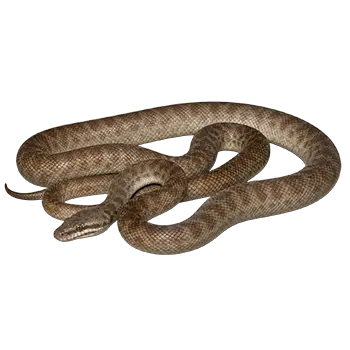
The Children's Python (Antaresia childreni) is a small python species native to the northern and central regions of Australia. Despite what its common name might suggest, the species was not named for its suitability as a children's pet but rather in honor of John George Children, a nineteenth-century British zoologist who served as the keeper of the zoological collection at the British Museum. The species was formally described by the English naturalist John Edward Gray in 1842, based on specimens collected from the Australian continent.

The genus Antaresia, to which the Children's Python belongs, comprises four small python species found across Australia. These include the spotted python (Antaresia maculosa), the Stimson's python (Antaresia stimsoni), and the pygmy python (Antaresia perthensis), the smallest python species in the world. The taxonomic history of the group has undergone several revisions, with the genus being reclassified from Liasis and Bothrochilus at various points as herpetologists refined their understanding of python phylogenetics.

Children's Pythons inhabit a range of environments across northern Australia, from rocky outcrops and woodland savanna to the margins of monsoon forests. Their adaptability to diverse habitats has made them one of the most widespread python species on the continent. Early naturalists noted the species' prevalence around human settlements and agricultural areas, where it plays a beneficial role in controlling populations of small rodents and other pest species.

The species' small size, generally calm disposition, and hardiness in captivity eventually brought it to the attention of reptile keepers both in Australia and internationally. By the latter decades of the twentieth century, the Children's Python had begun its transition from a species known primarily to field herpetologists to one of the most commonly kept pythons in the Australian and global reptile hobby.

Historical Roles in Indigenous Culture

Snakes occupy an important place in the spiritual and cultural traditions of Aboriginal Australian peoples, and the Children's Python, as a widespread and commonly encountered species, has been part of this relationship for tens of thousands of years. In the cosmological traditions of many Aboriginal groups, serpent figures feature prominently in creation narratives and in the ongoing spiritual connection between people, land, and the natural world. The Rainbow Serpent, one of the most widely recognized figures in Aboriginal mythology, reflects the deep cultural significance of snakes across the continent.

While the Rainbow Serpent is a generalized mythological figure rather than a representation of any single species, the Children's Python and other small pythons are among the snakes most frequently encountered by Aboriginal communities in the arid and semi-arid regions of northern and central Australia. These snakes are known to shelter in rock crevices, termite mounds, and around water sources — places that are also important to human communities. This shared use of the landscape has fostered intimate familiarity with the species over millennia.

Aboriginal ecological knowledge encompasses detailed understanding of the Children's Python's behavior, diet, seasonal patterns, and habitat preferences. This knowledge has been transmitted across generations through oral tradition and continues to inform land management practices in many communities. In some areas, traditional burning regimes and land stewardship practices create habitat conditions that benefit small python species by maintaining the mosaic of vegetation types and shelter sites on which they depend.

The intersection of indigenous knowledge and modern conservation science has become an area of increasing collaboration in Australia. Recognition of Aboriginal peoples' deep and longstanding understanding of species like the Children's Python has enriched scientific research and highlighted the value of integrating traditional ecological knowledge into contemporary wildlife management frameworks.

Cultural Symbolism & Appeal

The Children's Python occupies a distinctive niche in the cultural landscape of reptile keeping. Its small size, manageable temperament, and the endearing coincidence of its common name have made it a species with broad appeal, particularly among those who are new to snake keeping or who prefer a python that remains compact throughout its life. The species has come to symbolize accessibility and approachability in the reptile hobby, standing in contrast to the larger and more demanding python species that often dominate public attention.

In Australia, the Children's Python holds a particular cultural significance as one of the country's native reptile species that can be legally kept in most states and territories. For many Australian reptile enthusiasts, the Children's Python is the first python they ever own, and it serves as an introduction to the broader world of Australian herpetofauna. The species' association with the Australian outback, its hardiness, and its unassuming nature have made it a quietly beloved fixture of the domestic reptile scene.

The species' common name has been a source of both charm and confusion throughout its history. Many people encountering the name for the first time assume that it refers to a snake suitable for children, an interpretation that, while etymologically incorrect, is not entirely without basis — the Children's Python's small size and generally docile temperament do make it one of the more manageable python species for families considering a reptile pet. This happy accident of nomenclature has contributed to the species' popularity and public recognition.

In the broader cultural conversation about snakes and snake keeping, the Children's Python serves as a useful counterpoint to the negative stereotypes that often surround reptiles. Its diminutive stature and calm demeanor challenge the popular image of pythons as large and intimidating predators, and its widespread presence in the hobby helps to normalize the keeping of snakes as a legitimate and rewarding form of animal companionship.

Keeper Communities & Standards

The Children's Python has a dedicated following within the reptile-keeping community, particularly in Australia, where it is one of the most commonly kept native reptile species. Keeper communities organized around Antaresia pythons have formed both online and in person, with members sharing husbandry advice, breeding results, and observations about the species' natural history. These communities play an important role in maintaining and improving standards of care for the species in captivity.

In Australia, state-based herpetological societies have long included Children's Pythons in their educational programs, breeding registries, and annual shows. The species is frequently exhibited at reptile expos and educational events, where its calm temperament makes it an ideal ambassador for snake keeping. Judging criteria for show animals typically emphasize health, body condition, pattern clarity, and temperament, reflecting the community's commitment to both aesthetic quality and animal welfare.

The development of selective breeding programs has introduced a range of color and pattern morphs to the Children's Python market, including albino, caramel, and striped variants. While the morph market for Children's Pythons is less extensive than that for some other popular python species, the availability of visual variants has added a new dimension to the species' appeal and has encouraged a deeper engagement with genetics and selective breeding among keepers.

Online communities and social media groups dedicated to Antaresia pythons serve as important resources for both novice and experienced keepers. These platforms facilitate the exchange of information about feeding strategies, enclosure design, health management, and breeding techniques, and they provide a supportive environment for newcomers to the hobby. The collaborative and educational ethos of these communities reflects the broader values of the reptile-keeping world at its best.

The Children's Python Today

Today the Children's Python is firmly established as one of the most popular small python species in the global reptile hobby. In Australia, it remains one of the most frequently bred and traded native reptile species, with a robust captive population supported by a network of dedicated breeders. Internationally, the species is available from breeders in Europe, North America, and Asia, though its availability outside Australia is more limited due to the country's strict wildlife export prohibitions.

Advances in captive husbandry have made the Children's Python an accessible species for keepers of all experience levels. Modern care protocols emphasize appropriate enclosure sizing, thermal gradients, and feeding regimens tailored to the species' modest dietary requirements. The widespread availability of reliable husbandry information, both in print and online, has contributed to improved welfare outcomes for captive Children's Pythons and has helped to establish the species as a benchmark for responsible small python keeping.

The species continues to play an important role in reptile education and outreach programs. Zoos, wildlife parks, and school-based education programs frequently use Children's Pythons in hands-on demonstrations, where the snake's calm temperament and manageable size make it an effective tool for teaching young people about reptile biology, ecology, and conservation. These educational interactions help to foster positive attitudes toward snakes and other reptiles, countering the fear and misunderstanding that often surround these animals.

Looking ahead, the Children's Python's future in the hobby appears secure. Its combination of small size, longevity, hardiness, and gentle disposition ensures continued demand from keepers, while its role in education and its cultural significance within the Australian reptile community provide additional pillars of support for the species' ongoing presence in human life.

Notable Individuals & Influential Figures

The scientific and cultural history of the Children's Python is intertwined with the contributions of several notable figures. John George Children, the British zoologist for whom the species is named, was a prominent figure in early nineteenth-century natural history. As keeper of the zoological collection at the British Museum, Children played a key role in cataloguing and describing specimens from around the world, and his name has been permanently attached to this small Australian python through the conventions of taxonomic nomenclature.

John Edward Gray, the naturalist who formally described the species in 1842, was one of the most prolific taxonomists of the Victorian era. Gray described hundreds of animal species during his career at the British Museum, and his work on Australian reptiles laid important foundations for the subsequent development of Australian herpetology. The description of Antaresia childreni was part of a broader effort to catalogue the reptile fauna of the Australian continent during a period of rapid scientific exploration.

In the modern era, Australian herpetologists and field researchers have contributed significantly to the understanding of the Children's Python's ecology, distribution, and conservation status. Field studies conducted across northern Australia have documented the species' habitat requirements, reproductive biology, and population dynamics, providing essential data for conservation planning and management. Several prominent Australian herpetologists have published influential works on the Antaresia genus that serve as key references for both scientists and hobbyists.

Within the keeping community, a number of Australian breeders have been particularly influential in establishing high standards for Children's Python husbandry and in developing the various color morphs now available in the hobby. These breeders have shared their knowledge generously through publications, presentations at herpetological society meetings, and online forums, helping to raise the overall quality of care provided to the species in captivity and inspiring successive generations of Antaresia enthusiasts.

Always consult a qualified professional before making any health-related decisions. This content is provided for informational reference only and should not replace professional guidance specific to your animal.