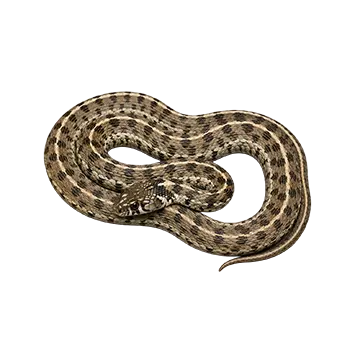

The Checkered Garter Snake (Thamnophis marcianus) is a small to medium-sized colubrid native to the southern United States, Mexico, and parts of Central America. Distinguished by the bold checkerboard pattern of dark blotches along its body, the species inhabits a broad range of environments including grasslands, desert scrub, river valleys, and agricultural margins from southern Kansas and the Texas panhandle southward through the Mexican plateau to Guatemala and Honduras. Its tolerance for arid and semi-arid conditions sets it apart from many other garter snake species that depend more heavily on mesic habitats and permanent waterways.
The species was formally described by the American herpetologist Spencer Fullerton Baird and French-born naturalist Charles Frederic Girard in 1853, based on specimens collected during the United States and Mexican Boundary Survey. Baird and Girard named the species Eutaenia marciana in honor of Brigadier General Randolph B. Marcy, a United States Army officer and frontier explorer who contributed significantly to natural history collections from the American Southwest during his expeditions through Texas and the Indian Territory. The species was later transferred to the genus Thamnophis as herpetological taxonomy matured during the twentieth century.
Long before Western naturalists documented the Checkered Garter Snake, indigenous peoples throughout its range possessed intimate knowledge of the species and its habits. Communities across what is now northern Mexico and the American Southwest recognized garter snakes as common elements of the riparian and grassland ecosystems they inhabited. Archaeological evidence and ethnographic records indicate that small, non-venomous snakes like the Checkered Garter Snake occupied a largely benign position in the ecological awareness of indigenous communities, valued for their role in controlling insect and amphibian populations near agricultural fields and water sources.
The mid-nineteenth century description of the species came during a period of intense herpetological exploration in North America. The boundary surveys, railroad surveys, and military expeditions of the era generated enormous volumes of zoological material that flooded American and European museums. Baird, working at the Smithsonian Institution, was at the center of this effort, describing hundreds of reptile and amphibian species from the western territories. The Checkered Garter Snake was one of numerous Thamnophis species delineated during this period, as taxonomists worked to sort out the confusing diversity of garter snakes across the continent.