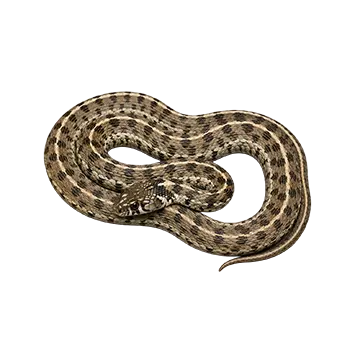

The Checkered Garter Snake has appeared in numerous wildlife documentaries and natural history television programs, though rarely as the sole subject of a feature-length production. Its most common documentary role is as a representative species within broader segments on North American reptile diversity, Southwestern desert ecosystems, or the ecology of riparian corridors in arid landscapes. Producers and filmmakers working in the American Southwest and northern Mexico frequently encounter Checkered Garter Snakes during field shoots and include footage of the species as part of ensemble portrayals of the reptile communities that inhabit these regions.
Nature programs focused on the biodiversity of the Chihuahuan Desert, the Rio Grande valley, and the Texas Hill Country have featured the Checkered Garter Snake as an example of how reptiles exploit the narrow bands of moisture-rich habitat that thread through otherwise arid terrain. Footage of Checkered Garter Snakes hunting amphibians along the margins of stock tanks, irrigation ditches, and desert springs provides visual shorthand for the ecological principle that water availability structures wildlife communities in dry landscapes. These segments, while often brief, have introduced the species to audiences far beyond its geographic range and contributed to a growing public understanding that garter snakes are not limited to the lush, temperate habitats most viewers associate with the genus.
The species has also been featured in documentary segments exploring the phenomenon of live birth in reptiles. As a viviparous species that gives birth to live young rather than laying eggs, the Checkered Garter Snake offers filmmakers a visually compelling subject for illustrating reproductive strategies that challenge the common assumption that all snakes are egg-layers. Footage of female Checkered Garter Snakes giving birth to litters of tiny, fully formed neonates has appeared in educational programs designed for both adult and younger audiences, often accompanied by narration explaining the ecological advantages that live birth can confer in environments with unpredictable temperatures or limited nesting site availability.
Regional wildlife programs produced by state agencies in Texas, New Mexico, Arizona, and Oklahoma have given the Checkered Garter Snake somewhat more prominent coverage than national productions. These locally focused programs, many of which are distributed through public broadcasting channels or state wildlife department websites, tend to feature the species in segments on backyard wildlife, snake identification, and the ecological benefits of tolerating non-venomous snakes in residential and agricultural settings.