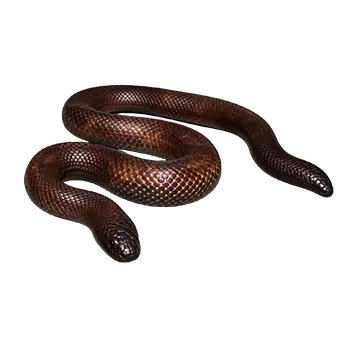

Finding a Calabar Python in its natural West African habitat is one of the more challenging objectives a field herpetologist or wildlife enthusiast can set. The species' fossorial lifestyle means that it spends the overwhelming majority of its time concealed beneath the leaf litter, topsoil, and decaying organic matter of the tropical forest floor, and above-ground encounters are infrequent even in areas where the species is known to occur at reasonable densities. Unlike many other snake species that bask in open areas, patrol conspicuous hunting routes, or aggregate at predictable sites, the Calabar Python moves through its environment almost entirely underground, surfacing most often during rainy periods or at night when humidity is high and the risk of desiccation is low.
The most productive approach to finding Calabar Pythons in the field involves searching through surface cover in appropriate habitat during or immediately after rainfall. Lifting fallen logs, turning over bark slabs, raking through accumulated leaf litter, and checking beneath debris in forest clearings and along forest edges are all techniques that can yield encounters, though success rates remain low even for experienced searchers. The species shows a particular affinity for the interface between intact forest and disturbed or agricultural land, where the combination of accumulated organic debris, abundant small prey, and relatively warm and moist microhabitats creates favorable conditions. Oil palm plantations and cocoa farms adjacent to forested areas are among the most frequently reported encounter sites for the species.
Night surveys during the wet season offer the best chances of encountering Calabar Pythons above ground and moving on the forest floor. The species is primarily nocturnal in its surface activity, emerging after dark to forage for small rodents, lizards, and other prey that are themselves more active during nighttime hours. Walking slowly through suitable habitat with a headlamp, scanning the ground surface and the bases of vegetation, is the standard technique for nocturnal herpetological survey work in the tropics and can produce occasional encounters with the species under the right conditions. Patience and repeated visits to productive areas are essential, as even the most experienced field herpetologists may search for multiple nights before recording a sighting.
Visitors to West African forests who hope to encounter Calabar Pythons should be prepared for the physical demands and logistical challenges of field work in tropical environments. Conditions include high heat and humidity, dense vegetation, uneven and often slippery terrain, abundant biting insects, and limited access to medical facilities or emergency services in remote areas. Proper preparation includes appropriate clothing and footwear, adequate water and nutrition supplies, reliable navigation tools, comprehensive travel health preparation including recommended vaccinations, and, ideally, the guidance of local contacts familiar with the terrain and the species' occurrence in the area.