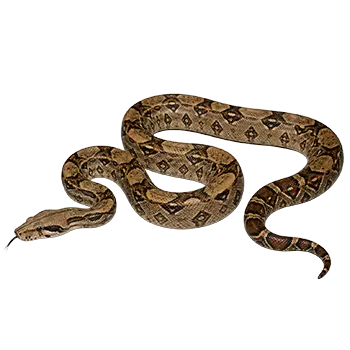

The boa constrictor is native to a vast stretch of the Americas, ranging from northern Mexico through Central America and deep into South America. Its natural habitats include tropical rainforests, semi-arid scrublands, and agricultural lowlands. The species was first formally described by Carl Linnaeus in 1758, making it one of the earliest large snakes classified under modern taxonomy. Its broad geographic range has given rise to numerous recognized subspecies and locality-specific populations, each with distinctive coloring and size characteristics.
Indigenous peoples throughout Central and South America lived alongside boa constrictors for millennia before European contact. Archaeological evidence suggests that boas were recognized as important predators within their ecosystems, helping to control rodent populations near human settlements. Some pre-Columbian cultures incorporated the boa into their cosmologies, seeing the snake as a bridge between the terrestrial and spiritual worlds.
When European explorers arrived in the Americas during the fifteenth and sixteenth centuries, the boa constrictor quickly captured their attention. Early naturalists documented encounters with large constrictors in their travel journals, often blending factual observation with exaggerated accounts of size and danger. These early descriptions laid the groundwork for the boa's enduring reputation as a creature of both fascination and unease in Western culture.
Over the centuries, scientific understanding of the boa constrictor has deepened considerably. Researchers have identified a complex of subspecies and regional forms, and genetic studies continue to refine the taxonomy of the group. The species now serves as a model organism for studies of snake physiology, thermoregulation, and constriction mechanics.