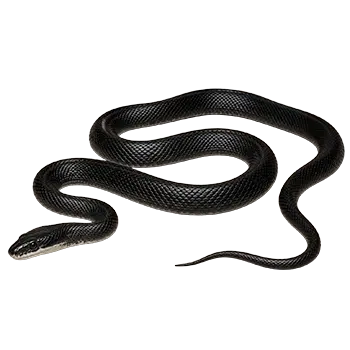

The Black Rat Snake's appearances in media trace back to the earliest traditions of American natural history illustration and writing. Colonial-era naturalists working in the eastern seaboard colonies produced some of the first visual representations of large black-colored snakes for European and American audiences. Mark Catesby's monumental illustrated work on the natural history of the Carolinas, published in the 1730s and 1740s, included depictions of large serpents that almost certainly encompassed the species now known as Pantherophis alleghaniensis. These hand-colored engravings, while imprecise by modern standards, introduced the Black Rat Snake to an international readership and established its visual identity in the Western naturalist tradition.
The nineteenth century brought a flourishing of American natural history publishing that gave the Black Rat Snake greater visibility in both scientific and popular literature. John Edwards Holbrook's North American Herpetology, published in multiple editions between 1836 and 1842, provided detailed descriptions and lithographic plates of the species that set a new standard for accuracy and artistic quality. These images were reproduced and adapted in countless field guides, encyclopedias, and educational texts throughout the remainder of the century, embedding the Black Rat Snake's distinctive appearance in the visual vocabulary of American natural history.
Beyond formal scientific illustration, the Black Rat Snake appeared frequently in the regional literature and journalism of nineteenth-century rural America. Newspapers and agricultural periodicals across the eastern states carried accounts of encounters with large black snakes, often framed as human-interest stories or practical advice for farmers dealing with snakes in barns and chicken coops. These accounts, while rarely illustrated, contributed to the species' cultural profile and ensured that even readers without direct experience of the snake had some awareness of its existence and habits.
The tradition of natural history illustration continued into the twentieth century with increasingly refined techniques. Artists such as Roger Tory Peterson, whose field guide illustrations revolutionized birdwatching and nature identification in the mid-twentieth century, helped establish a visual standard for wildlife identification that reptile field guides eventually adopted. The Black Rat Snake's glossy black adult coloration and distinctive juvenile blotched pattern made it a rewarding subject for illustrators, and its plates in guides by Conant, Collins, and other herpetological authors became definitive reference images for generations of amateur naturalists and students.