
Traditional Art & Literary References

The Beauty Snake's place in the visual and literary traditions of East Asia is intertwined with the broader cultural significance of serpents across the region. Chinese ink painting and scroll art have depicted snakes for centuries, and the Beauty Snake's elongated, graceful form and vividly patterned scales make it a natural subject for artists working in traditions that prize the capture of natural beauty through economical brushwork. While individual paintings rarely identify their reptilian subjects to the species level, the distinctive dorsal patterning and proportions of the Beauty Snake are recognizable in a number of historical works depicting snakes in mountainous and forested landscapes of southern China.

In Chinese literature, serpents appear extensively in poetry, fable, and mythological narrative. The Beauty Snake's common name in Mandarin, mei she, carries an aesthetic resonance that has occasionally drawn specific literary attention. Regional folk tale collections from provinces within the species' range, including Fujian, Guangdong, and Yunnan, include stories featuring beautiful or unusually striking snakes that function as agents of transformation, guardians of hidden treasure, or embodiments of natural forces. While these stories rarely identify a specific zoological species, the cultural prototype of the elegant, non-venomous snake that they describe aligns closely with the real-world characteristics of the Beauty Snake.

Taiwanese literary and artistic traditions have given the Beauty Snake somewhat more explicit recognition. The island's tradition of natural history illustration, which blossomed during the Japanese colonial period and continued through the postwar era, produced detailed depictions of the Taiwan Beauty Snake in field guides, educational materials, and popular natural history publications. These illustrations served not only scientific purposes but also contributed to a broader public awareness and appreciation of the island's native herpetofauna, helping to establish the Beauty Snake as one of Taiwan's most recognizable reptile species.

In the broader context of Southeast Asian art, serpent imagery appears abundantly in the textile traditions, woodcarving, and temple architecture of Vietnam, Thailand, and Myanmar, regions where the Beauty Snake is native. The naga, a mythological serpent figure of profound significance in Buddhist and Hindu traditions, dominates the visual representation of snakes in these cultures. While the naga is a supernatural entity rather than a depiction of any specific species, the presence of large, impressive snakes like the Beauty Snake in the everyday environment of these cultures contributed to the experiential basis from which artists and craftspeople drew when creating serpentine imagery.

Film, Television & Documentary Coverage

The Beauty Snake has appeared in wildlife documentary programming with increasing frequency as international natural history media have expanded their coverage of Asian ecosystems. Productions focusing on the biodiversity of southern China, Taiwan, and mainland Southeast Asia regularly feature the species, drawn by its photogenic qualities and its active, dynamic behavior. The Beauty Snake's semi-arboreal habits, its swift predatory strikes, and its willingness to explore open terrain during daylight hours make it a cooperative and visually rewarding subject for field camera crews, qualities that many other snake species, with their more cryptic habits, do not share.

Taiwanese natural history programming has given the Beauty Snake particularly prominent coverage. The island's public broadcasting networks and independent nature filmmakers have produced detailed segments on the Taiwan Beauty Snake's ecology, behavior, and conservation status, often framing the species as an indicator of habitat health and a point of pride in Taiwan's unique natural heritage. These productions have played a meaningful role in shaping public attitudes toward snakes on the island, countering the ophidiophobia that pervades many cultures and replacing it with an informed appreciation for the ecological services that large snake species provide.

In mainland Chinese media, the Beauty Snake appears in both documentary and popular entertainment contexts, though the line between these categories is sometimes blurred. Chinese wildlife documentaries produced for domestic audiences have featured the species in programs exploring the fauna of southern provinces, emphasizing its role as a rodent predator and its significance in traditional Chinese ecological knowledge. At the same time, the species has occasionally appeared in Chinese television dramas and films as a visual element in scenes set in forested or rural landscapes, contributing atmospheric detail even when the snake itself is not a narrative focus.

The cave-dwelling ridleyi subspecies has attracted disproportionate attention from documentary filmmakers, drawn by the dramatic visual spectacle of brilliantly colored snakes navigating limestone cave systems in peninsular Malaysia and Thailand. Footage of these cave racers hunting bats amid the dramatic geology of tropical karst formations has appeared in several international wildlife documentary series, introducing the Beauty Snake complex to audiences worldwide who might otherwise never encounter the species. The visual drama of these cave sequences has made them among the most widely shared and recognized snake footage in the documentary genre.

Wildlife Photography & Visual Media

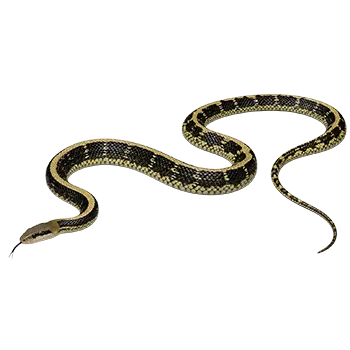
The Beauty Snake has become a prized subject among wildlife and reptile photographers, occupying a position in the photographic community that reflects its combination of visual appeal, behavioral interest, and accessibility. The species' bold patterning, which features complex arrangements of dark-edged blotches, stripes, and a characteristic head pattern that varies among geographic forms, provides rich material for close-up and macro photography. The contrast between the warm yellows and ochres of some mainland Chinese forms and the cool blue-blacks of the ridleyi cave racer has made the Beauty Snake complex one of the most photographed snake groups in Asia.

Field photographers working in the Beauty Snake's native range have produced bodies of work documenting the species in its natural habitats, from the subtropical forests of Taiwan's mountain ranges to the limestone karst landscapes of southern China and peninsular Malaysia. The species' relatively bold temperament compared to many other Asian colubrids, combined with its tendency to be active during periods of good light, makes it more accommodating of photographic attention than many snake species. Field images of Beauty Snakes in natural settings have appeared in field guides, natural history magazines, and conservation publications across East and Southeast Asia.

Within the herpetoculture community, photography of captive Beauty Snakes constitutes a significant body of visual media. Breeders and keepers regularly photograph their animals to document growth, health, and color development, and the resulting images are shared across social media platforms, reptile forums, and breeder websites. High-quality studio photography of Beauty Snake morphs and subspecies has become a marketing tool for breeders and a source of aesthetic appreciation within the hobby, with particularly striking images accumulating large audiences on platforms dedicated to reptile photography.

The Beauty Snake has also served as a subject for scientific illustration in the modern era. Contemporary field guide illustrators working on the herpetofauna of China, Taiwan, and Southeast Asia have produced detailed plates depicting the species' geographic variation, contributing to both the scientific documentation and the public visibility of the Beauty Snake complex. These illustrations, which combine artistic skill with anatomical precision, serve as important reference documents for researchers and conservationists as well as accessible introductions to the species for general audiences.

Online Communities & Social Media

The rise of online reptile communities has profoundly shaped the Beauty Snake's profile within the global herpetoculture hobby. Dedicated forums, Facebook groups, and subreddits focusing on Asian ratsnakes and colubrids have created platforms where keepers, breeders, and enthusiasts from around the world exchange information about the species' care, breeding, and taxonomy. These online communities function as repositories of collective knowledge, preserving and disseminating husbandry techniques, veterinary insights, and behavioral observations that would otherwise exist only in the isolated experience of individual keepers.

Social media platforms, particularly Instagram and YouTube, have amplified the Beauty Snake's visibility to audiences far beyond the traditional herpetoculture hobby. Keepers and breeders share photographs and video clips of their animals feeding, exploring enclosures, and displaying the species' characteristic active and inquisitive behavior. The visual impact of the various Beauty Snake subspecies and morphs translates well to image-driven platforms, and accounts featuring these animals can accumulate followings that number in the tens of thousands. This social media presence has introduced the Beauty Snake to people who might never visit a reptile expo or browse a specialist forum, broadening the species' cultural footprint in the digital era.

Chinese social media platforms including Douyin, Weibo, and Bilibili host active communities of reptile enthusiasts who share content related to native Chinese snake species, and the Beauty Snake features prominently in this content. These Chinese-language online communities provide a perspective on the species that is rooted in its cultural context as a native animal, complementing the primarily Western perspective that dominates English-language reptile forums. The cross-pollination between Chinese and Western online reptile communities has enriched the global understanding of the Beauty Snake, facilitating the exchange of locality-specific knowledge about wild populations and captive husbandry practices.

The online presence of the Beauty Snake has also raised awareness of conservation issues affecting the species in its native range. Social media posts documenting the scale of the Chinese snake trade, the habitat pressures facing wild populations, and the conservation programs working to protect native herpetofauna have reached audiences that traditional conservation communications might not engage. The capacity of social media to connect enthusiasts in consumer countries with conservation realities in range countries represents a potentially significant tool for building support for snake conservation in East and Southeast Asia.

Educational Media & Museum Exhibitions

The Beauty Snake has served as an educational ambassador for Asian herpetofauna in museums, zoos, and nature centers across both its native range and internationally. Its manageable size for a large colubrid, its active daytime behavior, and its visually striking appearance make it a practical and engaging exhibit animal for institutions seeking to educate visitors about snake biology and Asian biodiversity. Zoos in Taiwan, mainland China, and Southeast Asia frequently display native Beauty Snake populations as part of regional fauna exhibits, providing visitors with an opportunity to observe a species that many of them share the landscape with but rarely see in the wild.

International zoos and herpetological institutions have also incorporated Beauty Snakes into their collections and educational programming. The species appears in exhibits focused on Asian tropical and subtropical ecosystems, often alongside other representative species from the same geographic region. Interpretive signage and guided programs associated with these exhibits draw on the Beauty Snake's ecological role, its geographic variation, and its relationship with human communities to create narratives that connect visitors with broader themes of biodiversity, conservation, and coexistence.

In formal educational settings, the Beauty Snake appears in textbooks, identification guides, and teaching materials used in herpetology and ecology courses at universities across East and Southeast Asia. The species' well-documented geographic variation and the ongoing taxonomic debates surrounding its classification make it a useful teaching example for courses covering systematics, biogeography, and species concepts. Students of herpetology in Chinese and Taiwanese universities frequently encounter the Beauty Snake as a study organism in both classroom and field settings, and the species' accessibility has made it a popular subject for undergraduate and graduate research projects.

Museum collections hold extensive series of preserved Beauty Snake specimens from across the species' range, representing a physical record of geographic variation and historical distribution that is invaluable for both taxonomic research and conservation assessment. Major natural history museums in Beijing, Taipei, London, and Washington hold reference collections that span decades of field collecting, and these specimens continue to yield new insights as they are subjected to modern genetic and morphometric analysis techniques. The documentation associated with these museum holdings, including collection localities, habitat notes, and morphological measurements, constitutes a data resource of enduring scientific value.

Shaping Public Perception

The cumulative effect of the Beauty Snake's presence across these diverse media channels has been a gradual but meaningful shift in public perception of the species and, by extension, of large non-venomous snakes generally. In regions where the species is native, increased media exposure has contributed to a growing public awareness that snakes perform important ecological functions and that non-venomous species like the Beauty Snake pose no meaningful threat to human safety. This evolving perception, while far from universal, represents a significant departure from the reflexive fear and hostility that characterized earlier generations' attitudes toward snakes in many Asian cultures.

The herpetoculture community's media output has played a particularly important role in reshaping attitudes toward the Beauty Snake in Western countries, where the species is not native and where public knowledge of Asian colubrids has historically been limited. Through expos, online content, and published care literature, hobbyists have introduced the Beauty Snake to a broad audience and have demonstrated that a large, active colubrid can be maintained responsibly in captivity. The species' reputation within the hobby as an alert, engaging animal with genuine personality has helped to counter the perception of snakes as inert, unresponsive creatures, a misconception that contributes to ophidiophobia and to public indifference toward snake conservation.

The role of media in conservation advocacy for the Beauty Snake is still evolving. While documentary coverage and social media outreach have raised awareness of the threats facing wild populations, translating that awareness into concrete conservation outcomes remains a challenge. The gap between knowing that a species faces pressure and taking action to address that pressure is one that media alone cannot bridge. However, the foundation of public interest and awareness that media coverage has established creates the conditions for conservation organizations and policymakers to build upon.

Looking forward, the Beauty Snake's media presence is likely to continue growing as the species' profile within both the herpetoculture community and the broader public continues to rise. Advances in camera technology, including miniaturized field cameras and high-resolution macro photography equipment, promise to reveal new aspects of the species' behavior and ecology to audiences worldwide. The ongoing expansion of Asian-language natural history media and its increasing accessibility to international audiences will bring new perspectives and new depth to the global understanding of this remarkable colubrid.

Always consult a qualified professional before making any health-related decisions. This content is provided for informational reference only and should not replace professional guidance specific to your animal.