
Origins & Discovery

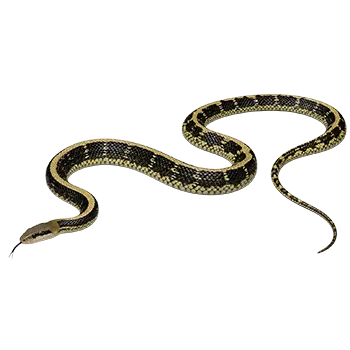
The Beauty Snake (Elaphe taeniura), also frequently classified under the genus Orthriophis as Orthriophis taeniurus, is a large, powerful colubrid native to a vast swath of East and Southeast Asia. Its range extends from the eastern provinces of China through Taiwan, Vietnam, Myanmar, Thailand, Laos, and into parts of the Malay Peninsula and Indonesian archipelago. Within this extensive distribution, the species inhabits a striking variety of environments, from subtropical lowland forests and limestone karst formations to agricultural land, bamboo groves, and even the periphery of human settlements. This ecological versatility is one of the defining characteristics of the species and has shaped its long relationship with human communities throughout its range.

The species was first described for Western science by the American herpetologist Edward Hallowell in 1861, though some taxonomic accounts attribute earlier descriptions to European naturalists working from specimens obtained through colonial trade networks in Southeast Asia. The name taeniura derives from the Greek words for ribbon and tail, a reference to the distinctive striped patterning along the posterior portion of the body and tail that is one of the species' most recognizable visual features. Long before Western taxonomists assigned the species its scientific name, however, the Beauty Snake was intimately known to the peoples of China, Taiwan, and mainland Southeast Asia, where it had been observed, named, and incorporated into cultural practice for centuries.

Across its range, the Beauty Snake has been recognized by a rich diversity of common names that reflect local perceptions of the animal. In Mandarin Chinese, it is commonly known as mei she, which translates directly as beautiful snake, a name that speaks to the species' genuinely striking appearance. Taiwanese keepers and naturalists refer to certain insular populations as the Taiwan Beauty Snake, recognizing the morphological distinctiveness of specimens from the island. In Vietnam and Thailand, local vernacular names similarly emphasize the snake's elegant patterning and impressive size.

The Beauty Snake is notable among Asian colubrids for its combination of size, speed, and visual impact. Adults regularly reach five to seven feet in total length, with exceptional individuals approaching or slightly exceeding eight feet. The body is muscular and laterally compressed, built for a semi-arboreal lifestyle that includes climbing trees and navigating rocky terrain with remarkable agility. The color pattern varies significantly across the species' range, a variability that has contributed to the recognition of multiple subspecies and geographic forms and that has made the Beauty Snake a subject of considerable taxonomic discussion.

Indigenous Knowledge & Historical Roles

Throughout East and Southeast Asia, the Beauty Snake has occupied a distinctive position in the practical knowledge systems of agricultural and rural communities. In southern and eastern China, where the species is particularly common, farming communities have long recognized the Beauty Snake as a highly effective controller of rodent populations. Rice paddies, grain stores, and village granaries attract rodents in large numbers, and the presence of Beauty Snakes in and around these structures was traditionally welcomed as a form of natural pest management. This utilitarian appreciation gave the species a degree of informal protection in many rural areas, where killing a Beauty Snake was considered wasteful and even unlucky.

Chinese traditional medicine has also drawn upon the Beauty Snake for centuries, incorporating various preparations derived from the species into pharmacological practice. Historical Chinese materia medica texts, some dating back several hundred years, reference snake-derived preparations used for conditions ranging from joint pain to skin ailments. While the Beauty Snake was not the sole species used in these preparations, its relative abundance and accessibility made it one of the more commonly harvested snakes for medicinal purposes in the regions where it was found. The intersection of medicinal harvesting and cultural respect for the species created a complex dynamic that varied significantly from region to region.

In Taiwan, the Beauty Snake has held a particularly prominent place in the island's ecological and cultural identity. The Taiwan subspecies, sometimes designated Elaphe taeniura friesei, is one of the largest and most visually impressive snakes found on the island, and it has featured prominently in Taiwanese natural history education and public awareness of native wildlife. Taiwanese farming communities developed their own body of practical knowledge regarding the species, including observations about its seasonal activity patterns, preferred denning sites, and reproductive timing that parallel and in some cases predate formal scientific documentation of these behaviors.

In the mainland Southeast Asian portions of its range, the Beauty Snake's relationship with human communities has been shaped by the region's extraordinary herpetological diversity. In Vietnam, Thailand, and Myanmar, the species is one of many large colubrid and boid snakes that local communities encounter regularly, and attitudes toward it are embedded within broader cultural frameworks for understanding and coexisting with snakes generally. In some Vietnamese highland communities, the Beauty Snake's preference for rocky, forested terrain associated it with upland landscapes that carried their own cultural and spiritual significance.

Cultural Symbolism & Folklore

The Beauty Snake's cultural symbolism is inseparable from the broader role that serpents play in Chinese and East Asian cosmological traditions. In Chinese culture, snakes have been associated with wisdom, transformation, fertility, and the earth element for millennia. The snake is one of the twelve animals of the Chinese zodiac, and those born in the Year of the Snake are traditionally ascribed qualities of intelligence, grace, and quiet determination. While these symbolic associations attach to snakes as a general category rather than to any single species, the Beauty Snake's striking appearance and widespread presence across China have made it one of the species most commonly invoked when these symbolic traditions are illustrated or discussed in popular contexts.

One of the most famous snake-related legends in Chinese literature is the Legend of the White Snake, known as Bai She Zhuan, a story that has been told and retold in countless forms over more than a thousand years. While the serpent in this legend is typically depicted as a white snake spirit, the broader cultural fascination with elegant, large snakes that the story reflects has contributed to the Beauty Snake's cultural cachet. The species' common name in Chinese, mei she, carries connotations that align with the themes of beauty, allure, and hidden power that permeate Chinese snake mythology. The Beauty Snake's real-life combination of graceful movement and swift, powerful predatory strikes provides a living counterpart to the mythological image of the serpent as simultaneously beautiful and formidable.

In Taiwanese indigenous cultures, particularly among the Paiwan and Rukai peoples, serpent imagery holds deep spiritual significance, appearing prominently in traditional art, architecture, and ceremonial practice. The hundred-pace pit viper occupies the central position in these serpent traditions, but the Beauty Snake's presence in the Taiwanese landscape has contributed to a general cultural awareness and respect for snakes that permeates island culture more broadly. This cultural context has influenced modern Taiwanese conservation attitudes and has supported public education efforts aimed at reducing the unnecessary killing of native snake species.

The Beauty Snake also features in the folk beliefs and practices of upland communities in mainland Southeast Asia. In parts of northern Vietnam and southern China's Yunnan province, snakes encountered near homes or agricultural land are sometimes interpreted as omens, and the particular species encountered may carry specific associations. The Beauty Snake's conspicuous presence, combined with its habit of denning in rocky crevices near human habitation, has made it a frequent subject of these interpretive traditions.

Taxonomic History & Scientific Classification

The taxonomic history of the Beauty Snake is a case study in the challenges of classifying a wide-ranging, morphologically variable species within a region of extraordinary herpetological diversity. Since Hallowell's original 1861 description of the species as Elaphe taeniura, the Beauty Snake has been the subject of repeated taxonomic revision, with different authorities placing it in different genera and recognizing varying numbers of subspecies based on geographic variation in size, color pattern, and scalation.

The genus-level classification of the Beauty Snake has been particularly contentious. For much of the twentieth century, the species was placed within the large and somewhat unwieldy genus Elaphe, which served as a catch-all for a diverse array of Old World ratsnakes. Molecular phylogenetic studies conducted in the early twenty-first century revealed that Elaphe as traditionally defined was not a natural evolutionary group, and several researchers proposed splitting the genus into multiple smaller genera that better reflected evolutionary relationships. Under one widely adopted revision, the Beauty Snake was transferred to the genus Orthriophis, yielding the combination Orthriophis taeniurus. However, not all herpetological authorities have accepted this reclassification, and both Elaphe taeniura and Orthriophis taeniurus remain in active use in scientific and hobbyist literature.

The subspecific taxonomy of the Beauty Snake is similarly complex and fluid. As many as nine subspecies have been described at various points, based primarily on differences in color pattern and geographic distribution. Among the most widely recognized are Elaphe taeniura taeniura from southern China, Elaphe taeniura friesei from Taiwan, Elaphe taeniura ridleyi from peninsular Malaysia and Thailand, and Elaphe taeniura grabowskyi from Borneo and Sumatra. The cave-dwelling ridleyi subspecies, often called the Cave Racer or Blue Beauty, is particularly distinctive, with a vivid blue-black and white color pattern that has made it one of the most sought-after forms in herpetoculture. Some researchers have argued that several of these subspecies warrant elevation to full species status based on genetic divergence and morphological distinctiveness.

The ongoing refinement of Beauty Snake taxonomy illustrates a broader theme in Asian herpetology, where the application of modern genetic techniques to species complexes described during earlier eras of morphology-based taxonomy is revealing previously unrecognized diversity. Field surveys and genetic sampling continue to refine understanding of population structure and evolutionary relationships within the Beauty Snake complex, and further taxonomic changes are likely as additional data accumulate.

The Herpetoculture Movement

The Beauty Snake was among the earlier Asian colubrid species to attract sustained interest from the international herpetoculture community. By the 1980s, specimens were appearing with increasing regularity at reptile expos and in the catalogs of specialist dealers in the United States and Europe, initially sourced primarily from wild-caught stock exported from China, Taiwan, and Southeast Asian range countries. The species' impressive size, active temperament, and striking patterning made it appealing to keepers who were looking for something beyond the ball pythons and corn snakes that dominated the entry-level reptile market.

Captive breeding of Beauty Snakes gained momentum through the 1990s and early 2000s as experienced keepers cracked the reproductive requirements of the species. Unlike some tropical Asian colubrids that proved difficult to cycle in captivity, the Beauty Snake responded relatively well to seasonal temperature and photoperiod manipulation, and females proved to be reasonably productive egg layers once properly conditioned. Clutch sizes of six to twelve eggs became standard in captive breeding operations, and incubation protocols were refined through shared experimentation within the keeping community. The availability of captive-bred specimens gradually reduced the trade's dependence on wild-caught imports, though wild collection continues in some parts of the species' range.

The diversity of subspecies and geographic forms within the Beauty Snake complex has been a major driver of hobbyist interest. Different forms command different levels of attention and market value, with the strikingly colored ridleyi cave racer form and the large, boldly patterned Taiwan Beauty being among the most popular. Breeders have also worked to develop and stabilize color and pattern mutations within captive populations, including hypomelanistic, albino, and axanthic variants that fetch premium prices. The selective breeding of Beauty Snake morphs has become a specialized niche within the broader herpetoculture market, supported by online forums, social media groups, and dedicated vendor networks.

The keeping of Beauty Snakes has also contributed meaningfully to the broader understanding of the species' biology. Captive observations of feeding behavior, growth rates, thermoregulatory preferences, and reproductive physiology have complemented field research, and the global community of Beauty Snake keepers represents a distributed network of observers whose collective experience provides a depth of natural history data that no single research program could replicate. This synergy between hobbyist observation and academic science is one of the more productive aspects of the herpetoculture hobby.

The Species Today

The Beauty Snake today occupies a position of considerable interest across multiple domains, from academic herpetology and conservation biology to the international reptile trade and cultural heritage preservation. In its native range, the species remains relatively common in many areas, benefiting from its ecological adaptability and its ability to thrive in habitats modified by human activity. Unlike many snake species that retreat rapidly in the face of agricultural expansion and urbanization, the Beauty Snake has demonstrated a capacity to persist in fragmented and human-influenced landscapes, provided that adequate prey populations and refugia are available.

However, the species is not without conservation concerns. In China, large-scale commercial harvesting of snakes for the food, traditional medicine, and leather trades has placed significant pressure on wild populations of many species, including the Beauty Snake. The scale of the Chinese snake trade is staggering by any measure, with millions of individual snakes entering commercial channels annually, and the Beauty Snake's relative abundance has made it a common target of collectors supplying these markets. While the species is not currently classified as threatened at the global level, localized population declines have been documented in areas of intensive harvesting, and the cumulative effect of sustained commercial pressure on long-term population viability remains a subject of concern among conservation biologists.

In Taiwan, the Beauty Snake has benefited from a growing public conservation ethic and from the island's relatively robust system of protected natural areas. Taiwanese herpetological research programs have produced detailed studies of the island population's ecology, genetics, and distribution, and public education campaigns have worked to replace fear-based attitudes toward snakes with an appreciation for their ecological roles. The Beauty Snake features prominently in these outreach efforts, serving as an accessible ambassador species for snake conservation on the island.

The international herpetoculture community continues to maintain and breed Beauty Snakes in significant numbers, ensuring the species' ongoing presence in captive collections worldwide. Responsible breeders emphasize the importance of maintaining genetically diverse captive populations that preserve the natural variability of the species, and efforts to document the provenance and subspecific identity of captive lineages have become increasingly formalized. As regulatory frameworks governing the reptile trade continue to evolve in Europe, North America, and the species' range countries, the Beauty Snake's future in herpetoculture will depend on the community's ability to demonstrate responsible stewardship and to engage constructively with policymakers.

Always consult a qualified professional before making any health-related decisions. This content is provided for informational reference only and should not replace professional guidance specific to your animal.