
Origins & Discovery

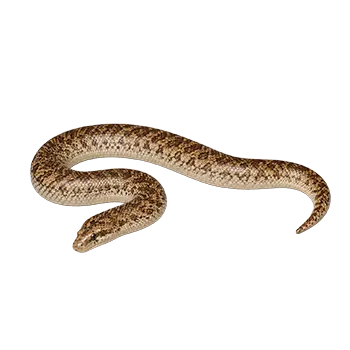
The Arabian Sand Boa (Eryx jayakari) is a small, fossorial snake endemic to the arid deserts and sandy plains of the Arabian Peninsula. Its range encompasses much of the sand sea terrain of Saudi Arabia, the United Arab Emirates, Oman, Yemen, Kuwait, and parts of southern Iran. The species was first formally described by the Belgian-British zoologist George Albert Boulenger in 1888, based on specimens collected during survey expeditions in the region. Boulenger named the species in honor of Colonel S.G. Jayakar, a British military surgeon and naturalist stationed in Muscat, Oman, who contributed extensively to the zoological documentation of Arabian fauna during the late nineteenth century.

The circumstances of the species' scientific discovery reflect the broader pattern of European naturalists cataloging Arabian wildlife during the colonial era. Jayakar, stationed at a military hospital in Muscat, spent his free time collecting and preserving animal specimens that he shipped back to the British Museum of Natural History in London. His contributions included not only the sand boa that would bear his name but also numerous species of fish, reptiles, and mammals previously unknown to Western science. The naming of Eryx jayakari thus represents a moment when the longstanding indigenous knowledge of Arabian desert fauna intersected with the European tradition of formal taxonomic description.

Prior to its scientific classification, the Arabian Sand Boa had been a familiar presence in the desert landscape for millennia. Bedouin communities and settled populations throughout the Arabian Peninsula were well acquainted with the small, blunt-tailed snake that spent the majority of its life buried beneath the sand. Its unique appearance, particularly its dorsally positioned eyes and wedge-shaped head adapted for subterranean movement, made it readily distinguishable from other snakes in the region. The gap between centuries of local familiarity and the relatively late date of formal scientific description underscores how much of the region's natural history remained uncatalogued by European science until the latter decades of the nineteenth century.

Indigenous Knowledge & Historical Roles

The Bedouin and other indigenous communities of the Arabian Peninsula developed detailed practical knowledge of the Arabian Sand Boa over many centuries of coexistence in shared desert environments. Nomadic herders and desert travelers recognized the snake's burrowing habits and understood that it posed no danger to humans or livestock. Unlike the venomous vipers and cobras that also inhabit the region, the Arabian Sand Boa was generally regarded with indifference or mild curiosity rather than fear, a distinction that reflects the sophisticated herpetological awareness embedded in traditional desert knowledge systems.

In practical terms, the sand boa's presence in an area was sometimes interpreted as an indicator of ecosystem health, since the snake's diet of small lizards, geckos, and invertebrates connected it to broader food webs within desert habitats. Bedouin oral traditions preserved observations about the snake's seasonal activity patterns, noting that it emerged more frequently during cooler months and retreated deeper into the sand during the extreme heat of summer. This kind of accumulated ecological knowledge, transmitted across generations through storytelling and direct instruction, constituted a rich but largely unwritten natural history of the species.

The Arabian Sand Boa also occupied a peripheral but noteworthy place in the broader cultural context of snakes in Arabian and Islamic tradition. While much of the folklore surrounding snakes in the region centered on larger and more dangerous species, the sand boa's harmless nature and peculiar appearance occasionally earned it specific mention in local accounts. Its small size, blunt tail that can be mistaken for a second head, and habit of lying in ambush just beneath the sand surface made it a distinctive creature in the desert bestiary. Some regional folk names for the snake reference its tail shape or its burrowing behavior, reflecting the close observational detail that characterized traditional Arabian natural history.

Cultural Symbolism & Folklore

Snakes occupy a complex position in the cultural and spiritual traditions of the Arabian Peninsula, and the Arabian Sand Boa contributes its own distinctive thread to this tapestry. In pre-Islamic Arabian cultures, serpents appeared in art, poetry, and oral narrative with a range of symbolic associations including guardianship, hidden knowledge, and the dangers of the unseen world. The sand boa's subterranean lifestyle lent itself to associations with concealment and the mysteries that lie beneath the surface of the visible desert landscape.

Islamic tradition, which became the dominant cultural framework across the Arabian Peninsula from the seventh century onward, carried forward some of these earlier symbolic associations while adding new layers of meaning. Classical Arabic literature and natural history texts, including works by scholars such as al-Jahiz in the ninth century and al-Damiri in the fourteenth century, catalogued the snakes of the known world and discussed their properties, behaviors, and cultural significance. While these encyclopedic works did not always distinguish between species with the precision of modern taxonomy, the descriptions of small, burrowing desert snakes in such texts are consistent with what we now recognize as sand boas.

In regional folklore, the Arabian Sand Boa's blunt tail has generated its own body of popular belief. In some communities, the snake was referred to by names that translate roughly to "two-headed snake" due to the superficial resemblance between its head and tail. This feature occasionally inspired cautionary tales or folk explanations, adding a layer of local mythology to an otherwise unassuming animal. The tendency of the sand boa to remain hidden beneath the sand and strike suddenly at passing prey also contributed to its reputation as a creature of patience and stealth, qualities that carried metaphorical weight in cultures that valued endurance and strategic thinking in the harsh desert environment.

Modern cultural attitudes toward the Arabian Sand Boa in the Gulf states reflect a broader regional shift toward valuing native wildlife as part of national heritage. Environmental awareness campaigns in countries such as the UAE and Oman increasingly feature native species, including the sand boa, as emblems of the desert ecosystem that underpin cultural identity. This contemporary framing reinterprets the snake not as a mere curiosity or hazard of desert life but as a living link to the natural heritage of the Arabian Peninsula.

The Herpetoculture Movement

The Arabian Sand Boa entered the international reptile-keeping hobby relatively recently compared to more widely distributed sand boa species such as the Kenyan Sand Boa (Gongylophis colubrinus). During the 1990s and early 2000s, a small number of captive specimens began appearing in specialist collections in Europe and North America, initially sourced from the pet trade networks operating out of Gulf states. The species' diminutive size, docile temperament, and unusual appearance quickly attracted interest among hobbyists already familiar with other members of the sand boa family.

Early captive husbandry of the Arabian Sand Boa presented challenges that required keepers to develop species-specific approaches. The snake's highly fossorial nature meant that standard enclosure setups used for other small boas were not always appropriate. Keepers learned that deep, fine sand substrates were essential to allow natural burrowing behavior, and that the species required lower humidity levels than many other commonly kept snakes. Feeding also posed initial difficulties, as some wild-caught individuals were reluctant to accept commercially available prey items, necessitating patient acclimation and sometimes creative feeding strategies.

As captive breeding programs became established, the availability of captive-born Arabian Sand Boas increased, reducing dependence on wild-caught imports and improving the overall health and adaptability of animals entering the hobby. Breeders documented the species' reproductive biology in captivity, noting its relatively small clutch sizes and the extended gestation periods typical of viviparous sand boas. These observations contributed to a growing body of practical husbandry literature that made the species more accessible to a wider range of keepers.

The Arabian Sand Boa's appeal within herpetoculture rests not only on its manageable size and calm disposition but also on its distinctive morphology. The dorsally positioned eyes, flattened head profile, and stubby tail give the species an appearance unlike most other commonly kept snakes, making it a conversation piece in any collection. Online reptile communities and social media have amplified this appeal, with photographs of the species' characteristically wide-eyed expression generating considerable popular interest that extends well beyond the dedicated reptile-keeping community.

Scientific Study & Classification

The taxonomic placement of the Arabian Sand Boa has undergone revision as herpetological classification methods have evolved. Originally placed in the genus Eryx alongside other Old World sand boas, the species has remained within this genus through most subsequent revisions, though the broader taxonomy of the family Erycidae (sometimes treated as a subfamily, Erycinae, within the Boidae) has been subject to ongoing debate. Molecular phylogenetic analyses conducted in the early twenty-first century have clarified some of the evolutionary relationships among sand boas, confirming that the Arabian Sand Boa represents a distinct lineage that diverged from its closest relatives in adaptation to the specific conditions of the Arabian desert.

Field studies of the Arabian Sand Boa in its native habitat have been relatively limited compared to research on more accessible snake species, owing in part to the logistical challenges of studying a small, nocturnal, and almost entirely subterranean animal in remote desert environments. Nevertheless, ecological surveys conducted in Oman, the UAE, and Saudi Arabia have documented the species' habitat preferences, revealing its association with areas of loose, fine-grained sand where it can burrow efficiently. These studies have also recorded its diet in the wild, which consists primarily of small lizards and geckos that share its sandy habitat.

Research into the Arabian Sand Boa's physiological adaptations has highlighted features that make it exceptionally well suited to desert life. Its smooth, polished scales reduce friction during subterranean movement, while its dorsally oriented eyes allow it to lie buried with only the top of its head exposed, scanning for approaching prey. Studies of its thermoregulatory behavior have shown that the species exploits the thermal gradient within the sand column, moving vertically to maintain its preferred body temperature as surface conditions change throughout the day and across seasons.

Conservation-focused research has begun to assess the status of Arabian Sand Boa populations across their range. While the species is not currently considered globally threatened, localized habitat degradation from urbanization, off-road vehicle activity, and agricultural expansion in parts of the Arabian Peninsula has raised concerns about regional population declines. Researchers have emphasized the need for baseline population surveys and long-term monitoring to detect trends that might necessitate targeted conservation interventions.

The Species Today

Today the Arabian Sand Boa occupies a unique position at the intersection of regional heritage and global herpetological interest. In its native range, the species continues to inhabit the sandy deserts and gravel plains where it has persisted for millennia, though the rapid pace of development across the Gulf states has altered or eliminated habitat in some areas. Conservation initiatives in countries such as the UAE and Oman have begun to incorporate the Arabian Sand Boa into broader efforts to document and protect native reptile diversity, recognizing that even common species require monitoring in the face of accelerating environmental change.

In the captive reptile community, the Arabian Sand Boa has grown from an obscure specialist species to a moderately popular choice among hobbyists who appreciate its unusual characteristics. Captive breeding programs in Europe, North America, and increasingly within the Gulf states themselves produce a steady supply of healthy, captive-bred animals that enter the hobby without placing pressure on wild populations. The species' small size, minimal space requirements, and generally calm temperament make it particularly well suited to keepers with limited space or those seeking an alternative to larger, more demanding snake species.

The Arabian Sand Boa has also gained a measure of broader cultural visibility through social media and popular science coverage. Photographs highlighting the species' distinctive face, with its small, upward-facing eyes perched atop a flattened head, have circulated widely online and introduced millions of people to a snake they might never otherwise have encountered. This viral popularity, while sometimes superficial, has served as a gateway to deeper public engagement with desert ecology and reptile conservation.

Looking ahead, the future of the Arabian Sand Boa will depend on the continued health of its desert habitats, the responsible management of the captive trade, and sustained scientific interest in its biology and ecology. The species' journey from an unnamed desert dweller known only to Bedouin communities, through its formal scientific description in the nineteenth century, to its current status as both a regional heritage species and a globally recognized reptile pet, illustrates the evolving relationship between human cultures and the wildlife with which they share the landscape.

Always consult a qualified professional before making any health-related decisions. This content is provided for informational reference only and should not replace professional guidance specific to your animal.