
Origins & Native Habitat

Chinchillas are native to the Andes Mountains of South America, where they inhabit rocky, arid slopes at elevations ranging from roughly 9,000 to 16,000 feet. Two species exist: Chinchilla chinchilla (the short-tailed chinchilla) and Chinchilla lanigera (the long-tailed chinchilla). The long-tailed species is the ancestor of virtually all domestic chinchillas kept as pets and raised commercially today.

The harsh Andean environment shaped the chinchilla's most distinctive feature — its extraordinarily dense fur. With roughly 20,000 hairs per square centimeter, chinchilla fur is among the densest of any land mammal, providing insulation against the cold, dry mountain air. This remarkable coat also made the chinchilla a target for human exploitation, a factor that would define much of the animal's history.

Wild chinchillas are social animals that live in colonies called herds, sometimes numbering in the hundreds. They are crepuscular, most active during dawn and dusk, and shelter in rock crevices during the heat of the day. Their natural diet consists of grasses, seeds, bark, and other plant material adapted to the sparse vegetation of the high Andes. These behavioral and dietary traits remain evident in domestic chinchillas today.

The name chinchilla is believed to derive from the Chincha people of the Andes, who inhabited parts of what is now Peru and valued the animal's fur long before European contact. The Chincha and other indigenous groups used chinchilla pelts for clothing and ceremonial purposes, integrating the animal into their cultural and economic life.

Historical Roles & the Fur Trade

The chinchilla's relationship with humans has been defined largely by its fur. Indigenous Andean peoples hunted chinchillas for their pelts for centuries, but the scale of harvesting remained sustainable until European colonization introduced global demand. Spanish colonizers in the sixteenth century recognized the exceptional quality of chinchilla fur and began exporting pelts to Europe, where they became prized luxury goods among the aristocracy.

By the eighteenth and nineteenth centuries, commercial hunting had escalated dramatically. Chinchilla fur was considered the softest and most luxurious available, commanding extraordinary prices in European and later American markets. A single full-length chinchilla coat required hundreds of pelts, and the resulting demand drove industrial-scale trapping across the Andes. Millions of chinchillas were harvested during this period.

The consequences were devastating. By the early twentieth century, wild chinchilla populations had collapsed to the point of near extinction. Both species were driven from most of their historical range, surviving only in small, fragmented populations in remote areas of Chile, Bolivia, and Argentina. The severity of the decline prompted early conservation efforts, including hunting bans enacted by Chile, Peru, Bolivia, and Argentina between 1910 and 1929.

Despite these protections, enforcement proved difficult in the rugged Andean terrain, and illegal poaching continued for decades. The wild chinchilla remains critically endangered today, with the short-tailed species in particularly dire straits. The story of the chinchilla fur trade stands as a cautionary tale about the consequences of unsustainable commercial exploitation of wildlife.

Cultural Symbolism

In Andean indigenous cultures, the chinchilla held practical and symbolic significance. The Chincha, Inca, and other peoples valued its fur as a material of prestige, and chinchilla-fur garments were associated with status and ceremony. Archaeological evidence suggests that chinchilla pelts were traded across significant distances, indicating their value as a commodity within pre-Columbian exchange networks.

In European and later global culture, chinchilla fur became synonymous with extreme luxury. Owning a chinchilla coat signaled wealth and exclusivity, and the fur appeared in fashion magazines, on celebrities, and in the wardrobes of royalty throughout the nineteenth and twentieth centuries. This association with opulence gave the chinchilla a cultural identity distinct from most other small mammals — it was known primarily as a luxury commodity rather than a living animal.

The rise of the animal welfare and anti-fur movements in the late twentieth century reframed the chinchilla's cultural meaning. Activists highlighted the cruelty of fur farming and the near extinction of wild populations, transforming the chinchilla from a symbol of luxury into a symbol of conservation concern. This shift in perception contributed to growing interest in chinchillas as companion animals rather than fur sources.

Today, the chinchilla occupies a dual symbolic position. In conservation circles, it represents the fragility of wild species in the face of commercial exploitation. In the pet community, it symbolizes the possibility of redemption — an animal that nearly vanished from the earth now thrives in the care of devoted owners worldwide.

Breed Clubs & Breeding Standards

The organized chinchilla fancy emerged in the mid-twentieth century as domestic chinchilla populations grew large enough to support breeding programs focused on companionship and exhibition rather than fur production. The first chinchilla breed clubs established standards for evaluating animals based on fur quality, body conformation, color, and temperament.

In the United States, organizations such as the Mutation Chinchilla Breeders Association and the Empress Chinchilla Breeders Cooperative developed standards and hosted shows where breeders could exhibit their animals and compete for recognition. These shows evaluate chinchillas on criteria including fur density, texture, and clarity of color; body size and proportion; head shape and ear set; and overall health and condition.

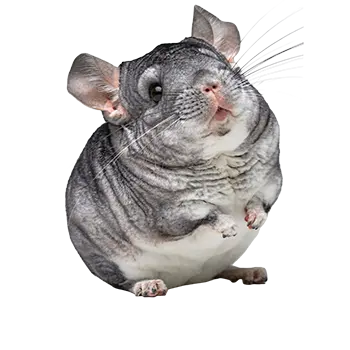
Color mutations have been a major focus of breeding programs. While the standard gray chinchilla — with its blue-gray fur and white belly — remains the most common and is often considered the benchmark, breeders have developed numerous color variations including white, black velvet, beige, violet, sapphire, and various combinations. Each mutation is governed by specific genetic inheritance patterns, and breeding for color has become both a science and an art within the fancy.

The chinchilla fancy maintains a productive tension between pet-oriented and show-oriented breeding philosophies. Pet breeders emphasize temperament, health, and longevity, while show breeders prioritize fur quality and conformation to visual standards. The best breeders seek to excel in both areas, producing chinchillas that are beautiful, healthy, and well-socialized — animals that serve as both excellent companions and worthy representatives of the species.

The Chinchilla Today

The domestic chinchilla has established itself as a popular and cherished companion animal worldwide. Their long lifespan — often exceeding fifteen years with proper care — distinguishes them from many other small mammals and allows owners to develop deep, lasting bonds with their animals. Their soft fur, expressive faces, and playful personalities make them appealing to a broad range of pet owners.

The pet chinchilla community has grown substantially with the rise of the internet and social media. Online forums, dedicated websites, and social media groups provide chinchilla owners with access to a wealth of husbandry information, veterinary guidance, and peer support. These communities have helped standardize care practices, combat misinformation, and connect chinchilla enthusiasts across geographic boundaries.

Conservation of wild chinchilla populations remains an urgent concern. Both wild species are listed on the IUCN Red List, with the short-tailed chinchilla classified as endangered and the long-tailed chinchilla as vulnerable. Conservation organizations in Chile and internationally work to protect remaining wild habitat, monitor populations, and combat illegal poaching. Some organizations have explored the potential for reintroduction programs using genetically diverse captive populations.

The chinchilla's journey from hunted commodity to beloved pet reflects broader shifts in human attitudes toward animals. As awareness of animal welfare, conservation biology, and the emotional lives of non-human animals has grown, the chinchilla has transitioned from a creature valued primarily for its fur to one valued for its companionship, personality, and intrinsic worth. This transformation, while incomplete — fur farming continues in some countries — represents meaningful progress in the human-animal relationship.

Notable Individuals & Pioneers

Mathias F. Chapman is the single most important figure in the history of the domestic chinchilla. A mining engineer working in Chile in the early 1920s, Chapman became fascinated by chinchillas and conceived the idea of bringing them to the United States for commercial breeding. After obtaining special permission from the Chilean government, he spent three years trapping eleven chinchillas from the wild, carefully acclimating them to lower altitudes over an extended period to prevent the shock that had killed previous attempts at translocation.

Chapman arrived in California in 1923 with his small group of chinchillas, which became the founding stock for virtually the entire North American domestic chinchilla population. His patient, methodical approach to capture and acclimation — he reportedly moved the animals downhill in stages over more than a year — demonstrated a level of care and foresight that was unusual for the era. Nearly all pet and ranch chinchillas in the United States trace their ancestry to Chapman's original eleven.

In the decades following Chapman's importation, numerous breeders contributed to the development of the domestic chinchilla through selective breeding for temperament, health, and color variation. Breeders who identified and stabilized color mutations — such as the first white, beige, and black velvet chinchillas — expanded the genetic palette available to the fancy and helped drive interest in chinchillas as exhibition animals.

On the conservation front, researchers and organizations working in Chile's Reserva Nacional Las Chinchillas and other protected areas have devoted careers to studying and protecting wild chinchilla populations. Their work, often conducted in remote and challenging conditions, has provided critical data on chinchilla ecology, population dynamics, and threats, informing conservation strategies that offer hope for the species' long-term survival in the wild.

Always consult a qualified professional before making any health-related decisions. This content is provided for informational reference only and should not replace professional guidance specific to your animal.