
Wildlife Documentaries & Television

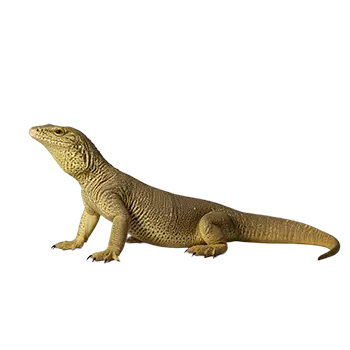
The Argus Monitor has appeared in a number of wildlife documentaries and television programs focused on Australian and New Guinean fauna, though it has rarely been the sole subject of a production. Its most frequent appearances occur within broader narratives about the ecology of northern Australia, where it serves as a representative of the continent's remarkable varanid diversity. Documentary crews working in the Top End and Kimberley regions have filmed Argus Monitors engaged in behaviors that make compelling television: patrolling territories with a purposeful, muscular gait; excavating crocodile nests to consume eggs; and engaging in ritualized combat with rival males during the breeding season. These sequences have contributed footage to productions aired on networks that specialize in natural history programming, bringing the species to audiences that might otherwise never encounter it.

The species has featured prominently in documentary segments addressing the ecological catastrophe of the cane toad invasion in Australia. Several productions examining the impact of Rhinella marina on native wildlife have used the Argus Monitor as a case study, showing the devastating consequences of a naive predator consuming a fatally toxic prey item. Footage of monitors approaching and consuming cane toads, followed by discussion of the resulting population declines, has served as powerful visual storytelling that communicates the severity of the invasive species crisis to general audiences. These appearances, while somber in context, have arguably done more to raise the public profile of the Argus Monitor than any other form of media exposure.

Television programs focused on reptile keeping and the exotic pet trade have also featured the Argus Monitor, typically in segments that profile advanced keepers or visit breeding facilities. Shows that tour reptile expos or profile notable collections have included Argus Monitors as examples of impressive large monitor species available in captivity. These appearances tend to emphasize the animal's size, intelligence, and the commitment required to house it properly, serving an educational function for viewers who may be unfamiliar with the species. The visual impact of a large, alert Argus Monitor being handled by an experienced keeper translates well to the television format and has helped position the species as an aspirational animal within the reptile-keeping community.

In Australia specifically, the Argus Monitor has appeared in regional natural history programming produced by the Australian Broadcasting Corporation and other domestic broadcasters. These programs, often focused on the ecology and wildlife of specific regions or national parks, present the species within its native landscape context. The Argus Monitor's conspicuous size and diurnal activity pattern make it a relatively cooperative subject for camera crews, as it can be observed and filmed during daylight hours without the specialized night-vision equipment required for many other reptile species.

Online Media & Social Platforms

The rise of social media and video-sharing platforms has transformed the way the Argus Monitor is perceived and discussed outside of specialist herpetological circles. Platforms such as YouTube, Instagram, and TikTok have become primary venues for reptile keepers to share footage of their animals, and the Argus Monitor's combination of large size, striking appearance, and interactive behavior makes it a natural subject for content creation. Videos showing Argus Monitors being target-trained, responding to their keepers' voices, or exploring enrichment setups in their enclosures routinely attract viewership that extends well beyond the core reptile-keeping audience, introducing the species to people who may have had no prior awareness of monitor lizards.

YouTube channels dedicated to reptile husbandry have produced detailed care guides, enclosure build tutorials, and feeding videos featuring the Argus Monitor. These longer-format videos serve a dual function, operating both as entertainment and as practical educational resources for prospective and current keepers. The platform's recommendation algorithm has amplified the reach of monitor lizard content generally, and the Argus Monitor benefits from this broader trend. Some of the most-viewed Argus Monitor videos on YouTube focus on dramatic moments — a particularly large feeding response, an animal free-roaming in a keeper's home, or the hatching of a clutch of eggs — that generate engagement through their novelty and visual impact.

Instagram and TikTok have favored shorter, more visually immediate content that showcases the Argus Monitor's aesthetic qualities. The species' golden-spotted patterning photographs exceptionally well, and close-up images of the animal's head, with its alert expression and constantly flickering tongue, have become a recognizable visual motif within the reptile segment of these platforms. Reptile-focused accounts with substantial followings frequently feature Argus Monitors alongside other large varanids, and the resulting cross-pollination of audiences has contributed to the species' growing name recognition among younger demographics who consume most of their media through mobile platforms.

Online forums and discussion communities, while predating social media in the history of the internet, continue to serve as important venues for substantive discourse about the Argus Monitor. Platforms such as dedicated monitor lizard forums, reptile-focused subreddit communities, and Facebook groups provide spaces for detailed discussions about husbandry, genetics, breeding projects, and veterinary care that are difficult to sustain in the short-form formats favored by newer social media platforms. These communities function as living archives of keeper experience, with threads spanning years or even decades that document the evolution of best practices for Argus Monitor care. The depth of knowledge concentrated in these spaces represents a significant collective resource that complements the more visually oriented content found on mainstream social media.

The cumulative effect of the Argus Monitor's presence across online media has been a meaningful expansion of the species' cultural visibility. An animal that was known primarily to specialist herpetologists and dedicated reptile enthusiasts as recently as the early 2000s is now recognizable to a much broader audience. This expanded awareness carries both benefits and risks: it drives interest in conservation and responsible keeping, but it also creates the potential for impulse acquisitions by individuals who are captivated by a social media video without fully understanding the long-term commitment that a large, intelligent monitor lizard demands.

Photography & Visual Arts

The Argus Monitor has attracted the attention of wildlife photographers working across its range, and the resulting body of photographic work has played an important role in shaping public perception of the species. Professional and serious amateur photographers operating in northern Australia and New Guinea have produced striking images of wild Argus Monitors in their natural habitats, capturing the animals basking on termite mounds, foraging along creek banks, and displaying the territorial postures that characterize male-male interactions during the breeding season. The species' diurnal habits and its tendency to bask in open, well-lit positions make it more accessible to photographers than many other large reptiles, and the golden-yellow ocellated patterning against a dark ground color creates images with strong visual contrast.

Within the captive-keeping community, photography of Argus Monitors has become a genre unto itself. Keepers with photographic skills produce detailed portrait-style images that highlight the animal's intricate scalation, the luminous quality of its eyes, and the textural contrast between the smooth ventral scales and the heavily keeled dorsal surface. These images circulate through social media, forum galleries, and reptile-focused publications, and the best examples have been featured in photography competitions organized by herpetological societies and reptile magazines. The controlled lighting conditions possible in a captive setting allow for a level of detail and artistic composition that is difficult to achieve in field photography, and some keepers have developed considerable skill in presenting their animals in ways that convey both scientific accuracy and aesthetic beauty.

In the domain of scientific illustration, monitor lizards including the Argus Monitor have been subjects for artists working within the tradition of natural history art. Detailed plate illustrations in herpetological field guides and taxonomic monographs depict the species' diagnostic features — scalation patterns, color variation between subspecies, and anatomical proportions — with a precision that serves both identification and aesthetic purposes. Contemporary scientific illustrators continue to produce work featuring Australian varanids for use in field guides, educational materials, and museum displays, and the Argus Monitor's distinctive spotted patterning makes it a visually rewarding subject within this genre.

Indigenous Australian artists have depicted monitor lizards in traditional and contemporary art forms for millennia, and while these works typically represent the monitor genus broadly rather than isolating individual species, the Argus Monitor is almost certainly among the animals referenced in works originating from communities within its range. Contemporary Aboriginal artists working in acrylic on canvas, printmaking, and textile design continue to produce monitor-themed works for both the domestic and international art markets. These pieces carry cultural significance that extends well beyond their visual content, encoding knowledge about the animal's place within specific Dreaming narratives and its ecological relationships within the artist's Country.

Scientific Literature & Educational Publishing

The Argus Monitor occupies a significant position in the scientific literature on varanid lizards, appearing in publications that span ecology, conservation biology, toxicology, evolutionary biology, and veterinary science. The species has been the subject of dedicated research papers examining its movement ecology, dietary habits, reproductive biology, and physiological responses to environmental stressors. Its role in the cane toad narrative has generated a particularly rich body of literature, with studies tracking population-level responses to toad invasion, documenting lethal toxic ingestion events, and investigating the tantalizing possibility of evolved or learned toad avoidance in surviving populations. This research has positioned the Argus Monitor as a key species in discussions about the ecological impacts of invasive species in tropical Australia.

Textbooks and reference works on monitor lizards frequently feature the Argus Monitor as a representative of the medium-to-large-bodied Australian varanid grade. Comprehensive treatments of the genus Varanus, including major works published in both English and German, include species accounts for Varanus panoptes that summarize its taxonomy, distribution, ecology, and conservation status. These accounts serve as primary references for students, researchers, and advanced hobbyists seeking authoritative information about the species. The Argus Monitor's inclusion in these works reflects its ecological importance within the Australian reptile fauna and its prominence in both scientific and herpetoculture contexts.

Husbandry-focused publications have contributed substantially to the written record on the Argus Monitor. Books and magazine articles dedicated to monitor lizard care in captivity routinely include chapters or sections on the species, covering enclosure design, temperature and lighting requirements, dietary management, breeding protocols, and common health concerns. The reptile magazine sector, encompassing both print and digital publications, has featured numerous articles on the Argus Monitor over the past two decades, ranging from introductory care sheets aimed at prospective keepers to in-depth breeding reports from experienced producers. These publications serve as conduits for the transmission of practical knowledge that complements the more theoretical content found in scientific journals.

Educational materials produced for schools, museums, and nature interpretation centers in Australia frequently reference the Argus Monitor as part of broader presentations on Australian wildlife and ecology. The species' role as a large terrestrial predator, its interactions with other significant fauna such as crocodiles and cane toads, and its cultural importance to Indigenous communities make it a useful teaching subject for educators seeking to illustrate ecological concepts in an Australian context. Museum displays in institutions across northern Australia include preserved specimens, photographic panels, and interpretive text that introduce visitors to the Argus Monitor and its place within the regional ecosystem.

Gaming, Fiction & Broader Pop Culture

The Argus Monitor's presence in gaming, fiction, and the broader pop culture landscape is more diffuse than that of the most iconic reptiles — the Komodo dragon, the crocodile, the chameleon — but it contributes to a growing cultural awareness of monitor lizards as a group. Video games set in Australian or tropical environments occasionally feature monitor lizard characters or enemies that draw visual and behavioral inspiration from species like the Argus Monitor, even when the in-game creature is not identified by species name. The general monitor lizard archetype in gaming — a large, fast, aggressive reptile encountered in wilderness or desert environments — owes much of its visual vocabulary to the proportions, coloration, and movement patterns of real varanid species, the Argus Monitor among them.

In fiction, monitor lizards appear in novels, short stories, and graphic narratives set in Australia and the broader Indo-Pacific region, where they serve as elements of local color, ecological atmosphere, or, occasionally, plot-relevant fauna. Thriller and adventure novels set in the Australian outback or the jungles of New Guinea sometimes incorporate encounters with large monitor lizards as set pieces that convey the wildness and unfamiliarity of the landscape to readers. While these fictional monitors are rarely identified to species level, the Argus Monitor's status as one of the most commonly encountered large varanids across northern Australia makes it a plausible real-world referent for many such literary appearances.

The species' mythological namesake provides an indirect but culturally resonant connection to one of the most enduring figures in Western classical tradition. The Argus of Greek mythology, tasked by Hera with guarding the nymph Io and equipped with a hundred eyes that ensured eternal vigilance, lends the monitor its scientific epithet panoptes and its common name. This classical allusion, while purely nomenclatural in origin, occasionally surfaces in popular writing about the species, where authors draw parallels between the mythical guardian's all-seeing gaze and the monitor's alert, watchful demeanor. The name itself confers a certain literary cachet that more prosaic common names might not, and it has likely contributed to the species' appeal among keepers and enthusiasts who appreciate the resonance between the animal's behavior and its etymological heritage.

Within the reptile-keeping subculture, the Argus Monitor has achieved a status that, while not reaching the mainstream cultural penetration of species like the bearded dragon or ball python, carries significant weight among enthusiasts. The species is recognized as a benchmark of advanced monitor keeping, and ownership of a well-maintained Argus Monitor carries a degree of prestige within the community. Reptile expos, online communities, and breeder networks have created a micro-culture around the species that includes shared terminology, aesthetic preferences regarding color and pattern, and ongoing debates about husbandry best practices that collectively constitute a form of pop culture specific to the herpetocultural world.

The broader cultural trajectory of the Argus Monitor suggests a species whose public profile is likely to continue growing. As monitor lizards in general receive increasing attention from media, conservation organizations, and the expanding global reptile-keeping community, the Argus Monitor is well positioned to benefit from this rising tide of interest. Its combination of impressive physical presence, documented intelligence, manageable temperament relative to its size, and the compelling ecological narratives that surround it — from crocodile nest raiding to cane toad survival — provide ample material for the kind of storytelling that drives cultural engagement with wildlife in the modern media landscape.

Always consult a qualified professional before making any health-related decisions. This content is provided for informational reference only and should not replace professional guidance specific to your animal.