
Origins & Natural Range

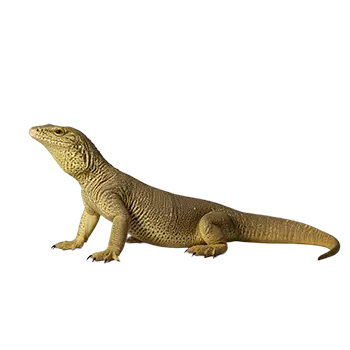
The Argus Monitor (Varanus panoptes) is a large, powerfully built monitor lizard native to the northern regions of Australia and the southern lowlands of New Guinea. Its species name, panoptes, derives from the Greek mythological figure Argus Panoptes, a giant with a hundred eyes, an allusion to the numerous ocellated spots that adorn the animal's dorsal surface. The species occupies one of the broadest geographic ranges of any Australian monitor, extending from the Kimberley region of Western Australia across the Top End of the Northern Territory, through the savannas and woodland corridors of Queensland, and northward into the southern provinces of Papua New Guinea and parts of Indonesian West Papua. This expansive distribution reflects the species' ecological versatility, a trait that distinguishes it from many of its more narrowly endemic relatives within the family Varanidae.

Three subspecies are currently recognized by most taxonomic authorities. Varanus panoptes panoptes, the nominate form, is found across the northern Australian mainland and represents the population most commonly encountered in both the wild and the reptile trade. Varanus panoptes horni, sometimes referred to as the Horn's Monitor, inhabits the island of New Guinea and surrounding smaller islands, and tends to display slightly different scalation and color patterning adapted to its more tropical, forested environment. A third subspecies, Varanus panoptes rubidus, occupies the arid interior and western desert regions of Australia and is distinguished by its more reddish-brown coloration and adaptation to drier conditions. The recognition of these subspecies underscores the considerable morphological and ecological variation within the species across its range.

In terms of body size, the Argus Monitor ranks among the larger varanids found on the Australian continent, though it falls well short of the massive proportions reached by the Perentie (Varanus giganteus). Adults of the nominate subspecies typically reach total lengths between 90 and 140 centimeters, with exceptional individuals occasionally exceeding 150 centimeters. Males tend to be appreciably larger than females, a pattern of sexual dimorphism common across the genus Varanus. The body plan is robust and muscular, with strong limbs, sharp claws suited for digging and climbing, and a laterally compressed tail that can be wielded defensively. The species' overall appearance conveys an impression of physical capability that is borne out by its behavior in the wild.

Ecologically, the Argus Monitor is a generalist predator with a remarkably varied diet. Wild populations consume insects, crustaceans, small mammals, frogs, bird eggs, nestling birds, other reptiles including smaller lizards and snakes, fish, and carrion. The species is an adept excavator, digging into soil and sand to access buried eggs of sea turtles and crocodiles, a behavior that has brought it into occasional conflict with conservation programs for those species. Its foraging strategy is active and wide-ranging, with individuals covering substantial distances in a single day as they patrol territories that can span several hectares. This combination of dietary flexibility, physical endurance, and behavioral adaptability has allowed the Argus Monitor to thrive across a diverse array of habitats, from monsoon vine thickets and riparian corridors to open grasslands and sandy coastal flats.

Indigenous Cultural Significance

Monitor lizards occupy a prominent position in the cultural traditions of Aboriginal Australian and Torres Strait Islander peoples, and the Argus Monitor, as one of the most visible and widely distributed large monitors across the tropical north, features within this broader cultural framework. For Indigenous communities whose Country overlaps with the species' range, monitor lizards — known by many different names across the hundreds of Aboriginal language groups — have functioned as food resources, totemic animals, subjects of artistic depiction, and characters in the narrative traditions that collectively form the Dreaming. The relationship between these communities and the large monitors of the northern landscapes stretches back tens of thousands of years, constituting one of the longest continuous associations between a human culture and a reptile species anywhere on Earth.

As a food source, larger monitor species including the Argus Monitor have been hunted by Aboriginal Australians using techniques that reflect intimate ecological knowledge. Hunters tracked monitors by reading subtle signs in the landscape: claw marks on tree bark, tail drag marks in sandy substrate, the distinctive wide-set track pattern left by a walking varanid, and the freshly disturbed soil at the entrance to an active burrow. Animals were extracted from burrows by digging or smoked out, and the meat was typically roasted in coals or earth ovens. The fat reserves carried by monitors, particularly during the late dry season, made them a nutritionally significant prey item in environments where large game was not always available. This practical dimension of the relationship between Aboriginal peoples and monitor lizards was embedded within a broader framework of reciprocal obligation and seasonal resource management that governed hunting practices.

In the visual arts, monitor lizards are among the most frequently depicted reptiles in Aboriginal rock art, bark painting, and contemporary Indigenous art. The elongated body, splayed limbs, and distinctive head shape of the monitor form lend themselves to powerful artistic representation, and monitor motifs appear in artwork ranging from ancient ochre paintings in Arnhem Land rock shelters to contemporary acrylic paintings produced for the international art market. While many of these depictions represent the monitor genus broadly rather than a specific species, the Argus Monitor's prominence across the Top End landscape means it is likely among the animals referenced in works originating from communities within its range.

It is essential to note that specific Dreaming narratives, songlines, and ceremonial associations tied to particular animal species are often held as restricted knowledge within Aboriginal communities. What can be stated in general terms is that monitor lizards are woven into the cosmological fabric of many northern Australian Indigenous cultures, appearing as ancestral beings, as participants in creation events, and as figures whose behavior provides moral or ecological instruction. The depth and specificity of this cultural knowledge far exceeds anything documented in Western herpetological science, representing a parallel tradition of understanding that has been maintained through oral transmission across hundreds of generations.

Western Scientific Discovery & Classification

The Argus Monitor entered the Western scientific record through the work of nineteenth-century naturalists engaged in the systematic documentation of the vast and unfamiliar fauna of the Australasian region. The species was formally described by John Edward Gray in 1838, though the taxonomic history of the animal has involved considerable subsequent revision. Gray, who spent much of his career at the British Museum of Natural History in London, worked extensively with specimens shipped from the expanding frontiers of British colonial exploration, and his description of Varanus panoptes was based on material originating from the northern Australian coast. The choice of the epithet panoptes, with its reference to the all-seeing guardian of Greek mythology, was characteristic of the classical allusions that pervaded nineteenth-century zoological nomenclature.

The taxonomic journey of the Argus Monitor through the twentieth century reflected the broader challenges faced by herpetologists working with a large and morphologically diverse genus. Various populations were at different times assigned to separate species, lumped together, or rearranged within the subgeneric classifications that researchers proposed for the unwieldy genus Varanus. The current three-subspecies arrangement — panoptes, horni, and rubidus — was stabilized through a combination of morphological analysis, biogeographic reasoning, and, in more recent decades, molecular phylogenetic data. Studies using mitochondrial DNA sequences have generally supported the distinctiveness of the three subspecies while confirming their close relationship within the broader varanid phylogeny.

Field research on wild Argus Monitor populations has been conducted intermittently but has yielded valuable ecological insights. Studies in the Northern Territory and Queensland have documented the species' movement patterns, habitat preferences, thermal ecology, and dietary habits. One area of particular research interest has been the Argus Monitor's role as a nest predator of both freshwater and saltwater crocodiles. Researchers monitoring crocodile nesting sites have observed Argus Monitors systematically excavating nests to consume eggs, a behavior that can result in significant egg mortality at some sites. This predator-prey dynamic has generated discussion about the ecological relationships between large Australian reptiles and has occasionally created management tensions where crocodile conservation objectives intersect with the activities of a protected native predator.

The species has also attracted research attention in the context of the invasive cane toad (Rhinella marina) crisis that has swept across northern Australia since the 1930s. As a predator that will readily consume amphibians, the Argus Monitor is vulnerable to lethal ingestion of cane toads, whose parotoid glands contain potent bufotoxins to which native Australian predators have no evolved resistance. Population declines in Argus Monitors have been documented in areas following the arrival of the cane toad front, and the species has become one of several high-profile native predators used to illustrate the cascading ecological damage caused by this invasive species. Some evidence suggests that certain Argus Monitor populations may be developing behavioral avoidance of cane toads or, potentially, physiological tolerance to low doses of the toxin, though this research remains in its early stages.

Rise in Herpetoculture

The Argus Monitor's entry into the global herpetoculture community followed a trajectory shaped by Australia's stringent wildlife export regulations and the species' undeniable appeal as an intelligent, physically impressive, and behaviorally engaging captive animal. Australia effectively prohibited the commercial export of native wildlife beginning in the 1960s, with progressively tighter legislative controls codified in the Wildlife Protection (Regulation of Exports and Imports) Act 1982 and its successor, the Environment Protection and Biodiversity Conservation Act 1999. These laws meant that the international captive population of the nominate Australian subspecies was founded on a very limited number of animals that left the country before the export bans took full effect, supplemented by specimens originating from the New Guinea populations of Varanus panoptes horni, which were not subject to Australian export restrictions.

The Horn's Monitor subspecies from New Guinea consequently played a disproportionately large role in establishing the Argus Monitor in overseas collections during the 1980s and 1990s. Wild-caught horni specimens were exported from Indonesia and Papua New Guinea through the legal wildlife trade channels that operated in those countries, and these animals formed the breeding nucleus for many of the captive lines that exist in the United States, Europe, and Asia today. The distinction between horni and the nominate panoptes subspecies became an important consideration for breeders who sought to maintain taxonomic integrity in their breeding programs, though the two forms are visually similar enough that misidentification and accidental hybridization have occurred.

As captive husbandry techniques for the species matured, the Argus Monitor earned a reputation as one of the more rewarding large monitor species to keep, provided that its considerable space, heat, and enrichment requirements were met. Experienced keepers noted the species' capacity for recognizing individual humans, its willingness to accept food from the hand, and its generally less defensive temperament compared to some other large monitors such as the Nile Monitor or the Water Monitor. These behavioral qualities, combined with the animal's striking appearance — a pattern of golden-yellow ocelli scattered across a dark brown to blackish ground color — made the Argus Monitor increasingly sought after by serious monitor enthusiasts who had the resources to house a large, active lizard.

Breeding success with the Argus Monitor in captivity improved markedly through the 2000s and 2010s as keepers refined protocols for cycling temperatures and photoperiod to simulate seasonal changes, providing appropriate nesting substrates for egg deposition, and managing the incubation of eggs at optimal temperatures and humidity levels. Female Argus Monitors can produce clutches of seven to twenty or more eggs, and multiple clutches per season are possible under good conditions, which facilitated the growth of captive populations and gradually reduced the dependence on wild-caught imports. The availability of captive-bred juveniles at reptile expos and through online breeder networks has made the species more accessible than at any previous point in its captive history, though prices remain higher than for the most common beginner monitor species.

The Argus Monitor community within herpetoculture, while smaller than those devoted to species like the Savannah Monitor or Ackie Monitor, is characterized by a relatively high level of keeper experience and commitment. The species' size and activity level mean that casual or impulse purchases are less common, and the keepers who maintain Argus Monitors tend to be dedicated hobbyists or professional breeders with established infrastructure. Online communities, social media groups, and specialized monitor lizard forums serve as the primary venues for knowledge exchange, with discussions covering enclosure design, dietary management, behavioral observation, and the genetic provenance of breeding stock.

Conservation Status & Future Outlook

The conservation status of the Argus Monitor across its native range presents a mixed picture shaped by the species' broad distribution, its ecological resilience, and the emerging threats that affect large reptilian predators in the tropical Australasian region. The International Union for Conservation of Nature currently lists Varanus panoptes as a species of Least Concern at the global level, reflecting its wide geographic range and the absence of evidence for rapid population decline across the entirety of its distribution. Within Australia, the species is protected under both federal and state or territory wildlife legislation, which prohibits the taking of animals from the wild without appropriate permits and bans commercial export. In New Guinea, the regulatory landscape is more complex, with varying levels of enforcement across national and provincial jurisdictions.

Despite its overall stable conservation status, the Argus Monitor faces localized threats that warrant ongoing monitoring. The cane toad invasion remains the most significant acute threat in Australia, with documented population declines in areas where the toxic amphibian has become established. The speed of the toad front's advance across northern Australia has outpaced the capacity of some monitor populations to adapt, and the loss of large predatory monitors from affected ecosystems has downstream consequences for prey populations and nest predation dynamics. Research into the long-term population recovery of Argus Monitors in areas where cane toads have been present for several decades is ongoing and will be critical to understanding the species' capacity for adaptation.

Habitat modification represents a slower-acting but potentially significant long-term concern. Across parts of the Argus Monitor's Australian range, pastoral land use, mining activity, altered fire regimes, and infrastructure development have changed the structure of the woodland and savanna habitats the species depends upon. While the Argus Monitor has demonstrated a degree of tolerance for disturbed landscapes and can persist in semi-rural environments, the cumulative effect of habitat fragmentation on population connectivity and genetic diversity has not been thoroughly assessed. In New Guinea, deforestation driven by logging, agricultural expansion, and palm oil cultivation poses a more immediate threat to the forested habitats occupied by the horni subspecies.

The role of the captive-keeping community in the broader conservation narrative of the Argus Monitor is a subject of evolving discussion. Captive populations maintain a reservoir of genetic material that could theoretically contribute to reintroduction or population supplementation efforts, though no such programs are currently active or planned for this species. More immediately, the captive community contributes to conservation through public education, by funding research initiatives through donations and purchases of captive-bred animals, and by reducing demand for wild-caught specimens through the production of healthy, well-socialized captive-bred stock. The relationship between in-situ conservation in the species' native range and the ex-situ population maintained by herpetoculturists worldwide represents a model of complementary effort that, while imperfect, has the potential to support the long-term persistence of the Argus Monitor in both wild and captive settings.

Looking ahead, the Argus Monitor's future will depend on the interplay of several factors: the trajectory of the cane toad invasion and the development of potential biological or behavioral countermeasures; the pace and pattern of habitat change across northern Australia and New Guinea; the effectiveness of wildlife trade regulation in preventing overexploitation of wild populations, particularly in New Guinea; and the continued maturation of captive breeding programs that reduce pressure on wild stocks. The species' inherent ecological flexibility, its capacity for rapid reproduction, and the growing body of scientific and husbandry knowledge that surrounds it provide grounds for cautious optimism, even as the environmental challenges facing tropical reptilian predators continue to intensify.

Always consult a qualified professional before making any health-related decisions. This content is provided for informational reference only and should not replace professional guidance specific to your animal.