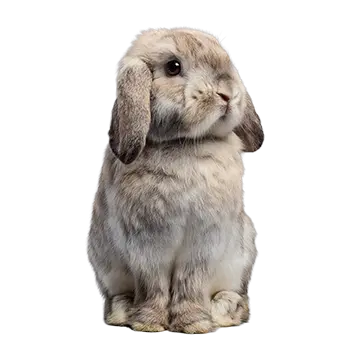

The American Fuzzy Lop owes its existence to breeders working with Holland Lops during the late 1970s and early 1980s. At that time, Holland Lop enthusiasts were attempting to introduce the broken pattern into their lines, and they crossed Holland Lops with English Spots. The resulting offspring occasionally carried a recessive wool gene that had been lurking in the Holland Lop gene pool, likely traced back to earlier Angora crosses used in the Holland Lop's own development in the Netherlands.
When these woolly kits appeared in Holland Lop litters, most breeders considered them undesirable and culled them from their breeding programs. However, a small group of fanciers recognized something special in these fuzzy, lop-eared rabbits. Patty Karl-Hess of New Jersey is widely credited as the driving force behind establishing the breed. She and fellow enthusiasts began selectively breeding the woolly Holland Lops with the specific goal of creating a new, recognized breed that combined the compact lop body type with a wool coat.
The development process required careful selection over multiple generations. Breeders worked to stabilize the wool gene while maintaining the short, compact body and lop ears that defined the breed's appeal. Some breeders incorporated additional Angora bloodlines to improve wool quality, while others focused strictly on woolly Holland Lop lines to preserve type. This dual approach created early debates within the fledgling breed community about the best path forward.
By the mid-1980s, the breed had gained enough consistency and a dedicated enough following to pursue official recognition. The American Fuzzy Lop was presented to the American Rabbit Breeders Association for consideration, marking the transition from a breeding curiosity to a legitimate breed with defined standards and an organized community of supporters.