
Origins & Development

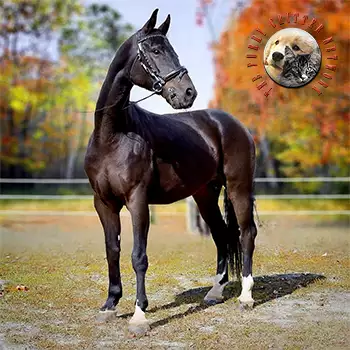
The Trakehner traces its origins to the Royal Trakehnen Stud, established in 1732 by King Friedrich Wilhelm I of Prussia in the marshy lowlands of East Prussia, near what is now the Kaliningrad Oblast of Russia. The stud was founded with the explicit purpose of producing a versatile cavalry horse that combined endurance, athleticism, and an elegant appearance suitable for officers. The foundation stock drew from hardy native Schweiken horses, small but resilient animals that had roamed the Baltic forests for centuries and were prized for their stamina and sure-footedness.

Over the following decades, Thoroughbred and Arabian bloodlines were systematically introduced to refine the breed's conformation, increase its speed, and enhance its overall quality. This careful infusion of hot blood set the Trakehner apart from other European warmbloods, giving it a lighter, more athletic frame while preserving the toughness inherited from its native ancestors. By the late eighteenth century, the Trakehnen Stud had become one of the most prestigious breeding operations in Europe, and its horses were recognized for their distinctive elegance and versatility.

The breeding program at Trakehnen was remarkably systematic for its era. Detailed studbooks were maintained, performance testing was rigorous, and only stallions that met strict standards of conformation, movement, and temperament were approved for breeding. This discipline created a breed with remarkable consistency and quality, establishing principles of selective breeding that would later influence warmblood programs across the continent. The double moose antler brand, still used today, became a symbol of excellence in horse breeding worldwide.

By the nineteenth century, the Trakehner had evolved from a purely military horse into a breed valued across multiple disciplines. Civilian breeders throughout East Prussia adopted the Trakehnen Stud's methods and bloodlines, creating a broad population of high-quality horses that served in agriculture, transportation, and sport. The breed's versatility and refinement made it a sought-after cross for improving other warmblood populations, a role it continues to play in modern sport horse breeding.

Historical Roles

For over two centuries, the Trakehner served as the backbone of the Prussian and later German cavalry. These horses were bred to carry officers over long distances at speed, to remain calm under the chaos of battle, and to navigate difficult terrain without hesitation. The breed's combination of stamina, courage, and responsiveness made it ideally suited to the demands of mounted warfare, and Trakehners saw action in numerous European conflicts throughout the eighteenth and nineteenth centuries.

Beyond the battlefield, Trakehners played a vital role in the agricultural economy of East Prussia. Farmers relied on them for plowing, hauling, and general draft work, while their refinement and smooth gaits also made them popular carriage horses among the Prussian aristocracy. This dual-purpose nature was a defining characteristic of the breed and a testament to the careful balance struck by the Trakehnen Stud between athleticism and utility.

The breed's most harrowing historical chapter came during the winter of 1944–1945, when the advancing Soviet Army forced the mass evacuation of East Prussia. Thousands of Trakehner horses and their owners fled westward in what became known as the Trek, a desperate journey of hundreds of miles through freezing temperatures, deep snow, and active combat zones. Of the estimated 25,000 to 30,000 Trakehners that began the journey, fewer than 1,500 are believed to have survived to reach safety in the West. This catastrophic loss nearly extinguished the breed entirely.

The Trek became a defining narrative in Trakehner history, symbolizing both the breed's extraordinary endurance and the devastating human cost of war. The horses that survived the journey carried not only their riders but also the genetic legacy of centuries of careful breeding. These survivors formed the foundation of the postwar Trakehner population and are revered as proof of the breed's remarkable resilience and spirit.

Cultural Symbolism

In Germany and the broader equestrian world, the Trakehner holds a unique cultural position as a symbol of refinement, perseverance, and aristocratic heritage. The breed's association with Prussian military tradition and royal patronage lent it an air of prestige that persists to this day. For many Germans, particularly those with roots in the former East Prussian territories, the Trakehner represents a living connection to a homeland lost in the upheavals of the twentieth century.

The story of the Trek has taken on an almost mythological quality in equestrian culture. It is frequently cited as one of the most remarkable feats of endurance in the history of the horse, and it has become a powerful symbol of the bond between horses and humans in times of extreme adversity. Memorials, books, and exhibitions dedicated to the Trek ensure that this chapter of the breed's history remains widely known and deeply felt.

The Trakehner's iconic double moose antler brand is one of the most recognized symbols in the horse world. Unlike many warmblood registries that use abstract or geometric marks, the Trakehner brand carries centuries of history and immediately identifies a horse as belonging to one of the oldest and most carefully maintained breeding programs in existence. The brand has become a mark of quality that transcends national borders and is respected by breeders and competitors worldwide.

In the Baltic region, the Trakehner also carries significance as a cultural artifact of a vanished way of life. The great estates of East Prussia, with their sprawling pastures and meticulously managed studs, represented a world that was entirely swept away by the Second World War. The survival of the Trakehner breed is often viewed as a small but meaningful act of cultural preservation, keeping alive a tradition that might otherwise have been lost entirely to history.

Breed Registries & Standards

The Trakehner Verband, headquartered in Neumünster, Germany, serves as the primary breed registry and the guardian of the Trakehner studbook. Founded in 1947 by refugees who had managed to bring their horses west during the Trek, the Verband took on the monumental task of reconstructing breeding records and establishing a postwar breeding program from the small surviving population. Its standards remain among the most stringent of any warmblood registry in the world.

Unlike most warmblood breeds, the Trakehner operates as a closed studbook, meaning that only Thoroughbred, Arabian, and Anglo-Arabian outcrosses are permitted. This policy preserves the breed's distinctive type and ensures that every registered Trakehner can trace its lineage directly back to the horses of East Prussia. The restriction on outside blood is a source of pride among Trakehner breeders, who view it as essential to maintaining the breed's identity and quality.

Stallion licensing in the Trakehner breed involves a rigorous evaluation process that assesses conformation, movement, jumping ability, and temperament. Approved stallions must also complete performance testing that measures their aptitude under saddle and their suitability as breeding animals. Mares are similarly inspected and scored, and the results of these evaluations are used to guide breeding decisions and maintain the overall quality of the population.

The American Trakehner Association, founded in 1974, oversees the breed in North America and works closely with the German Verband to uphold consistent standards. Similar affiliate organizations exist in countries across Europe, South America, and Australasia, reflecting the breed's global reach. These organizations coordinate inspections, approve stallions, and promote the Trakehner in their respective regions, ensuring that the breed's standards are maintained regardless of geography.

The Breed Today

The modern Trakehner has firmly established itself as one of the world's premier sport horse breeds, excelling particularly in dressage and eventing at the highest levels of international competition. Trakehners and Trakehner-influenced horses regularly compete at the Olympic Games, World Equestrian Games, and major Grand Prix events, earning recognition for their elasticity of movement, natural balance, and willingness to perform.

In the eventing world, the Trakehner's combination of Thoroughbred-like galloping ability and warmblood trainability has made it especially competitive. The breed's courage and stamina on cross-country courses reflect the same qualities that once made it an outstanding cavalry horse, while its elegance in the dressage arena and careful technique over show jumps demonstrate the refinement achieved through centuries of selective breeding.

The global Trakehner population remains relatively small compared to other major warmblood breeds, with annual foal registrations numbering in the low thousands worldwide. This smaller population is both a challenge and a point of distinction. Breeders must carefully manage genetic diversity within the closed studbook while continuing to produce horses that can compete at the top levels of sport. The breed's exclusivity, however, also contributes to its prestige and the strong sense of community among Trakehner enthusiasts.

Beyond the competition arena, Trakehners are valued as versatile riding horses for ambitious amateur riders. Their sensitivity and intelligence make them rewarding partners for experienced equestrians who appreciate a horse with character and presence. The breed's influence also extends through its role as an improver of other warmblood populations, with Trakehner stallions frequently used in Hanoverian, Oldenburg, and other breeding programs to add refinement and athleticism.

Notable Individuals

Among the most celebrated Trakehners in modern sport is Abdullah, a dark bay stallion who achieved international fame under American rider Conrad Homfeld. Abdullah won the individual silver medal in show jumping at the 1984 Olympic Games in Los Angeles and was a key member of the gold medal–winning United States team. His success at the highest level of show jumping demonstrated that the Trakehner could compete with purpose-bred jumping horses and helped raise the breed's profile in North America significantly.

In dressage, Donauwaltzer distinguished himself as one of the most successful Trakehners of his generation. Competing for Germany at Grand Prix level, he showcased the breed's natural aptitude for collected and extended work, earning top placings at major international championships. His career reinforced the Trakehner's reputation as a dressage horse of exceptional quality and helped attract new breeders to the discipline.

Peron, a Trakehner stallion ridden by German dressage legend Klaus Balkenhol, was a crowd favorite throughout his competitive career and represented the breed at multiple European Championships. His expressive movement and charismatic presence in the arena exemplified the qualities that make the Trakehner such a compelling sport horse. Peron's success also highlighted the breed's temperament, as his willing and joyful way of going set him apart from many of his competitors.

Historically, Tempelhüter remains perhaps the most iconic Trakehner of all. A stallion of extraordinary beauty and influence, he stood at the Trakehnen Stud in the early twentieth century and sired numerous offspring that shaped the breed for generations. A life-size bronze statue of Tempelhüter originally stood at the entrance to the Trakehnen Stud and became an enduring symbol of the breed. Replicas and images of the statue are widely recognized in the equestrian world and continue to serve as the breed's unofficial emblem.

Always consult a qualified professional before making any health-related decisions. This content is provided for informational reference only and should not replace professional guidance specific to your animal.