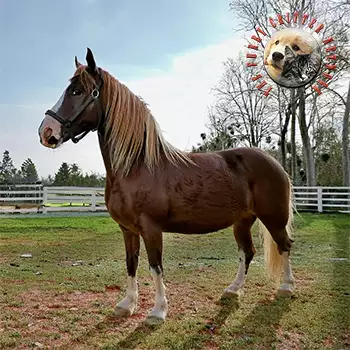

Origins & Development

The Peruvian Paso traces its ancestry to horses brought to the Americas by Spanish conquistadors during the sixteenth century. These founding bloodlines included the Jennet, the Barb, and the Andalusian, all of which contributed smoothness of gait, endurance, and an elegant bearing that would become hallmarks of the breed. When the Spanish established colonial settlements across Peru, selective breeding began almost immediately, driven by the practical need for a horse that could carry riders across vast haciendas and rugged Andean terrain without exhausting either mount or rider.

Unlike many other breeds that were shaped by frequent crossbreeding with outside stock, the Peruvian Paso developed in relative genetic isolation for nearly four hundred years. Peru's geographic barriers — the Andes to the east, the Atacama Desert to the south, and dense jungle to the north — created a natural closed studbook long before any formal registry existed. This isolation allowed breeders to fix the lateral four-beat gait known as the paso llano with remarkable consistency, producing horses that passed their smooth movement to offspring with near-total reliability.

By the eighteenth century, the breed had become deeply embedded in the agricultural economy of Peru's coastal and highland haciendas. Landowners prized the horses not only for their comfort under saddle but also for their stamina during long days of overseeing cattle, crops, and workers. The paso llano gait, which keeps at least one foot on the ground at all times, meant riders could travel for hours without the jarring impact of a trot, an advantage that had both practical and social dimensions in a culture where horsemanship signaled status.

The refinement of the breed accelerated during the nineteenth century, when prominent hacienda families began keeping detailed breeding records and competing informally to produce the smoothest, most stylish animals. Regional variations emerged — coastal Pasos tended toward a flashier termino, the distinctive outward-rolling foreleg motion, while highland strains were sometimes stockier and more utilitarian — but the core traits of gait, temperament, and brio remained universal across all lines.

Historical Roles

For centuries, the Peruvian Paso served as the primary working horse of Peru's hacienda system. Before roads and motorized vehicles connected the country's disparate regions, these horses were the most reliable means of transportation across difficult terrain. Hacendados rode them daily to inspect fields, move livestock, and travel between estates, and the breed's smooth gait made it possible to spend an entire day in the saddle without physical strain. This utility role shaped the breed's temperament as much as its movement: a horse that would be ridden all day needed to be calm, cooperative, and willing.

The Peruvian Paso also played a significant role in the country's military history. During Peru's wars of independence in the early nineteenth century and subsequent border conflicts, cavalry units mounted on Pasos benefited from the horses' sure-footedness on mountain trails and their ability to cover long distances at a sustainable pace. While never bred specifically as a war horse, the Paso's combination of endurance, agility, and steady nerves under pressure made it a valued military mount in a landscape where European cavalry breeds often struggled.

Beyond the battlefield and the hacienda, the Peruvian Paso held a ceremonial role in Peruvian society. Religious processions, civic celebrations, and social gatherings frequently featured elaborately tacked Pasos, their riders dressed in traditional chalán attire. The act of riding a finely trained Paso in public was both an art form and a social statement, demonstrating the rider's wealth, taste, and horsemanship. This ceremonial function helped elevate the breed from a working animal to a living cultural artifact.

In the twentieth century, agrarian reforms in the 1960s and 1970s dismantled many of the large haciendas that had been the breed's historical stronghold. Land redistribution broke up established breeding programs, and many fine horses were dispersed or lost. This period represented a genuine crisis for the breed, but it also spurred the formation of organized breed associations dedicated to preservation, ultimately shifting the Peruvian Paso from a regional working horse to an internationally recognized breed.

Cultural Symbolism

The Peruvian Paso occupies a singular place in Peru's national identity. In 1992, the Peruvian government declared the breed a Cultural Heritage of the Nation, a designation that placed it alongside archaeological sites and traditional arts as a protected element of Peruvian culture. This recognition was more than symbolic — it provided a legal framework for breed preservation and underscored the horse's importance to the country's sense of self. Few nations have extended such formal cultural protection to a horse breed, reflecting just how deeply the Paso is woven into Peruvian life.

The breed's association with the chalán tradition is central to its cultural meaning. The chalán, or traditional Peruvian horseman, represents an idealized figure of rural elegance and skill, roughly analogous to the Argentine gaucho or the American cowboy but with a distinctly Peruvian character. Dressed in a poncho, wide-brimmed hat, and silver-adorned tack, the chalán riding a Paso embodies a vision of grace, control, and harmony between horse and rider that Peruvians regard as uniquely their own.

The marinera, Peru's national dance, is frequently performed alongside Peruvian Pasos in a tradition known as the marinera a caballo. In this spectacular display, a rider guides a Paso through intricate footwork patterns while a dancer on the ground mirrors the horse's movements with her own choreography. The horse's natural termino and cadenced gait complement the dancer's flowing steps, creating a performance that celebrates both equine and human artistry. Major marinera competitions draw enormous crowds and are broadcast nationally.

Peruvian Pasos also appear prominently in the country's visual arts, literature, and music. Poets have written about the breed's grace, painters have depicted chaláns on Pasos against Andean backdrops, and folk songs reference the horses as symbols of freedom, pride, and connection to the land. This artistic legacy reinforces the breed's status as more than livestock — it is a living emblem of Peruvian heritage.

Breed Clubs & Standards

The formal organization of Peruvian Paso breeding began in 1947 with the founding of the Asociación Nacional de Criadores y Propietarios de Caballos Peruanos de Paso in Lima. This association established the first official breed registry and began codifying the traits that distinguished the Peruvian Paso from other gaited breeds. Its formation marked the transition from informal hacienda-based breeding to a structured national program with documented pedigrees, standardized judging criteria, and organized competitions.

In the United States, interest in the breed grew steadily through the 1960s after a small number of Peruvian Pasos were imported by enthusiasts who had encountered them while traveling in South America. The American Association of Owners and Breeders of Peruvian Paso Horses was founded in 1962 and later became the North American Peruvian Horse Association. This organization developed its own registry while maintaining close ties to the Peruvian parent association, ensuring that breed standards remained consistent across borders.

Breed standards for the Peruvian Paso emphasize gait quality above all other traits. Judges evaluate the smoothness, cadence, and consistency of the paso llano, as well as the visual flair of the termino — the outward-sweeping arc of the front legs that gives the breed its distinctive look in motion. Conformation, temperament, and brio (the spirited willingness to perform) are also scored, but a horse with a flawed gait cannot place highly regardless of how beautiful it may be standing still. This gait-first philosophy has kept the breed functionally distinct even as show ring aesthetics have evolved.

International breed organizations now exist in countries across Europe, South America, and beyond. The global Peruvian Paso community holds regular congresses to coordinate standards, share genetic research, and address conservation concerns. These organizations have played a vital role in maintaining genetic diversity within the breed, particularly as some bloodlines became popular and risked overrepresentation in the global gene pool.

The Breed Today

The Peruvian Paso today enjoys a devoted international following, though it remains far less numerous than breeds like the Quarter Horse or Thoroughbred. Global population estimates vary, but the breed's numbers have grown steadily since the low point of the agrarian reform era. Peru remains the breed's heartland, with the largest breeding farms and the most prestigious competitions, but significant populations now exist in the United States, Colombia, and several European countries.

Modern breeding programs balance the preservation of traditional traits with advances in veterinary science and genetic management. DNA testing is increasingly used to verify parentage and identify carriers of heritable conditions, while ultrasonography and reproductive technology have expanded breeding options. Despite these modern tools, the core selection criteria remain rooted in centuries of tradition: gait quality, temperament, and that intangible quality of brio that distinguishes a merely smooth horse from a truly great Peruvian Paso.

The show circuit remains the primary showcase for the breed. Peru's Concurso Nacional de Caballos Peruanos de Paso, held annually, is one of the largest horse shows in the world and draws competitors and spectators from across the globe. In the United States, regional and national shows sanctioned by breed associations provide a competitive venue for breeders and exhibitors. Trail riding and pleasure riding have also become important roles for the breed, as its smooth gait and gentle disposition make it an ideal mount for riders who want comfort without sacrificing style.

Conservation efforts continue to be a priority for the breed community. Organizations in Peru and abroad work to maintain genetic diversity, protect rare bloodlines, and promote responsible breeding practices. Educational programs introduce new generations to the breed's history and horsemanship traditions, ensuring that the cultural knowledge surrounding the Peruvian Paso is transmitted alongside the horses themselves.

Notable Individuals

Among the most celebrated Peruvian Pasos in the breed's history is Sol de Oro, a stallion widely regarded as one of the greatest sires the breed has ever produced. Bred in Peru in the mid-twentieth century, Sol de Oro stamped his offspring with exceptional gait quality and an elegant, refined type that came to define the modern Peruvian Paso ideal. His influence on the breed was so profound that his bloodline can be traced in a significant percentage of today's registered Peruvian Pasos worldwide.

Piloto, another foundational stallion, played a critical role in establishing the breed in North America. Imported to the United States in the 1960s, Piloto introduced American breeders and riders to the Peruvian Paso's unique qualities and produced offspring that excelled in early North American competitions. His success in the show ring and as a sire helped build the breed's reputation outside of Peru and encouraged further importation of quality breeding stock.

In the mare lines, several foundation mares have been recognized for their outsized contributions to the breed's genetic heritage. These mares, often less publicly celebrated than the great stallions, produced generation after generation of quality offspring and ensured the continuity of important bloodlines through periods of political and economic upheaval in Peru. Breed historians have increasingly focused on documenting these maternal lines to provide a more complete picture of the breed's genetic history.

Contemporary Peruvian Pasos continue to distinguish themselves in competition and as ambassadors for the breed. National and international champions are celebrated within the breed community, and their achievements help attract new enthusiasts to the Peruvian Paso. Social media and video sharing have made it possible for exceptional horses to gain followings far beyond the traditional show circuit, introducing the breed's remarkable gait and presence to audiences who might never attend a live competition.

Always consult a qualified professional before making any health-related decisions. This content is provided for informational reference only and should not replace professional guidance specific to your animal.