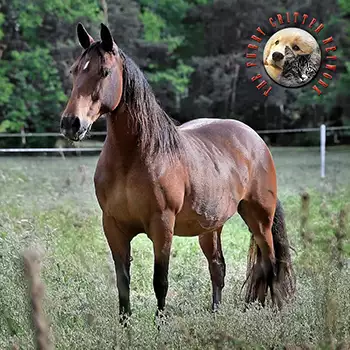

Origins & Development

The Morgan horse traces its lineage to a single remarkable stallion known as Figure, born around 1789 in Springfield, Massachusetts. Figure was given to a Vermont schoolteacher and composer named Justin Morgan as payment for a debt, and the horse eventually became known by his owner's name. Despite his modest size, the little bay stallion astonished onlookers with his ability to outwalk, outtrot, and outrun larger horses in local competitions, and he could outpull draft animals far heavier than himself.

Figure's exact breeding remains one of the great mysteries of American equine history. Various theories have attributed his sire to a Thoroughbred named True Briton, a Welsh Cob, or even an Arabian import, but no definitive documentation has survived. What is certain is that Figure possessed an extraordinary ability to stamp his offspring with his own qualities — compact muscular build, arched neck, refined head, and tireless endurance — regardless of the mares he was bred to.

Over the following decades, Figure's sons and grandsons spread across New England and beyond, establishing three principal bloodlines through his most influential sons: Sherman, Woodbury, and Bulrush. Each line carried the hallmark Morgan type while contributing slightly different strengths. Sherman produced horses of great refinement and speed, Woodbury's descendants were prized for their substance and presence, and Bulrush's line was celebrated for stamina and hardiness.

By the mid-nineteenth century, Morgans had become the most sought-after general-purpose horse in America. They plowed fields during the week, carried families to church on Sunday, and raced at county fairs in between. This extraordinary versatility made them indispensable to a young and expanding nation, and their population grew rapidly throughout the northeastern states and into the Midwest.

Historical Roles

Morgans played a pivotal role in the Civil War, serving as cavalry mounts, artillery horses, and officers' chargers on both sides of the conflict. The First Vermont Cavalry rode Morgans almost exclusively, and the regiment became renowned for its horses' endurance during grueling campaigns. These wartime contributions cemented the breed's reputation for courage, stamina, and levelheadedness under extreme conditions.

Before and after the war, Morgans were the backbone of American transportation and agriculture. They pulled stagecoaches across rugged terrain, delivered mail on frontier routes, and served as the primary motive power for family farms throughout the Northeast. Their ability to thrive on modest rations while performing heavy work made them an economical choice for settlers pushing westward, and Morgan blood was carried into virtually every corner of the expanding nation.

The breed's influence on other American breeds is difficult to overstate. Morgan blood contributed to the foundation of the Standardbred through the stallion Ethan Allen 50, one of the fastest trotters of his era. The American Saddlebred, Tennessee Walking Horse, and American Quarter Horse all carry Morgan ancestry in their foundation stock, making the Morgan arguably the most influential breed in American equine history.

Morgans also served in military remount programs well into the twentieth century. The U.S. Morgan Horse Farm in Weybridge, Vermont, operated under the Department of Agriculture beginning in 1907 and later transferred to the University of Vermont. This facility played a critical role in preserving and refining Morgan bloodlines during a period when the breed's numbers had declined due to crossbreeding and the rise of mechanized transportation.

Cultural Symbolism

The Morgan horse holds a unique place in the cultural identity of New England and the broader American consciousness. Vermont designated the Morgan as its official state animal in 1961, recognizing the breed's deep roots in the state's agricultural heritage. The Morgan is often cited as a symbol of the self-reliant, hardworking Yankee spirit — a modest animal that consistently outperforms expectations through sheer determination and quality.

The story of Figure and Justin Morgan has become an enduring American legend, one that resonates with themes of humble origins and extraordinary achievement. The image of a small, unassuming horse defeating larger rivals in pulling bees and races has captured the imagination of generations, serving as a parable about substance triumphing over appearance. This narrative has helped sustain public affection for the breed across more than two centuries.

Morgans have also become symbols of historic preservation and living heritage. Colonial-era reenactments, heritage farm programs, and carriage driving events frequently feature Morgans as authentic representations of early American life. Their presence at these events connects modern audiences to the agrarian traditions and transportation methods that shaped the country's formative years.

In equestrian culture more broadly, the Morgan represents the ideal of the versatile, owner-friendly horse. While many modern breeds have become increasingly specialized, the Morgan community takes pride in maintaining a horse that can transition from the show ring to the trail to the driving arena with equal competence. This philosophy of versatility has become a defining cultural value within the Morgan community.

Breed Clubs & Standards

The American Morgan Horse Association, founded in 1909 as the Morgan Horse Club, is the breed's primary registry and promotional organization. It maintains the breed registry, sanctions shows, and oversees breeding programs that preserve the Morgan's defining characteristics. The AMHA registry is among the oldest breed registries in the United States and has recorded hundreds of thousands of horses since its inception.

The breed standard emphasizes a compact, muscular horse with a distinctive head carriage, expressive eyes, and a naturally animated way of going. Morgans should display a broad forehead, large eyes set wide apart, a slightly dished or straight profile, and small, well-shaped ears. The neck should be set high and carried with a natural arch, blending smoothly into well-defined withers and a short, strong back. These characteristics trace directly back to descriptions of Figure himself.

Within the breed, a lively debate has persisted for decades between preservationists who favor the old-style, compact Morgan type and those who breed for a taller, more refined show horse influenced by Saddlebred crosses in the mid-twentieth century. The Lippitt Morgan, representing horses descended exclusively from pre-1930 bloodlines, has developed its own dedicated following among enthusiasts who value genetic purity and adherence to the original Morgan type.

Morgan breed clubs and regional associations exist throughout the United States and in several countries abroad, including Canada, Great Britain, Sweden, and Australia. International interest in the breed has grown steadily, with overseas breeders drawn to the Morgan's versatility, gentle disposition, and historical significance. The breed's global community, while still modest compared to breeds like the Arabian or Thoroughbred, is active and passionate about promoting Morgans worldwide.

The Breed Today

Today's Morgan horse enjoys a diverse and enthusiastic following across multiple disciplines. Morgans compete successfully in saddle seat, Western pleasure, dressage, driving, endurance riding, and working ranch events. The breed's annual Grand National and World Championship Morgan Horse Show, held each October in Oklahoma City, draws competitors from across North America and showcases the breed's remarkable range of talent.

The Morgan population in the United States is healthy, with several thousand foals registered each year. While the breed has never reached the massive numbers of Quarter Horses or Thoroughbreds, its devoted community maintains strong breeding programs focused on preserving the qualities that have defined Morgans for over two centuries. Breeders can be found in every state, with particular concentrations in New England, the Midwest, and the Pacific Northwest.

Morgans have also found a significant niche in therapeutic riding programs and as family pleasure horses. Their manageable size, willing temperament, and natural surefootedness make them excellent partners for riders of all ages and experience levels. Many Morgan owners describe a distinctive personality trait the community calls "heart" — an eagerness to please and a genuine desire to connect with their human partners that sets the breed apart.

The University of Vermont's Morgan Horse Farm continues to operate as both a breeding facility and a historical site, welcoming thousands of visitors annually. The farm serves as a living link to the breed's origins and a center for education about Morgan history and husbandry. Its continued operation reflects the enduring cultural significance of the Morgan horse in American life.

Notable Individuals

Figure, the founding sire of the entire breed, remains the most famous Morgan in history. Born around 1789 and living until approximately 1821, he spent most of his life in Vermont, where he was used as a stud, work horse, and competition animal. His ability to pass his characteristics to offspring with remarkable consistency laid the foundation for one of the world's most enduring horse breeds, and every registered Morgan alive today traces back to him.

Ethan Allen 50, foaled in 1849, became one of the most celebrated trotting horses of the nineteenth century. He held the world trotting record and was renowned for his beauty as well as his speed. His success on the track helped establish Morgan blood as a critical ingredient in the development of the Standardbred, and he remains one of the most storied racehorses in American history.

Black Hawk 20, a grandson of Figure through his son Sherman, was another enormously influential stallion. Standing at stud in Vermont and New Hampshire, Black Hawk sired hundreds of foals and became one of the most prolific progenitors in nineteenth-century American breeding. His descendants carried Morgan blood into countless other breeds and helped solidify the Morgan's reputation as a cornerstone of American horse breeding.

In more recent decades, individual Morgans have distinguished themselves in competitive disciplines ranging from dressage to combined driving to endurance racing. The breed has produced national and international champions in carriage driving, and Morgan trail horses have completed challenging endurance events across rugged terrain. These modern achievements continue to demonstrate the same versatility and determination that made Figure legendary more than two centuries ago.

Always consult a qualified professional before making any health-related decisions. This content is provided for informational reference only and should not replace professional guidance specific to your animal.