
Origins & Development

The Cleveland Bay is widely recognized as the oldest established horse breed in England, with roots stretching back to the medieval period in the Cleveland district of northeastern Yorkshire. During the Middle Ages, monasteries in the region maintained powerful pack horses that were used to transport goods across the rugged moorland terrain. These animals were prized for their strength, endurance, and sure-footedness, and they formed the foundation stock from which the Cleveland Bay would eventually emerge.

By the seventeenth century, the breed had begun to take on a more refined appearance through selective crossing with Barb and Andalusian stallions brought to England by traveling merchants. These infusions of continental blood added elegance and improved trotting action without sacrificing the substance and hardiness that had always defined the type. The resulting horses became known as Chapman horses, named after the traveling traders, or chapmen, who relied on them for long-distance hauling.

As coaching roads expanded across Britain in the eighteenth century, the Chapman horse evolved further into the Cleveland Bay recognized today. Breeders selected specifically for uniformity of color, favoring the distinctive bay coat with black points that became the breed's hallmark. The transition from pack animal to coach horse marked a pivotal moment in the breed's development, transforming it from a utilitarian working animal into a refined carriage horse that was equally comfortable under saddle.

The establishment of the Cleveland Bay Studbook in 1884 formalized the breed's identity and set standards that have guided breeding decisions ever since. This registry was among the earliest for any horse breed in the world, reflecting the high regard in which the Cleveland Bay was held by horsemen of the era. The studbook's founding ensured that the breed's characteristics would be preserved through careful record-keeping and selective breeding practices.

Historical Roles

Throughout its long history, the Cleveland Bay has served in a remarkable variety of roles that demonstrate its versatility and adaptability. In its earliest form as a pack horse, the breed was indispensable to the commerce of northeastern England, carrying heavy loads of raw materials and finished goods between market towns and ports. The horses could navigate steep hillside paths and muddy tracks that would have defeated lesser animals, making them essential to the region's economic life.

The breed's most celebrated historical role came during the golden age of coaching in the eighteenth and nineteenth centuries. Cleveland Bays were the preferred carriage horses for long-distance travel, prized for their ability to maintain a brisk trot over extended distances without tiring. Their calm temperament and natural elegance made them ideal for pulling the finest coaches, and they became fixtures on the major coaching routes connecting London with the northern counties.

In agriculture, Cleveland Bays served as powerful yet nimble farm horses capable of both plowing heavy clay soils and performing lighter tasks around the farmyard. Their intelligence and willing disposition made them easy to train for diverse agricultural work, and many smaller farms relied on a single Cleveland Bay to handle everything from harrowing fields to pulling carts to market. This dual-purpose utility made the breed economically valuable to rural communities.

The breed also played a significant role in military service, particularly during the nineteenth century when the British Army sought reliable horses for artillery and transport duties. Cleveland Bays and their crosses were valued for their strength, endurance, and level-headed temperament under the stress of battlefield conditions. Their contributions to mounted military operations, while less celebrated than those of Thoroughbreds or warmbloods, were nonetheless substantial and helped sustain the breed's reputation.

Cultural Symbolism

The Cleveland Bay holds a unique place in British cultural identity, symbolizing the pastoral heritage of Yorkshire and the broader traditions of English horsemanship. In the Cleveland district, the breed is a source of deep regional pride, representing centuries of careful husbandry and the enduring relationship between the people of northeastern England and their horses. Local festivals and agricultural shows have long featured Cleveland Bay classes, and the breed remains a powerful emblem of the region's rural character.

Perhaps the most visible symbol of the Cleveland Bay's cultural importance is its longstanding association with the British Royal Family. The Royal Mews has maintained Cleveland Bays for ceremonial carriage duties for well over a century, and the breed's appearance at state occasions such as coronations, royal weddings, and the State Opening of Parliament has made it one of the most recognizable horse breeds in the world. The sight of matched teams of bay horses drawing the royal carriages through London streets has become an iconic image of British pageantry.

Beyond its royal connections, the Cleveland Bay represents a broader ideal of the versatile, honest working horse that was once the backbone of rural British life. In an age of increasing mechanization, the breed serves as a living link to a time when horses were central to transportation, agriculture, and commerce. Preservation efforts have taken on a cultural dimension, with supporters arguing that saving the Cleveland Bay means preserving an irreplaceable piece of national heritage.

The breed's symbolism extends into the world of sport and competition, where Cleveland Bays and their crosses have demonstrated that substance and elegance are not mutually exclusive qualities. Their success in driving competitions and as foundation stock for sport horses has reinforced the cultural narrative of the Cleveland Bay as a breed that combines beauty with practical utility.

Breed Registries & Standards

The Cleveland Bay Horse Society, founded in 1884 alongside the establishment of the breed's studbook, is the primary registry and governing body for the breed worldwide. Based in the United Kingdom, the society maintains the official studbook, sets breed standards, and works to promote the Cleveland Bay both domestically and internationally. Its founding marked a critical moment in the breed's history, providing the organizational framework necessary to preserve the breed's identity during periods of declining numbers.

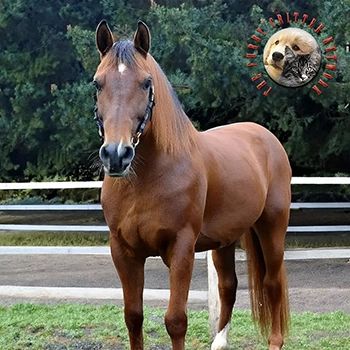
The breed standard as defined by the society specifies a horse standing between 16 and 16.2 hands, with a bay coat ranging from light to dark bay and black points on the legs, mane, and tail. A small white star on the forehead is permissible, but excessive white markings are discouraged. The standard emphasizes substance and bone, calling for a horse with clean, flat legs, a deep and wide body, and a well-set neck that reflects the breed's dual heritage as both a working and a carriage horse.

In North America, the Cleveland Bay Horse Society of North America serves as the breed's representative organization, maintaining a registry that works in coordination with the parent society in the United Kingdom. This organization has played an important role in preserving and promoting the breed on the American continent, where Cleveland Bay numbers have historically been small. Its efforts have included maintaining breeding records, organizing shows and events, and connecting breeders across a vast geographic area.

The breed standard has remained remarkably consistent since its original formulation, reflecting a commitment to preserving the Cleveland Bay's historic type rather than chasing fashionable trends. This conservatism has been both a strength and a challenge. It has ensured that modern Cleveland Bays closely resemble their historical predecessors, but it has also limited the breed's ability to adapt to changing market demands. The societies continue to balance preservation with the need to maintain a viable breeding population.

The Breed Today

The Cleveland Bay is classified as a critically endangered breed by the Rare Breeds Survival Trust and other conservation organizations, with global population estimates placing the number of purebred animals at only a few hundred. This precarious status has galvanized conservation efforts in the United Kingdom, North America, and Australasia, with breeders, breed societies, and government agencies working together to stabilize and gradually increase the population.

Despite its rarity, the Cleveland Bay continues to excel in the roles for which it was originally developed. In the driving world, the breed remains a top choice for competitive carriage driving, where its natural action, stamina, and calm temperament give it a significant advantage. Several Cleveland Bays and Cleveland Bay crosses have competed successfully at the highest levels of combined driving, demonstrating that the breed's historic qualities translate directly into modern competitive success.

The breed has also found a growing niche as a foundation for sport horse breeding. Cleveland Bay stallions crossed with Thoroughbred mares produce offspring with the substance, bone, and temperament that many riders seek in a competition horse, particularly for eventing and show jumping. These crosses, sometimes referred to as part-bred Cleveland Bays, have helped raise the breed's profile and created a market incentive for maintaining purebred breeding stock.

Conservation breeding programs have become increasingly sophisticated, employing genetic analysis and carefully managed breeding plans to maximize genetic diversity within the small population. Frozen semen and embryo transfer technologies have expanded the options available to breeders, allowing valuable genetic lines to be preserved and disseminated more widely than traditional breeding methods would permit. These scientific approaches, combined with the passionate dedication of Cleveland Bay enthusiasts, offer hope for the breed's long-term survival.

Notable Individuals

Throughout the breed's history, individual Cleveland Bays have achieved distinction and helped shape the breed's development and reputation. Mulgrave Supreme, foaled in 1961, is widely regarded as one of the most influential Cleveland Bay stallions of the twentieth century. His progeny demonstrated exceptional quality and versatility, and his bloodlines remain prominent in the modern studbook. Mulgrave Supreme's contributions were particularly significant during a period when the breed's numbers were at their lowest ebb, and his genetic legacy helped sustain the population through a critical bottleneck.

The stallion Dovelanden Dorian earned widespread recognition for his role in the Royal Mews, where he served as a ceremonial carriage horse for the British Royal Family. His dignified presence at state occasions brought the Cleveland Bay to the attention of a global audience, demonstrating the breed's suitability for high-profile ceremonial work. His service underscored the unique relationship between the Cleveland Bay and the British monarchy that has persisted for generations.

In the competition arena, several Cleveland Bay crosses have achieved remarkable success. Dovelanden Jupiter, a part-bred Cleveland Bay, competed in eventing and show jumping at a high level, showcasing the athletic ability that the breed can contribute to sport horse programs. These competitive achievements have been instrumental in demonstrating the Cleveland Bay's value beyond its traditional roles and attracting new breeders to the breed.

Queen Elizabeth II deserves special mention for her personal commitment to the Cleveland Bay breed. Her Majesty maintained Cleveland Bays in the Royal Mews throughout her reign and actively supported breeding efforts aimed at preserving the breed. The royal patronage provided invaluable visibility and prestige, helping to sustain interest in the breed during periods when its survival was genuinely in doubt. This royal connection continues to be a defining element of the Cleveland Bay's identity and cultural significance.

Always consult a qualified professional before making any health-related decisions. This content is provided for informational reference only and should not replace professional guidance specific to your animal.