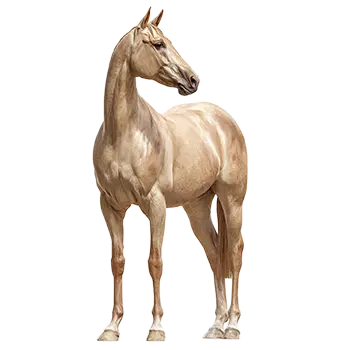

The Akhal-Teke is widely regarded as one of the oldest domesticated horse breeds in the world, with a lineage stretching back an estimated three thousand years or more. The breed originated in the arid deserts and oases of present-day Turkmenistan, where the Teke tribe of Turkmen people selectively bred horses for speed, endurance, and the ability to survive extreme desert conditions. Archaeological evidence and ancient texts suggest that horses matching the Akhal-Teke's description were known to civilizations across Central Asia long before written breeding records existed.
The name itself reflects geography and tribal heritage. "Akhal" refers to the Akhal oasis, a narrow strip of fertile land along the northern slopes of the Kopet Dag mountains, and "Teke" identifies the Turkmen tribe most closely associated with the breed's development. The Teke people raised their horses under demanding conditions, feeding them a carefully managed diet of alfalfa, barley, and animal fat to sustain them through grueling desert crossings. Horses were kept tethered near their owners' tents, fostering the intense bond between horse and rider that the breed is still known for today.
Genetic studies conducted in the early twenty-first century confirmed the Akhal-Teke's status as a genetically distinct breed with remarkably low diversity, consistent with a long and isolated breeding history. These findings support the oral traditions of the Turkmen people, who maintained meticulous knowledge of their horses' bloodlines for centuries before any formal stud book was established. The breed's genetic profile sets it apart from most other modern horse breeds and underscores its antiquity.
The Akhal-Teke's ancestors are believed to have influenced many of the world's prominent horse breeds. Historians have drawn connections between the ancient Turkmen horse and the development of the Arabian, the Thoroughbred, and several other breeds that shaped global equestrian culture. While the exact lines of influence remain debated among scholars, there is broad agreement that the horses of the Central Asian steppes played a foundational role in the story of the modern horse.