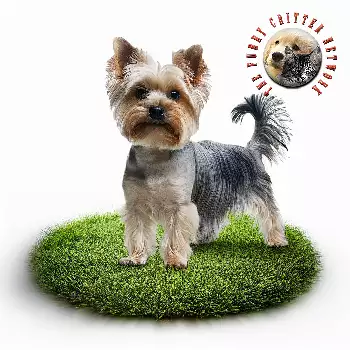

Origins & Development

The Yorkshire Terrier was developed during the mid-nineteenth century in the industrial counties of Yorkshire and Lancashire in northern England. The breed did not emerge from aristocratic kennels but rather from the working-class communities that powered the textile mills and coal mines of the region. Scottish weavers migrating south for factory work brought several small terrier types with them, and these dogs were crossed with local terriers over several generations to produce a compact, keen ratter well suited to the cramped conditions of mills and mine shafts.

Among the breeds believed to have contributed to the Yorkshire Terrier's foundation stock are the Clydesdale Terrier, the Paisley Terrier, the Skye Terrier, and the now-extinct English Black and Tan Toy Terrier. Early specimens were considerably larger than today's Yorkies, often weighing twelve pounds or more, and their coats, while long, were coarser than the silky texture modern fanciers prize. Selective breeding throughout the 1860s and 1870s refined the breed's size downward and its coat quality upward.

The breed was initially exhibited under a variety of names, including Broken-Haired Scotch Terrier and Halifax Fancy Terrier. It was not until 1870 that a journalist named Angus Sutherland proposed the name Yorkshire Terrier, arguing that the breed had been so thoroughly improved in Yorkshire that the county deserved naming credit. The Kennel Club of England accepted the name, and the breed was formally recognized in 1886.

A dog named Huddersfield Ben, born in 1865 and owned by Mary Ann Foster of Bradford, is widely regarded as the father of the modern Yorkshire Terrier. Ben won over seventy prizes in ratting contests and dog shows alike, establishing the type that breeders would follow for decades. His influence on the breed was so profound that nearly every modern Yorkie pedigree traces back to him in some fashion.

Historical Roles

Before the Yorkshire Terrier became a fashionable lapdog, it earned its keep as a working ratter. In the textile mills of Yorkshire, bolts of stored fabric attracted rodents, and the small, tenacious terriers were tasked with keeping the vermin population in check. Their diminutive size allowed them to follow rats into narrow spaces between looms and under floorboards, and their fierce determination made them effective hunters far out of proportion to their stature.

Coal miners also valued the breed's ratting abilities. Rodents in mine tunnels were more than a nuisance; they could chew through timber supports and gnaw at the candles and tallow that provided light underground. A good terrier saved both supplies and potentially lives. Some miners reportedly carried their Yorkies inside their coats on the descent into the shaft, releasing them to work once below ground.

As the breed's appearance became more refined in the 1870s and 1880s, Victorian ladies began adopting the Yorkie as a companion animal. The transition from working dog to parlor pet happened remarkably quickly. The breed's small size, striking coat, and spirited personality made it a natural fit for the drawing rooms of the upper middle class, and breeders responded by selecting for ever-smaller dogs with ever-longer, silkier hair.

During the Second World War, a Yorkshire Terrier named Smoky became one of the most celebrated war dogs in American military history. Found in a foxhole in the New Guinea jungle in 1944, Smoky served with the Fifth Air Force and was credited with running communication wire through a narrow culvert pipe, saving construction crews days of dangerous work under enemy fire. She went on to visit wounded soldiers in hospitals, making her one of the earliest documented therapy dogs.

Cultural Symbolism

The Yorkshire Terrier occupies a distinctive place in cultural symbolism, embodying a blend of elegance and scrappiness that few other breeds can claim. Its glamorous floor-length coat and diminutive frame project an image of luxury and refinement, yet beneath that silky exterior lies the heart of a tenacious terrier bred to dispatch rats in grimy factories. This duality has made the Yorkie a symbol of resilience wrapped in beauty.

In British culture, the breed carries echoes of the Victorian era's social mobility. A dog born in the working-class mills of Yorkshire that ascended to the laps of society ladies mirrors the broader narrative of industrial-age aspiration. The Yorkie became a living emblem of the idea that origins need not define destiny, and this theme has resonated across generations of owners who see their small companions as proof that great things come in small packages.

In the United States, the Yorkshire Terrier became closely associated with urban sophistication during the twentieth century. The breed's compact size made it ideal for apartment living, and its confident, outgoing personality suited the pace of city life. By the 1990s and 2000s, Yorkies had become one of the most popular breeds in major metropolitan areas, frequently seen in handbags and designer carriers that reinforced their image as fashion accessories.

Despite its glamorous reputation, the Yorkie's cultural symbolism also encompasses a streak of toughness that long-time owners are quick to celebrate. Yorkie enthusiasts often describe their dogs as having no idea how small they are, confronting much larger dogs and unfamiliar situations with a boldness that borders on the absurd. This fearlessness has become central to the breed's identity and a point of pride among its devoted community.

Breed Clubs & Standards

The Yorkshire Terrier Club of England, established in 1898, was among the earliest breed-specific organizations devoted to the Yorkie. The club worked to codify the breed standard, setting parameters for size, coat quality, color, and general conformation that would guide breeders for over a century. Early standards emphasized the steel-blue and tan coloring, the straight and glossy texture of the coat, and a compact, well-proportioned body.

In the United States, the Yorkshire Terrier Club of America (YTCA) serves as the American Kennel Club's parent club for the breed. The YTCA maintains the breed standard, sponsors national specialties, and provides educational resources for breeders and owners. The American standard closely mirrors its British counterpart, calling for a weight not exceeding seven pounds, a steel-blue coat from the back of the skull to the base of the tail, and rich golden tan on the head and legs.

Breed standards have evolved modestly over the decades. Early Yorkies were often shown with cropped ears, a practice that fell out of favor by the early twentieth century. The preferred size has also trended downward, with modern show dogs typically weighing between four and six pounds. Some breeders have pushed for even smaller dogs, marketed as teacup Yorkies, but major kennel clubs do not recognize a separate teacup variety and generally discourage breeding for extreme miniaturization due to associated health risks.

The Fédération Cynologique Internationale, which governs breed standards in much of Europe and the developing world, classifies the Yorkshire Terrier in Group 3, Section 4, as a toy terrier. While the FCI standard aligns with the British and American versions in most respects, slight regional variations in judging emphasis persist, with some continental judges placing greater weight on coat texture and others prioritizing overall balance and movement.

The Breed Today

The Yorkshire Terrier consistently ranks among the most popular dog breeds worldwide. In the United States, the breed has held a position in the American Kennel Club's top ten most registered breeds for much of the twenty-first century, and it remains a fixture at dog shows, in pet stores, and in shelters and rescues alike. Its enduring appeal lies in a combination of manageable size, striking appearance, and a personality that owners describe as larger than life.

Modern Yorkies are bred primarily as companion animals, though the breed's terrier instincts remain intact. Many owners report that their Yorkies still exhibit ratting behavior, pouncing on toys with intensity and alerting to the presence of small animals with sharp, excited barking. The breed's intelligence and eagerness to engage make it responsive to training, and Yorkies have found success in competitive obedience, rally, and agility, where their speed and nimbleness give them an edge on scaled-down courses.

Health-conscious breeding practices have become an increasingly important focus for the Yorkie community. Responsible breeders screen for conditions common to the breed, including luxating patella, portosystemic liver shunt, tracheal collapse, and progressive retinal atrophy. The breed's small size makes dental health a persistent concern, and veterinary professionals recommend regular dental cleanings and home care to prevent the tooth loss that plagues many toy breeds.

The rise of social media has given the Yorkshire Terrier a new stage. Yorkie-focused Instagram and TikTok accounts attract millions of followers, showcasing the breed's photogenic looks and entertaining antics. This digital visibility has introduced the breed to a new generation of potential owners, though breed advocates emphasize the importance of researching reputable breeders and understanding the breed's grooming and health needs before committing to ownership.

Notable Individuals

Huddersfield Ben, born in 1865, stands as the most historically significant Yorkshire Terrier. Owned by Mary Ann Foster, Ben dominated the show ring and the ratting pit alike, winning prizes that established the breed's standard type. His influence on the breed was so far-reaching that he is often called the father of the Yorkshire Terrier, and his legacy is commemorated in breed literature worldwide.

Smoky, the war dog discovered in a New Guinea foxhole during World War II, remains the breed's most famous individual in the popular imagination. Adopted by Corporal William Wynne of Cleveland, Ohio, Smoky served in twelve combat missions, survived over one hundred and fifty air raids, and pulled communication wire through a narrow pipe beneath an active airstrip. After the war, Wynne and Smoky toured hospitals and performed tricks on live television, pioneering the concept of animal-assisted therapy. A memorial statue of Smoky stands in Rocky River, Ohio.

In the show ring, a Yorkshire Terrier named Champion Cede Higgins made history by winning Best in Show at the Westminster Kennel Club Dog Show in 1978. The win elevated the breed's profile in the competitive dog world and demonstrated that a toy breed could compete at the highest levels against sporting, working, and herding dogs many times its size.

Sylvia, a Yorkshire Terrier owned by Arthur Marples of Blackburn, England, held the record as the smallest dog in recorded history at the time of her death in 1945. She measured just two and a half inches at the shoulder and three and a half inches from nose to tail tip, weighing a mere four ounces. While her extreme size would not be encouraged by modern breeding standards, Sylvia's record captured public fascination and contributed to the breed's reputation for remarkable smallness.

Mr. Famous, a Yorkshire Terrier belonging to actress Audrey Hepburn, became one of the most photographed dogs of the mid-twentieth century. Hepburn was frequently seen carrying Mr. Famous during her travels and on film sets, and the pairing helped cement the Yorkie's association with Hollywood glamour and international sophistication.

Always consult a qualified professional before making any health-related decisions. This content is provided for informational reference only and should not replace professional guidance specific to your animal.