
Origins & Development

The Silky Terrier traces its origins to the late nineteenth and early twentieth centuries in Australia, where breeders sought to create a companion dog that combined the best traits of the Australian Terrier and the Yorkshire Terrier. The Australian Terrier, a hardy and rugged working dog bred for vermin control in the Australian bush, provided the foundation of toughness and adaptability. Yorkshire Terriers, imported from England, contributed their luxurious silky coats and refined appearance. The crossbreeding was not a single event but rather a sustained effort across several decades, primarily concentrated in the Sydney and Melbourne regions.

Early breeders faced the challenge of producing consistent offspring from these crosses. Litters often varied significantly, with some puppies resembling one parent breed more than the other. Breeders who favored the silky-coated, smaller-sized puppies began selectively breeding them together, gradually establishing a more uniform type. By the early 1900s, these dogs were becoming recognizable as a distinct breed, though they were still frequently referred to as Sydney Silkies due to the city where much of the early development took place.

The process of separating the Silky Terrier from its parent breeds was complicated by the fact that Australian Terriers and Yorkies were also being refined during the same period. There was considerable debate among Australian dog fanciers about whether the Silky should be considered its own breed or simply a variety of the Australian Terrier. This question was not fully resolved until breed standards were formally established and kennel clubs began registering Silky Terriers as a separate breed in the mid-twentieth century.

The development of the Silky Terrier is a notable example of deliberate breed creation for companionship rather than utility. While both parent breeds had strong working backgrounds, the Silky was bred primarily as a household companion with an attractive appearance. This emphasis on temperament and aesthetics over working ability set the Silky apart and helped define its character as an affectionate, lively, and loyal pet.

Historical Roles

Although the Silky Terrier was developed primarily as a companion animal, it retained many of the instincts and capabilities of its terrier ancestors. In Australian homes during the early twentieth century, Silky Terriers served a dual purpose as both affectionate lap dogs and efficient vermin hunters. Their small size made them ideal for urban living, while their keen prey drive and quick reflexes made them surprisingly effective at controlling mice, rats, and other small pests around the home and garden.

In rural and suburban Australia, Silky Terriers earned a reputation as alert watchdogs despite their diminutive stature. Their sharp bark and attentive nature made them reliable sentinels, quickly alerting their owners to the approach of strangers or unfamiliar animals. This watchdog instinct, inherited from the Australian Terrier side of their lineage, added practical value to what was otherwise considered a companion breed.

During World War II, American servicemen stationed in Australia encountered Silky Terriers and were charmed by their spirited personalities and striking coats. Many soldiers brought Silky Terriers back to the United States after the war, introducing the breed to an entirely new audience. This post-war migration played a critical role in establishing the breed's international presence and marked the beginning of the Silky Terrier's journey from a regional Australian breed to a globally recognized companion dog.

As the breed gained popularity in the United States and other countries during the 1950s and 1960s, the Silky Terrier's role became almost exclusively that of a companion and show dog. The breed's elegant appearance and manageable size made it a favorite among urban dog owners and apartment dwellers. While individual Silky Terriers still demonstrated their ancestral hunting instincts from time to time, the breed's primary function in modern life became that of a devoted and entertaining family companion.

Cultural Symbolism

The Silky Terrier holds a special place in Australian culture as one of the country's few toy-sized native breeds. In a nation known for its rugged working dogs like the Australian Cattle Dog and the Kelpie, the Silky Terrier represents a different facet of the Australian character: an appreciation for elegance, refinement, and the pleasures of domestic life. The breed serves as a reminder that Australian dog breeding history encompasses not only pastoral and working traditions but also a strong heritage of companion dog development.

In the broader world of dog culture, the Silky Terrier symbolizes the successful blending of form and function. Despite its glamorous coat and toy classification, the breed retains a sturdy, athletic build and a bold terrier temperament. This combination has made the Silky Terrier an emblem of the idea that beauty and substance need not be mutually exclusive, a theme that resonates with many dog enthusiasts who value both appearance and character in their canine companions.

The Silky Terrier has also come to represent the adaptability of dogs to modern urban life. As cities grew and living spaces shrank throughout the twentieth century, breeds like the Silky Terrier became increasingly popular because they could thrive in apartments and small homes. The breed's rise in popularity during the post-war suburban boom in both Australia and the United States reflected changing lifestyles and a growing demand for dogs that could fit comfortably into contemporary living arrangements.

Among terrier enthusiasts, the Silky Terrier occupies a unique niche as a bridge between the toy and terrier groups. This dual identity has sparked ongoing conversations about breed classification and what it means to be a terrier. The Silky's placement in the toy group by some kennel clubs and in the terrier group by others reflects broader debates about how breeds should be categorized and what qualities define a breed's essential character.

Breed Clubs & Standards

The formal standardization of the Silky Terrier began in Australia in the early twentieth century, though the process was neither smooth nor swift. The first breed standard was drafted in 1906 in New South Wales, followed by a separate standard in Victoria in 1909. These two standards differed on several points, including acceptable weight ranges and ear carriage, reflecting the regional variations that had developed in the breed. The existence of competing standards created confusion and controversy among Australian breeders for decades.

It was not until 1926 that efforts were made to reconcile the two Australian standards into a single unified document. Even after this compromise standard was adopted, debates continued about specific details, and further revisions were made in subsequent years. The Australian National Kennel Council eventually established a definitive standard that brought consistency to the breed's requirements across all Australian states and territories.

In the United States, the Silky Terrier was recognized by the American Kennel Club in 1959, following a surge of interest sparked by the dogs brought home by returning servicemen. The AKC placed the breed in the Toy Group, emphasizing its role as a companion rather than a working terrier. The Silky Terrier Club of America was formed to promote the breed and maintain its standard in North America, and the club has been instrumental in organizing specialty shows and educational programs for breeders and owners.

Internationally, the Silky Terrier is recognized by the Fédération Cynologique Internationale under the name Australian Silky Terrier, a designation that honors the breed's country of origin. The FCI standard closely follows the Australian standard and classifies the breed in the terrier group rather than the toy group. This difference in classification between the AKC and FCI reflects the ongoing tension between viewing the Silky primarily as a companion or as a true terrier, a debate that continues to engage breed enthusiasts worldwide.

The Breed Today

Today the Silky Terrier enjoys a devoted following among dog owners who appreciate its combination of elegance and terrier spirit. While the breed has never achieved the widespread popularity of some other toy breeds, it maintains a steady presence in the dog world, consistently ranking among the recognized but less common breeds in AKC registration statistics. This relatively modest popularity is often viewed positively by breed enthusiasts, who believe it has helped preserve the Silky's quality and temperament by discouraging overbreeding and puppy mill production.

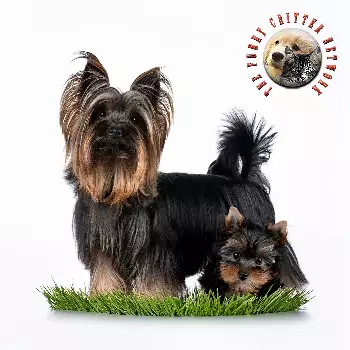
Modern Silky Terrier breeders continue to emphasize the breed's distinctive silky coat, compact build, and lively temperament. The breed standard calls for a flat, fine coat that is silky in texture and falls to approximately five to six inches in length, parted along the back from head to tail. Maintaining this coat requires regular grooming, which has become both a point of pride for dedicated owners and a factor that limits the breed's appeal to potential owners who prefer lower-maintenance dogs.

In the show ring, Silky Terriers continue to compete successfully in both toy and terrier group competitions depending on the country and kennel club. The breed has produced notable winners at major dog shows, and specialty shows organized by breed clubs attract dedicated exhibitors from around the world. The show community plays an important role in maintaining breed standards and promoting responsible breeding practices.

The Silky Terrier has also found a niche in various dog sports and activities beyond traditional conformation showing. Their intelligence, agility, and eagerness to please make them competitive participants in agility trials, obedience competitions, and rally events. Some owners have also explored therapy work with their Silky Terriers, taking advantage of the breed's affectionate nature and manageable size to bring comfort to hospital patients and nursing home residents.

Notable Individuals

While the Silky Terrier has not produced the same number of individually famous dogs as some larger or more popular breeds, several notable Silky Terriers have made their mark in the show ring and in breed history. Champion Donogh of Donalee, an influential Australian show dog from the mid-twentieth century, is frequently cited in breed histories as a dog whose conformation and temperament helped define the modern standard for the breed.

In the United States, the breed's early show career was shaped by dogs imported from Australia by dedicated fanciers who recognized the breed's potential. These foundation dogs and their descendants established the American Silky Terrier lines that continue to influence the breed today. The contributions of these early importers and breeders are well documented in the records of the Silky Terrier Club of America and are celebrated at the club's national specialty shows.

Beyond the show ring, individual Silky Terriers have gained recognition for their roles in therapy work, community service, and even search and rescue training demonstrations. The breed's intelligence and trainability have allowed individual dogs to distinguish themselves in a variety of contexts, demonstrating that the Silky Terrier's abilities extend well beyond the show ring and the living room.

The breed has also been championed by notable dog writers, judges, and breed historians who have documented the Silky Terrier's development and advocated for its recognition and preservation. These individuals have played a crucial role in maintaining public awareness of the breed and ensuring that its history and heritage are accurately recorded for future generations of dog enthusiasts.

Always consult a qualified professional before making any health-related decisions. This content is provided for informational reference only and should not replace professional guidance specific to your animal.