
Origins & Development

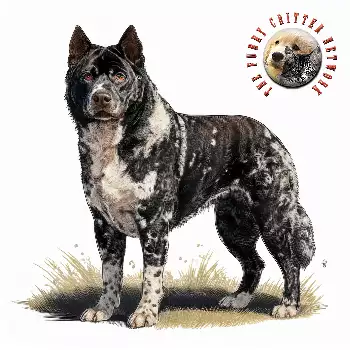
The Mudi is a Hungarian herding breed that emerged naturally in the countryside of Hungary during the 18th and 19th centuries. Unlike many European breeds that were deliberately engineered through selective crossing programs, the Mudi developed organically among the working dogs of Hungarian shepherds. These farmers and herdsmen valued function above appearance, and the dogs that proved most capable at managing livestock were the ones that survived and reproduced. Over generations, a distinct type began to solidify in the rural regions between the Danube and Tisza rivers.

The breed was not formally recognized or even named until 1936, when Dr. Dezső Fényesi, a Hungarian museum director and dog enthusiast, began studying the country's native herding dogs in earnest. Fényesi observed that while the Puli and Pumi had already received breed recognition, a third type of Hungarian herding dog was being overlooked entirely. He documented the characteristics that distinguished this dog from its better-known cousins and proposed the name Mudi, a term that may derive from a common Hungarian nickname for small working dogs.

The timing of Fényesi's work proved both fortunate and tragic. His documentation provided the foundation for the breed's identity, but the devastation of World War II nearly erased the Mudi from existence. Hungary's rural communities were ravaged during the conflict, and livestock herding operations collapsed. Many Mudis perished alongside their owners. In the postwar years, dedicated Hungarian breeders painstakingly reconstructed the breed from the small number of surviving dogs, cross-referencing Fényesi's descriptions to maintain the breed's essential character.

The Fédération Cynologique Internationale granted the Mudi official recognition in 1966, placing it within Group 1 as a sheepdog and cattle dog. This recognition was an important milestone, but the breed remained almost entirely confined to Hungary and a handful of neighboring countries for decades. It was not until the late 20th and early 21st centuries that the Mudi began attracting attention from dog enthusiasts in Western Europe and North America, drawn to the breed's intelligence, versatility, and striking wavy or curly coat.

Historical Roles

The Mudi was bred first and foremost as a working farm dog, and its historical roles reflect the demanding realities of Hungarian agricultural life. These dogs were expected to handle a remarkable range of livestock, from sheep and cattle to pigs and poultry. A single Mudi could manage a flock of sheep numbering in the hundreds, using a combination of bold eye contact, sharp barking, and quick physical corrections to move animals efficiently. Their willingness to confront stubborn cattle head-on set them apart from more cautious herding breeds.

Beyond herding, the Mudi served as an all-purpose farm guardian. Hungarian smallholders could rarely afford to maintain separate dogs for different tasks, so the Mudi was expected to deter predators, alert the family to intruders, and even assist with vermin control. Their keen prey drive made them effective ratters, and their alertness ensured that nothing moved on the property without notice. This versatility became the breed's defining characteristic and remains central to its identity today.

The Mudi also played a role in Hungary's equestrian culture. In regions where horses were raised alongside cattle and sheep, Mudis were tasked with helping to move and manage horse herds. Their speed, agility, and fearlessness made them well suited to working around large animals that could easily injure a less nimble dog. Accounts from Hungarian horsemen describe Mudis darting between the legs of galloping horses with an almost casual confidence.

During the 20th century, the Mudi's working roles expanded beyond the farm. Hungarian authorities recognized the breed's intelligence and trainability, and Mudis were employed in search-and-rescue operations, narcotics detection, and border patrol work. Their compact size, sharp senses, and willingness to work in difficult terrain made them effective in roles that larger service breeds sometimes found challenging. Though these working roles remain relatively niche, they underscore the breed's extraordinary adaptability.

Cultural Symbolism

In Hungary, the Mudi occupies a special place in the national consciousness as a symbol of rural self-reliance and practical ingenuity. The breed embodies a distinctly Hungarian approach to working dogs: no frills, no exaggerated features, just quiet competence shaped by centuries of real-world demands. For many Hungarians, the Mudi represents the resourcefulness of the country's farming communities, where limited resources demanded maximum versatility from every animal on the property.

The Mudi is often discussed in contrast to its more famous Hungarian cousins, the Puli and Komondor, whose dramatic corded coats have made them internationally recognizable. While those breeds have become cultural ambassadors of a sort, the Mudi has remained the insider's dog, known primarily to those with direct connections to Hungary's herding traditions. This relative obscurity has given the breed a kind of underdog status that resonates with enthusiasts who value substance over spectacle.

In Hungarian folk traditions, herding dogs were regarded with deep respect. A good working dog was considered as valuable as a horse, and the relationship between a shepherd and his dog was seen as a partnership rather than simple ownership. The Mudi, as one of the primary herding breeds, inherited this cultural regard. Stories passed down through farming families often center on remarkable individual dogs whose intelligence and bravery saved livestock or even human lives during harsh winters or encounters with wolves.

More recently, the Mudi has become a quiet symbol of Hungarian cultural preservation. As the country has modernized and traditional farming practices have declined, maintaining heritage livestock breeds and their associated working dogs has taken on new significance. Hungarian breed enthusiasts view the Mudi not merely as a pet or sport dog but as a living connection to the country's pastoral heritage, worthy of protection for its cultural as much as its practical value.

Breed Clubs & Standards

The Mudi's breed standard has been shaped primarily by Hungarian and European cynological organizations. The Hungarian Kennel Club, known as the Magyar Ebtenyésztők Országos Egyesülete (MEOE), has served as the breed's primary custodian since its formal recognition. The MEOE's standard emphasizes the Mudi's working character, describing a medium-sized dog with a wedge-shaped head, erect ears, and a distinctive coat that is short and smooth on the face and front legs but wavy to curly on the rest of the body.

The Fédération Cynologique Internationale standard, which governs the breed internationally, closely follows the Hungarian template. It specifies an ideal height of 41 to 47 centimeters at the withers for males and 38 to 44 centimeters for females. The standard recognizes a wide range of coat colors, including black, white, fawn, ash, brown, and a striking merle pattern. This diversity of accepted colors is unusual among herding breeds and reflects the Mudi's heritage as a dog valued for performance rather than cosmetic uniformity.

In North America, the Mudi's journey toward full recognition has been gradual. The American Kennel Club admitted the Mudi to its Foundation Stock Service in 2004, allowing the breed to be registered and shown in companion events. The AKC granted full recognition in 2022, placing the Mudi in the Herding Group. The United Kennel Club had already recognized the breed in 2006. These milestones have increased the Mudi's visibility in North America, though the breed remains rare compared to established herding breeds.

Breed clubs dedicated to the Mudi exist in several countries, including the Mudi Club of America, which serves as the AKC parent club, and various European organizations. These clubs work to promote responsible breeding, organize herding trials and other performance events, and educate the public about the breed. A recurring theme in club communications is the importance of preserving the Mudi's working instincts and avoiding the pitfalls of breeding primarily for the show ring, a concern that reflects the breed's deeply practical origins.

The Breed Today

The Mudi remains a rare breed by global standards. Estimates suggest that the worldwide population numbers only a few thousand dogs, with the largest concentrations found in Hungary and Finland. In North America, annual registrations are modest, and finding a Mudi puppy typically requires patience, advance planning, and willingness to join a waiting list with a dedicated breeder. This rarity has both advantages and challenges: it has helped prevent the overbreeding and health problems that plague more popular breeds, but it also means that the gene pool requires careful management.

In its homeland, the Mudi continues to work as a herding dog on farms where traditional livestock management practices persist. However, the majority of Mudis today live as companion animals and sport dogs. The breed has proven exceptionally capable in competitive dog sports, excelling in agility, obedience, flyball, disc dog competitions, and herding trials. Their combination of speed, intelligence, and eagerness to work with a handler makes them formidable competitors, and Mudi owners frequently report that the breed learns new skills with remarkable speed.

The Mudi's temperament makes it well suited to active households that can provide ample mental and physical stimulation. These are not dogs content to spend their days lounging on the sofa. They thrive when given a job to do, whether that job involves managing livestock, navigating an agility course, or learning complex trick routines. Prospective owners are generally advised to consider whether their lifestyle can accommodate a dog that demands engagement and activity.

The breed's recent AKC recognition has brought increased attention, and Mudi enthusiasts are cautiously optimistic about the breed's future. The hope is that greater visibility will attract dedicated owners and breeders without triggering the kind of popularity surge that can lead to irresponsible breeding. The Mudi community has watched other rare breeds struggle with sudden popularity, and most breeders are committed to a slow, deliberate approach to growth that prioritizes health, temperament, and working ability above all else.

Notable Individuals

While the Mudi lacks the celebrity status of breeds that have starred in major films or belonged to heads of state, individual Mudis have earned recognition within the dog sport and working dog communities. Several Mudis have achieved championship titles in agility at both national and international levels, demonstrating the breed's extraordinary athletic ability. In European agility circuits, where competition is fierce and dominated by Border Collies and Belgian Malinois, Mudis have turned heads by competing at the highest levels despite their relative obscurity.

In the world of herding trials, Hungarian Mudis have distinguished themselves in competitions that test practical stock-handling skills. These events, which simulate real-world herding scenarios, reward the calm authority and quick decision-making that the Mudi brings to livestock work. Judges and spectators have noted the breed's distinctive style: less intense and obsessive than a Border Collie, but remarkably efficient and adaptable, able to shift approach depending on the temperament of the livestock being worked.

The breed has also gained recognition through search-and-rescue work. Individual Mudis have been deployed in disaster response scenarios in Hungary and neighboring countries, where their compact size allows them to navigate rubble and confined spaces that larger breeds cannot access. These dogs have contributed to successful operations that saved lives, earning respect from professional handlers who might otherwise have overlooked such a rare breed.

In North America, several Mudis have served as breed ambassadors by earning titles across multiple disciplines, demonstrating the breed's versatility to audiences unfamiliar with Hungarian herding dogs. These multi-titled dogs, competing in everything from herding and agility to scent work and rally obedience, have done more to introduce the Mudi to the broader dog community than any advertising campaign could. Their achievements underscore the breed's founding principle: a single dog, capable of doing it all.

Always consult a qualified professional before making any health-related decisions. This content is provided for informational reference only and should not replace professional guidance specific to your animal.