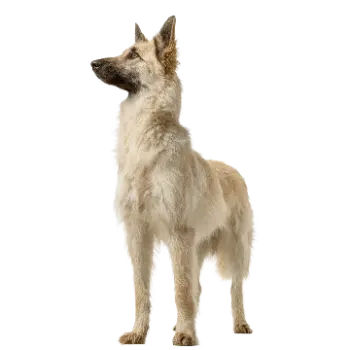

The Belgian Laekenois traces its roots to the rural farmlands surrounding the town of Laeken, near Brussels, Belgium. During the late nineteenth century, Belgian shepherds relied on sturdy, weather-resistant herding dogs capable of managing flocks across open pastures and guarding property. The Laekenois emerged as a distinct variety within the broader family of Belgian Shepherds, sharing common ancestry with the Malinois, Tervuren, and Groenendael but distinguished by its uniquely rough, tousled coat.
Professor Adolphe Reul of the Belgian Veterinary School played a pivotal role in formally classifying Belgian shepherd dogs in the 1890s. After an extensive survey of working sheepdogs throughout Belgium, Reul and his colleagues grouped the dogs into four varieties based on coat type and regional origin. The wiry-coated dogs concentrated around the Laeken district were designated the Laekenois, and early breeding programs sought to standardize their appearance while preserving the hardy working temperament that farmers depended on.
Unlike its three sibling varieties, the Laekenois was also historically employed to guard linen drying in the fields around Laeken, a task that required vigilance and an independent streak. This dual-purpose background as both herder and guardian gave the breed a distinctive behavioral profile that persists today. Early pedigrees show that Laekenois bloodlines occasionally crossed with the other Belgian varieties, but dedicated breeders gradually worked to maintain the rough coat as a defining characteristic.
By the turn of the twentieth century, breed clubs in Belgium had established formal standards, and the Laekenois was exhibited at Belgian dog shows alongside its smoother and longer-coated relatives. However, it remained the least numerous of the four varieties, a status it has never fully shaken. The breed's rarity has been both a challenge for breeding programs and a point of pride for the devoted fanciers who have sustained the Laekenois through periods of war and social upheaval.