
Origins & Development

The Bedlington Terrier traces its roots to the mining town of Bedlington in Northumberland, England, where it was first developed in the early nineteenth century. Before the breed carried its current name, dogs of this type were known as Rothbury Terriers or Rothbury's Lambs, a nod to the nearby Rothbury Forest where similar terrier types had been kept by Romani travelers and local hunters for generations. These early dogs were prized for their remarkable speed, endurance, and tenacity in pursuing vermin and small game through the rough terrain of northern England.

The breed's formal history often begins with a dog named Old Flint, whelped around 1782 and owned by Squire Trevelyan. However, the first dog to actually bear the name Bedlington Terrier was Ainsley's Piper, born in 1825 and owned by Joseph Ainsley of the town of Bedlington. Piper was renowned for his courage and hunting prowess and reportedly continued to hunt badgers and other quarry well into old age, cementing the breed's reputation as a fearless working terrier despite its lamb-like appearance.

Over subsequent decades, breeders refined the Bedlington by crossing the original Rothbury type with Whippets, which contributed the breed's graceful, arched-back silhouette and impressive turn of speed. Some historians also believe that Dandie Dinmont Terrier and Otterhound blood entered the mix, adding to the Bedlington's distinctive topknot and linty, curly coat. These careful crosses produced a dog uniquely suited to both the hunt and the hearth, combining terrier grit with an elegant bearing that would later captivate the show ring.

By the mid-nineteenth century, the Bedlington Terrier had begun to move beyond its working-class origins. Miners and nail-makers who originally kept the dogs for ratting and rabbit hunting found that the breed's unusual appearance and spirited yet gentle temperament also appealed to the gentry. This dual identity as both a rugged working dog and a refined companion would become one of the Bedlington's defining characteristics throughout its history.

Historical Roles

In the coal-mining communities of Northumberland and Durham, Bedlington Terriers served a vital practical function as vermin exterminators. Rats were a persistent problem in mines, homes, and grain stores, and the Bedlington's combination of speed, agility, and relentless prey drive made it an exceptional ratter. Miners often wagered on their dogs' abilities in organized ratting competitions, where Bedlingtons regularly outperformed larger and more powerful breeds through sheer determination and quickness.

Beyond vermin control, the breed played an important role in poaching and small-game hunting. In an era when game laws heavily restricted hunting rights to the landed classes, working-class families in northern England relied on dogs like the Bedlington to supplement their diets with rabbit, hare, and the occasional fox. The breed's quiet demeanor and deceptive speed made it an ideal poacher's companion, able to course game silently and efficiently without attracting the attention of gamekeepers.

Bedlingtons also found work alongside Romani and Tinker communities, who valued the breed's versatility and portability. These traveling groups used Bedlingtons for hunting, guarding camps, and as general-purpose working dogs suited to a nomadic lifestyle. The breed's hardiness and adaptability to varying conditions made it a natural fit for life on the road, and Romani breeders are credited with helping to shape and preserve the early Bedlington type.

As industrialization reshaped the English landscape, the Bedlington gradually transitioned from working terrier to show dog and companion. The breed's elegant lines and distinctive grooming style attracted exhibitors, and by the late nineteenth century, the Bedlington was a regular fixture at dog shows across Britain. This shift did not entirely erase the breed's working instincts, however, and many fanciers have continued to value the Bedlington's dual heritage as both an athletic hunter and a graceful show dog.

Cultural Symbolism

Few breeds embody the concept of hidden strength quite like the Bedlington Terrier. Often described as a dog with the appearance of a lamb but the heart of a lion, the Bedlington has become a symbol of the idea that gentle exteriors can conceal fierce determination. This duality resonates deeply in the culture of northern England, where working-class communities have long valued toughness tempered by quiet dignity.

In Northumberland and the broader North East of England, the Bedlington Terrier is a source of considerable local pride. The town of Bedlington itself has embraced the breed as a cultural emblem, and the dog's silhouette appears in various local insignia and community branding. For residents of the region, the breed represents a living connection to the area's mining heritage and the resilient communities that shaped it.

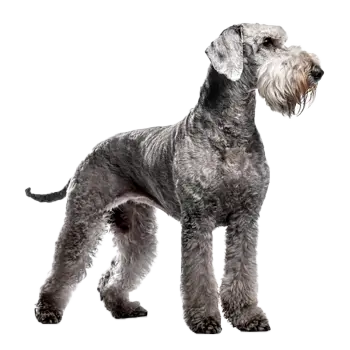
The Bedlington's distinctive lamb-like trim has also made it a symbol within the broader dog fancy of the artistry involved in breed presentation. The elaborate grooming required to achieve the breed's signature silhouette transforms each Bedlington into a kind of living sculpture, blurring the line between animal husbandry and aesthetic craft. This grooming tradition has become an integral part of the breed's cultural identity, inseparable from the dog itself.

Beyond its home region, the Bedlington Terrier has come to represent a broader ideal of the versatile companion dog. Neither purely a lapdog nor solely a working terrier, the Bedlington occupies a unique cultural niche as a breed that can transition seamlessly from energetic outdoor pursuits to quiet domestic life. This adaptability has given the breed a symbolic resonance among dog enthusiasts who value balance and versatility in their canine companions.

Breed Clubs & Standards

The Bedlington Terrier Club, founded in England in 1877, was among the earliest breed-specific clubs established for any terrier. Its formation marked a critical turning point in the breed's history, signaling the transition from an informal working type to a formally recognized breed with documented standards. The club's founding members, many of whom had roots in the mining communities of Northumberland, sought to preserve the breed's distinctive characteristics while establishing consistent criteria for judging and breeding.

The first written breed standard for the Bedlington Terrier was drawn up shortly after the club's formation and emphasized the breed's unique combination of grace and strength. Key features outlined in the early standard included the distinctive pear-shaped head with its prominent topknot, the arched loin, the linty coat, and the light, springy gait. While the standard has undergone revisions over the decades, many of its core descriptors remain remarkably consistent with those original specifications, reflecting the breed's stable type.

In the United States, the Bedlington Terrier Club of America has served as the breed's parent club under the American Kennel Club since 1936. The BTCA has been instrumental in promoting responsible breeding practices, supporting health research, and organizing specialty shows that celebrate the breed's unique qualities. The club also maintains a rescue network to help rehome Bedlingtons in need, reflecting the breed community's commitment to the welfare of individual dogs beyond the show ring.

Internationally, the Bedlington Terrier is recognized by all major kennel clubs and is classified within the terrier group. The Fédération Cynologique Internationale maintains a standard based on the British original, ensuring a degree of global consistency in breed type. Despite relatively modest registration numbers compared to more popular breeds, the Bedlington maintains a dedicated and passionate global community of breeders and exhibitors who work to preserve the breed's distinctive characteristics and working heritage.

The Breed Today

The Bedlington Terrier remains a relatively uncommon breed in the twenty-first century, consistently ranking in the lower half of AKC registration statistics. However, the breed's devoted following argues that this modest popularity has been something of a blessing, helping to shield the Bedlington from the overbreeding and genetic bottlenecks that have affected more fashionable breeds. Dedicated breeders have been able to maintain a focus on health, temperament, and breed type without the pressures of mass commercial demand.

Health-conscious breeding has become a particular point of emphasis in the modern Bedlington community. The breed is affected by copper toxicosis, a hereditary liver condition caused by an autosomal recessive gene. The development of DNA testing for this condition has been a significant milestone, allowing breeders to identify carriers and make informed breeding decisions. This proactive approach to genetic health has become a model for other breed communities facing similar hereditary challenges.

In the show ring, the Bedlington continues to attract attention for its dramatic grooming and elegant movement. The breed's distinctive trim, which requires considerable skill to execute properly, has made the Bedlington a perennial crowd favorite at major dog shows. At the same time, a growing number of owners are rediscovering the breed's athletic abilities through performance events such as agility, earthdog trials, and lure coursing, where the Bedlington's speed and prey drive can be channeled into structured competition.

As a companion animal, the modern Bedlington Terrier is valued for its gentle, affectionate temperament and hypoallergenic coat. The breed's minimal shedding makes it a popular choice for allergy sufferers, while its moderate exercise needs and adaptable nature suit a range of living situations from country homes to urban apartments. The Bedlington's combination of elegance, athleticism, and companionability continues to win converts among dog enthusiasts seeking something distinctive and rewarding.

Notable Individuals

Ainsley's Piper, born in 1825, holds the distinction of being the first dog formally identified as a Bedlington Terrier. Owned by Joseph Ainsley of Bedlington, Piper was celebrated for his extraordinary courage and hunting ability. Historical accounts describe him as still gamely pursuing badgers at fourteen years of age, despite having lost most of his teeth and much of his sight. Piper's tenacity established an enduring template for the breed's character and remains a touchstone in Bedlington Terrier lore.

In the show ring, several Bedlingtons have achieved notable distinction over the decades. Champion Donan's Delta Dawn made a significant impact in the American show ring during the 1970s, helping to raise the breed's profile among exhibitors and the general public. More recently, Bedlingtons have continued to earn competitive placements at prestigious events including the Westminster Kennel Club Dog Show and Crufts, demonstrating that the breed can hold its own against more numerically dominant terrier breeds.

The Bedlington Terrier has also produced notable individuals in performance disciplines. The breed's Whippet heritage gives it surprising speed and athleticism, and individual Bedlingtons have earned titles in agility, obedience, and earthdog competitions. These performance achievements are important to the breed community because they demonstrate that the modern Bedlington retains the working abilities and drive that defined its ancestors in the Northumberland coalfields.

Beyond the world of organized competition, individual Bedlingtons have served with distinction as therapy dogs, search-and-rescue volunteers, and ambassadors for their breed at educational events and community outreach programs. These working roles highlight the breed's versatility and gentle temperament, reinforcing the Bedlington's reputation as a dog capable of excelling in virtually any role asked of it.

Always consult a qualified professional before making any health-related decisions. This content is provided for informational reference only and should not replace professional guidance specific to your animal.