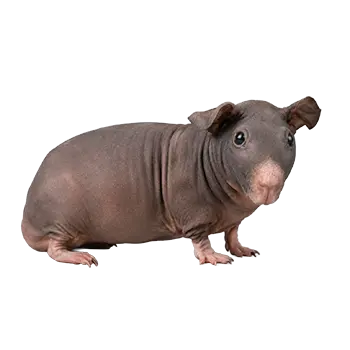

The Skinny guinea pig has one of the most unusual origin stories in the companion animal world. Unlike most guinea pig breeds, which were developed through generations of selective breeding for coat type and color, the Skinny emerged from a laboratory setting. In 1978, researchers at the Armand Frappier Institute in Montreal, Canada, identified a spontaneous genetic mutation in a colony of laboratory guinea pigs that resulted in a nearly hairless phenotype. This mutation, caused by a recessive gene, produced animals born with little to no fur covering their bodies.
The original hairless guinea pigs were maintained as a laboratory strain for dermatological research, as their exposed skin made them useful models for studying skin conditions, wound healing, and the effects of topical treatments. For years, these animals existed exclusively within the research community, bred and maintained under controlled conditions with no thought toward their potential as companion animals.
During the 1980s and 1990s, hairless guinea pigs began to make their way from laboratory colonies into the hands of private breeders who recognized their potential as unique pets. These early breeders worked to strengthen the genetic health of the Skinny by outcrossing with furred guinea pig breeds, improving the animals' overall vigor and temperament while maintaining the characteristic hairless appearance. This process transformed the Skinny from a laboratory specimen into a viable companion animal breed.
The transition from lab animal to pet was not without controversy. Some in the cavy community questioned whether breeding for hairlessness was in the animals' best interest, given the increased vulnerability to temperature extremes and skin injuries that comes with a lack of fur. Proponents argued that responsible husbandry and appropriate care could address these concerns, and the breed's growing popularity among informed owners has largely validated that position.