
Origins & Ancient Roots

The Turkish Van is one of the oldest naturally occurring cat breeds in the world, with roots stretching back thousands of years to the rugged highlands surrounding Lake Van in eastern Turkey. This remote, mountainous region provided an isolated environment where the breed developed its distinctive characteristics with minimal human intervention. Archaeological evidence and regional folklore suggest that cats resembling the modern Turkish Van have inhabited the area for centuries, thriving in the harsh continental climate that shaped their uniquely water-resistant coat.

The breed's semi-longhaired, single-layered coat is a direct adaptation to the extreme seasonal shifts of the Lake Van region, where bitterly cold winters give way to intensely hot summers. Unlike most longhaired breeds, the Turkish Van lacks a dense undercoat, allowing it to shed efficiently in warm months and grow a luxurious cashmere-like coat for winter insulation. This natural engineering is one of the clearest indicators of the breed's ancient adaptation to its homeland.

Genetic studies conducted in the early twenty-first century confirmed that the Turkish Van is among the most genetically distinct domestic cat populations in the world. Its DNA profile places it firmly within the Eastern Mediterranean and Southwest Asian genetic cluster, far removed from the European and Asian breeds developed through selective breeding programs. This genetic isolation underscores just how long the breed has existed as a distinct population, shaped primarily by natural selection rather than human design.

Local communities around Lake Van have long regarded these cats as a natural treasure. Stories passed down through generations describe the cats hunting in the fields, resting on the warm stones of ancient ruins, and even swimming in the shallows of Lake Van itself. While the specifics of these oral histories vary from village to village, the consistent thread is one of a hardy, self-sufficient cat that has been woven into the daily life and landscape of the region for as long as anyone can remember.

Historical Roles

Throughout much of their history, Turkish Vans served practical roles in the rural communities surrounding Lake Van. Farmers and villagers valued them as skilled mousers capable of keeping grain stores and homes free of rodents. Their athletic build, keen hunting instincts, and fearless temperament made them highly effective working cats in a region where rodent control was essential to food security and household hygiene.

The breed's most famous characteristic, its reported affinity for water, likely developed as a functional behavior in the Lake Van environment. Observers have noted Turkish Vans wading into shallow streams and lake edges, possibly to cool off during the region's extreme summer heat or to catch small fish. While not every individual Turkish Van is a natural swimmer, the breed's unusual comfort around water has been documented consistently enough to suggest a genuine behavioral tendency shaped by generations of life near one of the largest lakes in the Middle East.

Beyond pest control, Turkish Vans also served as companion animals in the homes of regional traders and merchants who traveled the ancient trade routes crisscrossing eastern Anatolia. Their sociable but independent nature made them well-suited to the rhythms of busy households. Some historical accounts describe Turkish merchants bringing their cats along on caravan journeys, though these accounts are anecdotal and difficult to verify with certainty.

In the broader context of feline history, the Turkish Van occupies an important niche as an example of a landrace breed, one that developed naturally within a specific geographic area rather than being deliberately engineered by breeders. This distinction sets it apart from the majority of recognized cat breeds and gives it a special status among geneticists and breed historians who study the natural evolution of domestic cats.

Cultural Symbolism

In Turkish culture, the Van cat holds a position of considerable symbolic importance. The breed is widely regarded as a national treasure of Turkey, and its image appears on regional insignia, tourism materials, and cultural displays throughout the Van Province. The Turkish government has taken active steps to promote the breed as part of the nation's natural and cultural heritage, reflecting the deep pride that many Turkish citizens feel toward this distinctive animal.

One of the most enduring legends associated with the Turkish Van involves the story of Noah's Ark, which, according to tradition, came to rest on Mount Ararat, located not far from Lake Van. Regional folklore holds that two cats left the Ark and made their way to the shores of Lake Van, becoming the ancestors of the modern breed. According to some versions of the story, the distinctive color markings on the Turkish Van's head were left by a divine blessing. While this story is a matter of cultural tradition rather than historical fact, it illustrates the reverence with which the breed is regarded in its homeland.

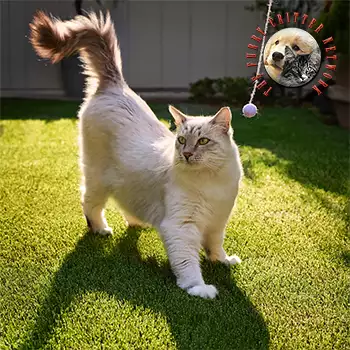
The Turkish Van's striking appearance, a predominantly white body with color confined to the head and tail in the classic Van pattern, has also contributed to its symbolic resonance. This unusual marking pattern is so closely associated with the breed that the term Van pattern is now used across the cat fancy to describe any cat displaying a similar distribution of color. The pattern's visual distinctiveness has made the Turkish Van an instantly recognizable symbol of its region.

Beyond Turkey, the breed has gained symbolic significance among cat enthusiasts worldwide as a living connection to the ancient world of domesticated animals. Breed advocates often emphasize the Turkish Van's natural origins and genetic purity as qualities worth preserving, framing the breed as a bridge between modern cat culture and the deep history of the human-feline relationship.

Breed Clubs & Standards

The modern history of the Turkish Van as a recognized breed begins in 1955, when two British women, Laura Lushington and Sonia Halliday, encountered the cats during a trip to Turkey and brought a pair back to England. Struck by the cats' distinctive appearance and unusual love of water, they began a careful breeding program that would eventually introduce the Turkish Van to the wider world of pedigreed cat fancying.

The Governing Council of the Cat Fancy in the United Kingdom granted the breed official recognition in 1969, initially under the name Turkish Cat. The name was later changed to Turkish Van to distinguish it from the Turkish Angora, a separate breed with its own distinct history and characteristics. This naming clarification was important for establishing the Turkish Van's unique identity within the cat fancy and preventing confusion between two breeds that share a geographic origin but differ significantly in build, coat type, and temperament.

In the United States, the Cat Fanciers' Association accepted the Turkish Van for registration in 1988 and granted it full championship status in 1994. The International Cat Association also recognizes the breed, as do most major cat registries around the world. Breed standards across these organizations consistently emphasize the Turkish Van's large, muscular build, distinctive Van-pattern markings, and semi-longhaired coat with a silky texture.

Dedicated breed clubs and societies exist in several countries, working to promote responsible breeding practices, educate the public about the breed's unique qualities, and maintain genetic diversity within a relatively small global population. These organizations play a critical role in the breed's long-term viability, as the Turkish Van remains one of the rarer pedigreed cat breeds, with limited breeding stock available outside of Turkey.

The Breed Today

Today the Turkish Van remains a rare breed by global standards. Annual registration numbers with major cat registries are modest compared to more popular breeds, and finding a reputable Turkish Van breeder often requires patience and research. This rarity is partly a function of the breed's relatively late entry into the Western cat fancy and partly a reflection of the limited genetic base available to breeders working outside of Turkey.

Within Turkey, efforts to preserve the breed have intensified in recent decades. The Van Cat Research Center, affiliated with Yüzüncü Yıl University in the city of Van, maintains a breeding colony dedicated to preserving the breed's genetic integrity. The center has attracted both domestic and international attention for its work in studying and protecting the Turkish Van, and it serves as a focal point for conservation efforts. The Turkish government has also imposed restrictions on the export of Turkish Van cats from the country, reflecting the breed's status as a protected national heritage animal.

In the Western cat fancy, Turkish Van breeders face the ongoing challenge of maintaining genetic diversity while adhering to strict breed standards. Outcrossing is generally not permitted under most registry rules, which means breeders must work carefully to avoid the health problems that can arise from a narrow gene pool. Despite these challenges, the breed enjoys a loyal following among cat enthusiasts who are drawn to its unique combination of athleticism, intelligence, and striking appearance.

The Turkish Van's reputation as the swimming cat continues to be its most recognizable calling card, even though individual cats vary widely in their actual enthusiasm for water. Breeders and owners report that many Turkish Vans do show a notable curiosity about running water, splashing in bowls, and even joining their owners in the bathtub, but these behaviors are not universal. Regardless, the association with water has given the breed a distinctive identity that sets it apart in a crowded field of pedigreed cats.

Notable Individuals

While the Turkish Van has not produced the kind of individual celebrity cats associated with some more common breeds, several notable cats have contributed to the breed's development and public profile over the years. The original pair brought to England by Laura Lushington in 1955, named Van Attila and Van Guzelli Iskenderun, are credited with founding the Western breeding population and remain important figures in the breed's pedigree records.

In the show ring, Turkish Vans have earned top honors at major cat shows around the world, helping to raise the breed's visibility among judges and spectators alike. Grand champions and supreme winners in organizations such as the Cat Fanciers' Association and The International Cat Association have demonstrated the breed's ability to compete at the highest levels, showcasing the muscular build, luxurious coat, and confident personality that define the standard.

The cats maintained at the Van Cat Research Center in Turkey have also gained a degree of fame, particularly the odd-eyed individuals that are highly prized in Turkish culture. Cats with one blue eye and one amber eye are considered especially auspicious in local tradition, and photographs of these striking animals have been widely circulated in media coverage of the center's work. These cats serve as ambassadors for the breed within Turkey and have helped to sustain public interest in Turkish Van conservation.

Social media has given individual Turkish Vans a platform to reach audiences far beyond the traditional cat fancy. Owners who share videos and photographs of their cats displaying the breed's characteristic behaviors, including water play, acrobatic leaps, and interactive intelligence games, have helped to introduce the Turkish Van to a new generation of potential admirers. While no single Turkish Van has achieved the viral fame of some internet-celebrity cats, the breed's collective online presence has contributed meaningfully to its growing recognition.

Always consult a qualified professional before making any health-related decisions. This content is provided for informational reference only and should not replace professional guidance specific to your animal.