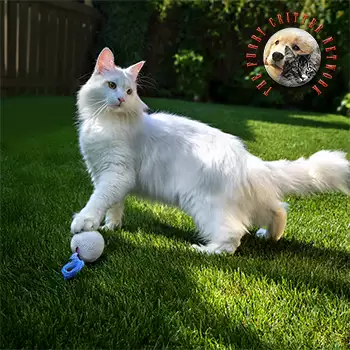

Origins & Ancient Ancestry

The Turkish Angora is widely regarded as one of the oldest natural cat breeds in existence, with roots stretching back centuries to the Ankara region of central Turkey. Historical evidence suggests that longhaired cats first appeared in this mountainous area, where cooler climates may have favored the development of their distinctive silky coats. The breed's name itself derives from Angora, the historical European name for the city of Ankara, underscoring the deep geographical connection between this cat and its homeland.

Early written references to longhaired cats from Turkey appear in European texts dating to the sixteenth century, when traders and diplomats traveling through the Ottoman Empire encountered these striking felines. French naturalist Nicolas-Claude Fabri de Peiresc is often credited as one of the first Europeans to import Angora cats to Western Europe in the early 1600s. From France, the cats quickly spread to aristocratic households across England, Italy, and beyond, where their elegant appearance made them prized companions.

Genetic studies have largely confirmed the Turkish Angora's status as a naturally occurring breed rather than one shaped primarily by selective human breeding. The longhair gene carried by these cats is believed to be a spontaneous mutation that became fixed within the population over many generations. This natural heritage sets the Turkish Angora apart from many modern breeds that were developed through deliberate crossbreeding programs, and it remains a point of deep pride for enthusiasts and Turkish conservationists alike.

The Ankara Zoo has played a pivotal role in preserving the breed within Turkey, maintaining a controlled breeding program since the early twentieth century. Turkish authorities recognized that the purebred white Angora was becoming increasingly rare due to crossbreeding with other cats, and the zoo's program focused on maintaining the white-coated, odd-eyed variety that had become a national symbol. For decades, the zoo restricted exports, making it difficult for Western breeders to obtain foundation stock directly from Turkey.

Historical Roles

Throughout Ottoman history, the Turkish Angora held a place of distinction in the courts and households of the ruling class. These cats were cherished not only for their beauty but also for their companionable and alert temperaments. Ottoman sultans reportedly kept Angoras within the Topkapi Palace, and the cats became closely associated with luxury, refinement, and the cultural sophistication of the empire. Their presence in royal settings elevated the breed's status far beyond that of an ordinary household cat.

Beyond the palace walls, Turkish Angoras served practical roles in homes and communities across Anatolia. Like all cats, they were valued for their skill in controlling rodent populations in granaries, markets, and homes. However, their calm and sociable nature also made them favored indoor companions, and they were often given as prestigious gifts to visiting dignitaries and foreign ambassadors. This tradition of diplomatic gifting helped spread the breed across Europe and contributed to its early international reputation.

In Islamic tradition, cats have long held a respected place, and the Turkish Angora benefited from this broader cultural reverence. Cats are considered clean animals in Islamic teaching, and numerous hadith reference the Prophet Muhammad's fondness for them. This cultural context meant that Turkish Angoras and other cats moved freely through mosques, homes, and public spaces in Ottoman society, enjoying a level of respect and care that was unusual for domestic animals in many other parts of the world.

As European interest in pedigreed cats grew during the nineteenth century, the Turkish Angora's historical pedigree gave it an aura of authenticity and nobility. Early cat fanciers in Victorian England particularly valued the breed, though the rising popularity of the Persian cat eventually overshadowed the Angora in Western show rings. This period of relative obscurity in the West lasted until the mid-twentieth century, when renewed interest in natural breeds brought the Turkish Angora back into the spotlight.

Cultural Symbolism

In Turkey, the white Turkish Angora holds deep national significance and is considered a living cultural treasure. The breed is closely associated with Turkish identity, appearing on postage stamps, in tourism campaigns, and in government-sponsored conservation efforts. The odd-eyed white Angora, with one blue eye and one amber eye, is particularly iconic and is sometimes linked in Turkish folklore to themes of good fortune and divine blessing.

The Turkish Angora's image has been woven into the cultural fabric of Ankara and the broader Turkish nation in ways that few other animal breeds can claim. Public art, municipal emblems, and cultural festivals in the Ankara region frequently reference the breed. The cats are seen not merely as pets but as ambassadors of Turkish heritage, representing the continuity of a natural lineage that predates modern borders and political structures.

Beyond Turkey, the Angora's silky white coat and graceful bearing have made it a widespread symbol of feline elegance. In Western art and literature, the longhaired white cat often depicted in paintings and illustrations from the eighteenth and nineteenth centuries is frequently modeled on, or at least inspired by, the Angora type. This cultural image has persisted, and the Turkish Angora continues to embody a certain ideal of feline beauty in the popular imagination.

The breed also carries symbolic weight in discussions about genetic conservation and biodiversity. As a naturally occurring breed with documented historical lineage, the Turkish Angora serves as a case study in the importance of preserving unmodified gene pools. Conservationists and breed advocates often point to the Angora as an example of how cultural commitment and institutional support can sustain a rare population against the pressures of crossbreeding and genetic dilution.

Breed Clubs & Standards

The Cat Fanciers' Association recognized the Turkish Angora for registration in 1968, initially accepting only white cats. Full championship status followed in 1973, and over the subsequent decades the CFA expanded its accepted color palette to include a wide range of coat colors and patterns beyond white. This broadening reflected a growing understanding that the breed's genetic heritage encompassed far more diversity than the iconic all-white variety alone.

The International Cat Association also recognizes the Turkish Angora and has developed its own breed standard emphasizing the cat's elegant, balanced body type, fine-boned structure, and distinctively silky coat. TICA's standard places considerable weight on the breed's overall refinement and gracefulness, distinguishing it from heavier-bodied longhaired breeds such as the Persian or Maine Coon. The almond-shaped eyes, large upright ears, and plumed tail are among the defining features judges evaluate in the show ring.

In Turkey, the Ankara Zoo's breeding program operates under its own set of criteria that differ somewhat from Western registry standards. The zoo has historically focused almost exclusively on white-coated cats, particularly those with odd eyes or blue eyes, reflecting the cultural premium placed on these traits within Turkey. This divergence between Turkish conservation priorities and Western breed standards has occasionally created tension, but it also highlights the different purposes that breed programs serve — cultural preservation on one hand and competitive exhibition on the other.

Dedicated Turkish Angora breed clubs exist in North America, Europe, and beyond, providing resources for breeders and owners. These organizations coordinate health screening initiatives, organize specialty shows, and work to educate the public about the breed's unique history and care requirements. They also serve as advocates for maintaining genetic diversity within breeding lines, recognizing that the Turkish Angora's relatively small global population makes careful management essential to the breed's long-term health.

The Breed Today

The Turkish Angora remains a relatively uncommon breed outside of Turkey, though it enjoys a devoted following among cat fanciers worldwide. Breeders in North America, Europe, and parts of Asia maintain active programs, and the breed consistently attracts attention at cat shows for its striking appearance and animated personality. Despite its rarity compared to breeds like the Persian or Siamese, the Turkish Angora's passionate community of breeders and owners ensures its continued visibility.

Modern Turkish Angoras are recognized in a wide array of colors and patterns, including solid, tabby, calico, and bicolor varieties. While the white-coated Angora remains the most iconic and publicly recognized form, colored Angoras have gained significant appreciation in recent decades. This broader color acceptance has helped expand the breed's gene pool and has given breeders more flexibility in planning healthy pairings.

Health consciousness has become an increasingly important focus for the breed community. Turkish Angoras are generally robust cats, but they can be predisposed to certain conditions, including hypertrophic cardiomyopathy and hereditary ataxia. Responsible breeders screen for these conditions and share health data to minimize their prevalence. The white, blue-eyed variant also carries a higher incidence of congenital deafness, a trait that breeders and owners manage through testing and informed placement.

In Turkey, conservation efforts continue at the Ankara Zoo and through private initiatives. The Turkish government has periodically revisited its policies on exporting purebred Angoras, balancing the desire to share the breed internationally with the imperative to protect its domestic population. These ongoing conversations reflect the Turkish Angora's unique position as both a beloved companion animal and a living piece of cultural heritage that carries national significance.

Notable Individuals

Perhaps the most frequently cited historical Angora owner is the French Cardinal Richelieu, who was famously devoted to cats and is believed to have kept Angora-type longhairs among his numerous feline companions in the seventeenth century. While definitive breed identification at that distance is impossible, the association between Richelieu and elegant longhaired cats has become part of the breed's popular lore and helped cement the Angora's reputation as a cat of the aristocracy.

Marie Antoinette is another historical figure often linked to the Turkish Angora. Legend holds that the French queen attempted to send her beloved cats to America ahead of her planned escape during the Revolution, and that these cats eventually reached Maine, where some enthusiasts have speculated they contributed to the development of the Maine Coon breed. While this story is almost certainly apocryphal, it speaks to the Turkish Angora's enduring association with royalty and historical drama.

In the twentieth century, the Turkish Angora's profile was significantly boosted by breeders who traveled to Turkey to obtain foundation stock directly from the Ankara Zoo. American military personnel and diplomats stationed in Turkey during the mid-century decades played a notable role in bringing Angoras to the United States, and their efforts laid the groundwork for the breed's formal recognition by Western cat registries. These individuals are celebrated within the breed community for their dedication to establishing the Turkish Angora outside its homeland.

Mustafa Kemal Ataturk, the founder of modern Turkey, is often associated with the Turkish Angora through a well-known legend predicting that his successor would be identified by the bite of a white cat. While the historical accuracy of this story is debated, it has powerfully reinforced the Turkish Angora's status as a national symbol and has been widely repeated in both Turkish and international media. The story intertwines the breed's identity with the founding narrative of the Turkish republic itself.

Always consult a qualified professional before making any health-related decisions. This content is provided for informational reference only and should not replace professional guidance specific to your animal.