
Origins & Development

The Tonkinese breed traces its roots to deliberate crosses between the Siamese and the Burmese, two of Southeast Asia's most celebrated feline lines. While the modern breeding program began in the 1960s, cats matching the Tonkinese description appeared in Western cat fancy literature as far back as the early twentieth century. Wong Mau, the foundation cat of the Burmese breed brought to the United States in 1930 by Dr. Joseph Thompson, is widely believed to have been a Tonkinese-type cat, a natural hybrid exhibiting traits intermediate between the Siamese and Burmese.

Canadian breeder Margaret Conroy is credited with launching the first intentional Tonkinese breeding program in the 1960s. Working with a sable Burmese and a seal point Siamese, Conroy sought to produce a cat that combined the moderate body type and warm personality of the Burmese with the striking coloring and vocal nature of the Siamese. The resulting kittens displayed the distinctive mink coat pattern that would become the breed's hallmark, a soft, rich coloring with subtly blended points.

Around the same time, American breeder Jane Barletta was conducting parallel crosses in New Jersey, unaware of Conroy's work in Canada. When the two breeders discovered each other's programs, they joined forces to establish a consistent breed standard. Their collaboration proved essential in building a large enough gene pool to sustain the breed and present a unified case to registering bodies.

The breed was initially registered under the name Tonkanese, a reference to the Gulf of Tonkin, though it carried no direct geographic connection to that region. The spelling was later changed to Tonkinese for consistency. The Canadian Cat Association granted championship status in 1971, and the Cat Fanciers' Association followed with full recognition in 1984 after years of provisional showing.

Historical Roles

Unlike many dog breeds developed for specific working tasks, the Tonkinese has always been bred primarily as a companion animal. Its role throughout its history has centered on human interaction, and breeders have consistently prioritized temperament alongside physical conformation. The breed's exceptional sociability made it a natural fit for households seeking an interactive and engaging pet rather than a decorative or independent one.

The Tonkinese's ancestral breeds, however, carried deep historical significance in Southeast Asia. Siamese cats were treasured in the royal courts of Siam, while Burmese-type cats appeared in the ancient Thai manuscript known as the Tamra Maew, or Cat-Book Poems. Though the Tonkinese itself is a Western creation, it inherits a lineage steeped in centuries of cultural reverence. This dual heritage gave the breed a certain mystique among cat enthusiasts who appreciated its connection to two storied bloodlines.

In the decades following its establishment, the Tonkinese found a niche as a therapy and emotional support animal. Its tendency to seek out human contact, combined with a calm confidence around strangers, made it well suited for visits to hospitals, nursing homes, and schools. While never formally classified as a working breed, the Tonkinese has served a quiet but meaningful role in animal-assisted interaction programs across North America.

Breeders also noted the Tonkinese's aptitude for learning tricks and responding to verbal cues, traits inherited from both parent breeds. This trainability, while not harnessed for any formal working purpose, contributed to the breed's reputation as one of the most interactive and engaging cats in the domestic fancy.

Cultural Symbolism

The Tonkinese occupies a unique symbolic space in the cat world as a breed that represents harmony and balance. Born from two distinct and sometimes rival breed communities, the Tonkinese embodies the idea that blending different qualities can produce something greater than the sum of its parts. This symbolism has resonated with breeders and owners who see in the Tonkinese a living example of complementary strengths uniting in a single animal.

Within the broader cat fancy, the Tonkinese has come to represent a middle path between extremes. Where the modern Siamese has trended toward an ultra-refined, angular body type and the Burmese toward a compact, rounded form, the Tonkinese maintains a moderate silhouette that many enthusiasts consider closer to the original type of both ancestral breeds. This moderation has made the Tonkinese a touchstone in debates about breed standards and the direction of selective breeding.

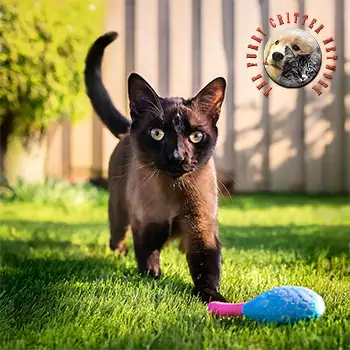
The breed's signature mink coat pattern also carries its own symbolic weight. Neither fully pointed like the Siamese nor uniformly shaded like the Burmese, the mink pattern represents a genetic intermediate that is unique to the Tonkinese. This visible blending of parental traits has made the mink Tonkinese an icon of hybrid vigor and genetic diversity in cat breeding discussions.

Culturally, the Tonkinese has become associated with warmth, sociability, and an almost dog-like devotion to family. Owners frequently describe the breed as bridging the gap between cat and dog in terms of interactive behavior, a characterization that has shaped public perception and contributed to the breed's steady growth in popularity.

Breed Clubs & Standards

The Tonkinese Breed Association, founded in the 1970s, served as the primary advocacy organization during the breed's formative years. This group coordinated breeding records, promoted responsible practices, and lobbied registries for recognition. Their efforts were instrumental in moving the Tonkinese from experimental status to full championship standing in multiple associations over the course of two decades.

The Cat Fanciers' Association recognizes the Tonkinese in twelve colors across three coat patterns: mink, solid, and pointed. The mink pattern, exclusive to heterozygous cats carrying one copy each of the Siamese and Burmese color genes, is considered the breed's signature look. Solid-patterned Tonkinese resemble Burmese in coloring, while pointed Tonkinese echo the Siamese. All three patterns are showable, though mink has traditionally been the most popular in the show ring.

The International Cat Association also grants the Tonkinese full championship status and maintains a standard that closely parallels the CFA version, emphasizing a medium-sized, muscular body with a modified wedge-shaped head. TICA's standard places particular emphasis on the breed's aqua eye color in mink-patterned cats, a feature that distinguishes the Tonkinese from both parent breeds and is often cited as one of its most captivating physical traits.

Breed clubs in Europe, Australia, and New Zealand have also established active Tonkinese communities, each adapting standards to align with their governing registries while preserving the breed's core characteristics. These international clubs have played a vital role in expanding the gene pool and connecting breeders across continents, ensuring the breed's long-term genetic health and diversity.

The Breed Today

The Tonkinese enjoys a stable and devoted following in the contemporary cat fancy, consistently ranking among the more popular pedigreed breeds in North America and gaining ground internationally. While it has never reached the mainstream visibility of the Siamese or Persian, the Tonkinese has cultivated a loyal community of breeders and owners who prize the breed's unique combination of beauty, personality, and health.

Modern Tonkinese breeders face the ongoing challenge of maintaining genetic diversity within a breed derived from a relatively narrow foundation. Outcrossing to Siamese and Burmese remains permitted by some registries, a practice that helps introduce fresh genetic material while staying true to the breed's hybrid origins. This policy reflects a pragmatic approach to breed management that prioritizes long-term vitality over closed studbook purity.

The rise of social media has provided the Tonkinese with new avenues for visibility. Owners share photos and videos of their cats' playful antics and affectionate behavior, introducing the breed to audiences who might never attend a cat show. Instagram and YouTube accounts dedicated to Tonkinese cats have amassed substantial followings, helping to drive interest and adoption inquiries.

Health-conscious breeding practices have become a central focus of the modern Tonkinese community. Breeders screen for conditions common to the Siamese and Burmese lines, including amyloidosis and certain cardiac issues, and many catteries provide health guarantees to buyers. This emphasis on transparency and preventive care has strengthened the breed's reputation as a responsibly managed and generally healthy pedigreed cat.

Notable Individuals

While the Tonkinese has not produced the kind of singular celebrity cats associated with some other breeds, several individuals have played important roles in the breed's development and public profile. Wong Mau, though officially classified as the foundation of the Burmese breed, is frequently cited in Tonkinese history as a probable natural Tonkinese, making her one of the most significant cats in the history of both breeds.

Margaret Conroy's early breeding cats, though not widely known by individual name outside the breeding community, are considered foundational to the modern Tonkinese. Her original crosses produced the cats that defined the breed's type and temperament, and their descendants appear in the pedigrees of Tonkinese around the world. Jane Barletta's cats from New Jersey played an equally important role, and the merging of these two programs created the genetic base from which the breed expanded.

In the show ring, certain Tonkinese have earned distinction through regional and national wins that raised the breed's profile during critical periods of its development. Grand champions and regional winners from the 1980s and 1990s helped demonstrate that the Tonkinese could compete at the highest levels of the cat fancy, lending credibility to the breed during a time when it was still establishing itself alongside more entrenched competitors.

More recently, individual Tonkinese cats have gained recognition through therapy work and social media presence. Cats working in hospital visitation programs and school reading programs have served as ambassadors for the breed's gentle and sociable nature, demonstrating the practical value of the temperament traits that breeders have worked to preserve over decades of careful selection.

Always consult a qualified professional before making any health-related decisions. This content is provided for informational reference only and should not replace professional guidance specific to your animal.