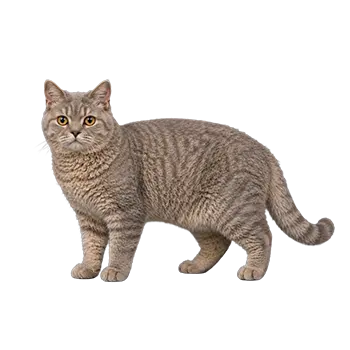

The Selkirk Rex traces its origins to a single remarkable kitten born in 1987 at a shelter in Sheridan, Montana. Among a litter of otherwise normal-coated kittens, one female stood out with an unusual curly coat that extended to her whiskers. The shelter worker recognized the kitten as something special and contacted Jeri Newman, a local Persian breeder with a keen interest in feline genetics.
Newman adopted the curly kitten and named her Miss DePesto, after a character from the television series Moonlighting. Intrigued by the coat's texture and appearance, Newman began a careful breeding program to determine the nature of the mutation. She bred Miss DePesto to a black Persian male named PhotoFinish of Deekay, and the resulting litter of six kittens included three with curly coats. This outcome was significant because it demonstrated that the curly gene was dominant, setting the Selkirk Rex apart from the other Rex breeds whose curly coats are produced by recessive genes.
The discovery of a dominant Rex gene was a momentous event in the world of cat breeding. Unlike the Cornish Rex and Devon Rex, which require two copies of their respective recessive genes to produce a curly coat, the Selkirk Rex needed only one copy of the mutated gene. This made the breed easier to establish and allowed breeders to maintain genetic diversity by outcrossing to straight-coated cats while still producing curly-coated offspring in each generation.
Newman named the breed after the Selkirk Mountains near the area where Miss DePesto was born, making it one of the few cat breeds named after a geographical feature rather than a person or place of cultural significance. Some accounts also note that Newman named the breed in honor of her stepfather, adding a personal dimension to the breed's identity.