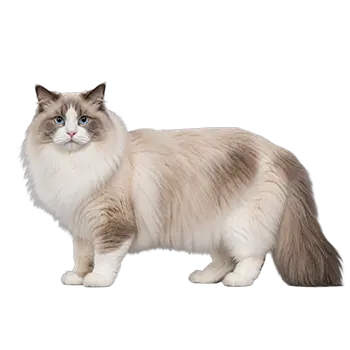

The Ragamuffin traces its roots to the Ragdoll breeding program established by Ann Baker in Riverside, California, during the 1960s. Baker's original foundation cat, Josephine, a white domestic longhair of uncertain ancestry, produced kittens with remarkably placid temperaments and striking semi-long coats. Baker selectively bred these cats and eventually trademarked the Ragdoll name, imposing strict franchise-style breeding agreements on anyone who wished to produce cats under that label.
By the mid-1990s, a group of Ragdoll breeders grew frustrated with the restrictive contractual controls Baker maintained over the breed's direction. In 1994, these breeders formally separated from Baker's International Ragdoll Cat Association and sought to establish their own independent breeding program. Because Baker held the Ragdoll trademark at the time, the breakaway group needed a new name for their cats, and they settled on "Ragamuffin" — a playful nod to the breed's scrappy origins and its connection to the original Ragdoll lines.
The founding breeders of the Ragamuffin worked to broaden the breed's genetic base by introducing outcrosses to Persians, Himalayans, and domestic longhairs. This strategic diversification was intended to improve overall health, expand the range of accepted coat colors and patterns, and reduce the risks associated with a narrow gene pool. The result was a cat that retained the Ragdoll's famously gentle disposition while gaining a wider palette of physical characteristics.
The early years of the Ragamuffin as a distinct breed were marked by both excitement and controversy within the cat fancy. Some purists questioned whether the Ragamuffin was truly different enough from the Ragdoll to merit separate breed status, while supporters argued that the expanded gene pool and independent governance represented a meaningful step forward for the cats' welfare and the breeders' autonomy.