
Origins & Discovery

The Devon Rex traces its origins to a single curly-coated kitten born in 1959 in Buckfastleigh, a small town in Devon, England. A woman named Beryl Cox noticed a feral, curly-coated tomcat living near an abandoned tin mine on her property. When one of her straight-coated female cats produced a litter, a single male kitten emerged with a strikingly unusual wavy coat. Cox named the kitten Kirlee, and he would become the founding father of the entire Devon Rex breed.

At the time of Kirlee's birth, the Cornish Rex had already been established as a recognized curly-coated breed originating from Cornwall, just one county over. Breeders initially assumed that Kirlee's curly coat was the result of the same gene responsible for the Cornish Rex mutation. However, when Kirlee was bred with Cornish Rex queens, all of the resulting kittens had straight coats, proving that the Devon Rex mutation was genetically distinct and caused by a completely different recessive gene.

This discovery was pivotal in establishing the Devon Rex as a separate breed rather than a regional variant of the Cornish Rex. The gene responsible for the Devon Rex coat, known as Gene II or re, produces a coat that is shorter, less dense, and more fragile than that of the Cornish Rex. Breeders quickly recognized that they had something entirely new on their hands, and dedicated breeding programs began in earnest throughout the 1960s.

Kirlee's genetic legacy is remarkable in the world of pedigreed cats. Because every Devon Rex alive today descends from this single male, the early breeding programs faced significant challenges related to genetic diversity. Breeders carefully outcrossed to British Shorthairs, Burmese, and other breeds to expand the gene pool while preserving the distinctive curly coat and elfin facial features that made the Devon Rex so unique.

Historical Development

The 1960s and 1970s were a formative period for the Devon Rex as breeders worked to stabilize the breed's characteristics while maintaining genetic health. Early breeding efforts in the United Kingdom focused on refining the distinctive physical traits that set the Devon Rex apart: the large, low-set ears, the wide-set eyes, the short muzzle, and the delicate, rippling coat. These features gave the breed its now-famous elfin or pixie-like appearance, earning it nicknames that would stick for decades.

The breed made its way across the Atlantic to North America during the late 1960s, where American breeders embraced it with enthusiasm. The Devon Rex was initially shown alongside the Cornish Rex in some registries, but the genetic distinction between the two breeds was well established by this point, and separate classification soon followed. The breed attracted a devoted following among cat fanciers who appreciated its unique look and unusually social personality.

Throughout the 1970s and 1980s, breed standards were refined by registries on both sides of the Atlantic. The Cat Fanciers' Association in the United States and the Governing Council of the Cat Fancy in the United Kingdom each developed detailed standards that emphasized the breed's distinctive head shape, large ears, and wavy coat. The refinement process was careful and deliberate, as breeders balanced the desire for a consistent type with the need to maintain a healthy gene pool.

By the 1980s, the Devon Rex had earned championship status with most major registries worldwide. The breed's journey from a single feral-born kitten in a Devon mining town to international recognition in less than three decades remains one of the more remarkable origin stories in the cat fancy.

Cultural Symbolism

The Devon Rex has earned a distinctive place in popular imagination thanks to its otherworldly appearance. With its oversized ears, enormous eyes, high cheekbones, and slender neck, the breed has been compared to everything from pixies and elves to aliens and fantasy creatures. This unusual look has made the Devon Rex a symbol of feline individuality and has attracted owners who value the unconventional and the distinctive.

In cat fancy circles, the Devon Rex represents a fascinating intersection of natural mutation and selective breeding. The breed stands as a reminder that some of the most beloved domestic cat varieties originated not from deliberate human design but from spontaneous genetic events. This origin story resonates with a broader cultural appreciation for the unexpected and the serendipitous, and the Devon Rex is often cited as an example of nature's creative surprises.

The breed's personality has also contributed to its cultural identity. Devon Rex cats are widely known for their dog-like devotion to their human companions, their love of perching on shoulders, and their talent for acrobatic antics. These traits have earned the breed the affectionate nickname "monkey in a cat suit," a label that speaks to the Devon Rex's reputation as one of the most interactive and entertaining of all cat breeds.

The Devon Rex has also become associated with hypoallergenic claims, though this is something of a cultural myth. While the breed's short, sparse coat does produce fewer loose hairs than many other breeds, Devon Rex cats still produce the Fel d 1 protein that triggers allergic reactions in sensitive individuals. Nonetheless, the breed's reputation as a more allergy-friendly option has contributed to its popularity and cultural profile.

Breed Clubs & Standards

The Devon Rex has a well-organized network of breed clubs and fancier organizations around the world. The Devon Rex Breed Club in the United Kingdom, one of the earliest breed-specific organizations, played a crucial role in developing the initial breed standard and promoting the breed within the Governing Council of the Cat Fancy. In the United States, the Devon Rex Breed Club works closely with the Cat Fanciers' Association and The International Cat Association to support breeders and educate the public.

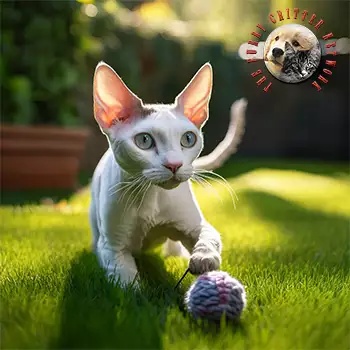
Breed standards for the Devon Rex emphasize several key features that distinguish it from all other breeds. The head should be a modified wedge shape with full cheeks and a strong chin, topped by strikingly large, low-set ears. The eyes are large and wide-set, giving the face its characteristic open, alert expression. The body is medium in size but hard and muscular, with long legs and a long, fine tail. The coat, of course, is the breed's signature feature: short, soft, and wavy, with a texture often described as feeling like suede or crushed velvet.

Breed clubs have also been instrumental in addressing health concerns specific to the Devon Rex. Because the entire breed descends from a single male, genetic diversity has been an ongoing focus. Breed clubs have supported responsible outcrossing programs and have advocated for genetic testing to reduce the incidence of hereditary conditions such as Devon Rex myopathy, a muscle disorder unique to the breed, and hypertrophic cardiomyopathy.

International cooperation among Devon Rex breed clubs has helped ensure that standards remain broadly consistent across registries while allowing for regional variation. Annual breed specialty shows and international exhibitions provide opportunities for breeders to showcase their cats, share knowledge, and celebrate the breed's distinctive qualities.

The Breed Today

The Devon Rex enjoys steady popularity among cat enthusiasts worldwide, consistently ranking among the more sought-after breeds in both North America and Europe. The breed's appeal has grown beyond traditional cat fancy circles, attracting owners who are drawn to the Devon Rex's distinctive appearance, manageable grooming requirements, and exceptionally social personality. In an era when many people seek companion animals that integrate closely into daily life, the Devon Rex's desire to be near its human family makes it an ideal fit.

Modern Devon Rex breeders benefit from advances in genetic testing and veterinary science that were unavailable to the breed's founders. DNA testing for Devon Rex myopathy, blood typing, and screening for hypertrophic cardiomyopathy have become standard practices among responsible breeders. These tools have helped improve the overall health profile of the breed while preserving the distinctive traits that make the Devon Rex so beloved.

The breed has also found a niche among people living in apartments and smaller homes. The Devon Rex's moderate size, relatively quiet voice, and indoor-oriented temperament make it well-suited to urban living. Its short, low-shedding coat is an additional practical advantage, though owners learn quickly that the delicate coat requires gentle care and that Devon Rex cats can be sensitive to cold temperatures.

Social media has given the Devon Rex a significant boost in visibility in recent years. The breed's expressive faces, acrobatic antics, and photogenic appearance make Devon Rex cats natural stars on platforms like Instagram and TikTok. This increased visibility has introduced the breed to a broader audience, though breed clubs continue to emphasize the importance of researching breeders carefully and understanding the breed's specific needs before bringing a Devon Rex into the home.

Notable Individuals

Kirlee, the founding sire of the Devon Rex breed, holds a place of singular importance in feline history. Born in 1959, this curly-coated kitten from Buckfastleigh, Devon, was the genetic origin point for every Devon Rex in existence. Kirlee was bred extensively throughout the 1960s to establish the breed, and his legacy endures in every Devon Rex pedigree. His story is a staple of breed histories and cat fancy literature, representing one of the most well-documented breed origin events in the world of pedigreed cats.

Over the decades, numerous Devon Rex cats have achieved distinction in the show ring. Grand champions and supreme grand champions in both CFA and TICA have helped elevate the breed's profile and demonstrate the refinement that decades of careful breeding have achieved. These show cats have served as ambassadors for the breed, introducing judges and spectators alike to the Devon Rex's unique combination of elegance and impishness.

The Devon Rex has also gained notable individual fans among public figures and celebrities who have shared their lives with the breed. While less publicly associated with celebrity culture than breeds like the Persian or the Bengal, the Devon Rex has a quiet but devoted following among people who value the breed's companionable nature and distinctive personality.

In the world of cat rescue and advocacy, individual Devon Rex cats have played roles in promoting breed-specific rescue organizations. Groups dedicated to rehoming Devon Rex cats that have been surrendered or abandoned work to educate the public about the breed's specific needs and to match displaced Devon Rex cats with knowledgeable adopters. These efforts highlight the importance of breed-aware rescue work and have given individual Devon Rex cats second chances at happy lives.

Always consult a qualified professional before making any health-related decisions. This content is provided for informational reference only and should not replace professional guidance specific to your animal.