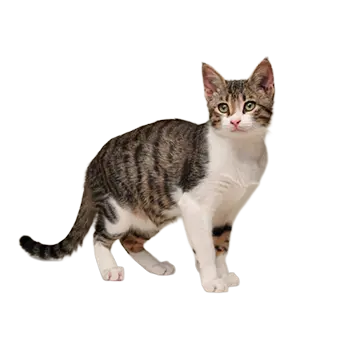

Animal Welfare Legislation in Cyprus

The primary legislation governing the treatment of animals in the Republic of Cyprus is the Animal Welfare Law, originally enacted in 1994 under reference 4(I)/94 and falling under the authority of the Ministry of Agriculture, Rural Development, and Environment. This law addresses the general welfare of domesticated and captive animals, imposing penalties for acts of cruelty and neglect. It was significantly amended in 2020 under Law 175(I)/2020, which strengthened penalties and expanded the scope of prohibited conduct toward animals.

Under the amended law, a first conviction for animal cruelty or neglect carries a potential prison sentence of up to one year and a fine of up to ten thousand euros. A second or subsequent conviction can result in up to two years of imprisonment and fines of up to twenty thousand euros. These penalties represented a dramatic increase from the previous maximums, which had been set at one thousand and two thousand Cypriot pounds respectively. The 2020 amendments also introduced prohibitions against keeping dogs or cats confined on terraces or balconies, reflecting a growing legislative concern with quality of life for companion animals beyond basic survival.

Notably, Cyprus has a specific Dog Law enacted in 2002 under reference 109(I)/2002, which regulates dog ownership, registration, and care in considerable detail. No equivalent standalone legislation exists for cats. This asymmetry means that while dog owners face specific registration requirements, microchipping mandates, and breed-specific restrictions, cat ownership in Cyprus operates under the broader and less prescriptive umbrella of the general animal welfare statute. Animal welfare organizations have long advocated for the introduction of cat-specific legislation, arguing that the absence of mandatory registration and microchipping for cats contributes to the difficulty of managing the island's large stray population.

The legal framework also addresses stray animals, though enforcement has been inconsistent. Municipal authorities have the power to manage stray animal populations, but the methods and resources devoted to this task vary widely across the island. The law prohibits the destruction of public feeding stations for cats, though the Attorney General has clarified that this protection, as currently written, applies only to feeding stations established by local authorities rather than to those set up by private individuals or organizations. This narrow interpretation has been a source of frustration for animal welfare groups who maintain informal feeding stations throughout the island.

Stray Cat Management & Public Policy

Managing the free-roaming cat population has become one of the most visible and contentious areas of public policy in Cyprus. With estimates placing the stray and feral cat population at approximately one million animals, roughly equal to the human population of the island, the scale of the challenge is unlike that faced by most other European Union member states. Successive Cypriot governments have been criticized by animal welfare organizations for failing to implement systematic, nationwide population management programs.

The government allocates annual funding for cat sterilization, a figure that in recent years has been set at approximately seventy-five thousand euros. Animal welfare advocates have consistently described this amount as grossly inadequate given the size of the population, noting that an unsterilized female cat can produce up to eight kittens per year and that the mathematics of reproduction quickly overwhelm any sterilization effort that operates at too small a scale. Some municipalities have implemented their own trap-neuter-return programs, and a number of private veterinary clinics offer discounted sterilization services, but these efforts remain fragmented and unevenly distributed across the island.

Recent legislative amendments have attempted to address the issue of public feeding, a practice that sits at the center of an ongoing dispute between those who view feeding as a humanitarian obligation and those who see it as a driver of population growth and a source of sanitation problems. Under amended regulations published through the Law Office, feeding of stray cats in public areas is permitted only in specially designated zones. This restriction has drawn sharp criticism from animal welfare organizations, who argue that limiting feeding to approved locations leaves many cats without access to food and undermines the welfare of the very animals the law is supposed to protect.

The government has announced plans for a multi-year sterilization campaign, to be supported by volunteers, veterinary clinics, and international organizations. Some municipalities have begun testing digital reporting applications that allow residents to register the locations of cat colonies and coordinate sterilization efforts more efficiently. However, the effectiveness of these initiatives depends on sustained political commitment, adequate funding, and public cooperation, all of which remain uncertain. The ecological dimension of the problem has added another voice to the debate, as organizations such as BirdLife Cyprus have documented the impact of free-roaming cats on native bird and reptile populations, creating a tension between animal welfare and biodiversity conservation that policymakers have yet to resolve.

Breed Recognition & Registry Status

The legal and administrative framework surrounding breed recognition for the Cyprus cat involves multiple international organizations, each with its own standards, naming conventions, and procedural requirements. Understanding the breed's registry status is essential for breeders, exhibitors, and anyone seeking to import or export Cyprus cats under official breed documentation.

The World Cat Federation granted full recognition to the breed on July 1, 2012, under the name Aphrodite's Giant. This recognition covers both the semi-longhaired and shorthaired varieties, though the WCF standard specifically calls for a large, strong, and muscular cat that is not cobby in body type, with big-boned proportions evident even in kittens. The World Cat Congress, a confederation of national and international cat federations, oversees breeding regulations for the Aphrodite's Giant across its member organizations and uses the names Aphrodite's Giant Longhair and Aphrodite's Giant Shorthair for the two coat varieties.

The International Cat Association accepted the breed in September 2017 under the simpler name Aphrodite, granting it preliminary new breed status. TICA's acceptance covers both shorthaired and semi-longhaired types and places the breed in its own group rather than grouping it with other existing breeds. Both TICA and the WCF prohibit outcrossing to other breeds, a restriction designed to preserve the natural characteristics that define the Cyprus cat and to prevent the dilution of its indigenous genetic heritage. A small number of TICA member breeders in Europe, Asia, and the United States have established breeding programs for the Aphrodite.

Despite these milestones, the breed has not been recognized by the Cat Fanciers' Association, which is the largest registry in North America, or by the majority of other major international registries. This lack of broader recognition limits the breed's eligibility for competition in many major cat shows and restricts its visibility among buyers and breeders who operate primarily within CFA-affiliated circles. The Cyprus Cats National Breed Association, founded in 2009, continues to advocate for wider recognition and serves as the primary local organization coordinating breeding standards, health screening, and promotional efforts on behalf of the breed. The tension between the WCF's emphasis on the giant variety and TICA's more inclusive approach, which admits smaller cats as well, reflects ongoing debates within the breeding community about the proper scope and definition of the breed standard.

Import, Export & EU Regulations

As a member state of the European Union, the Republic of Cyprus follows the standard EU framework for the non-commercial movement of companion animals, including cats. These regulations are designed to prevent the spread of rabies and other transmissible diseases while facilitating the movement of pets across EU borders. Any cat entering Cyprus must be identified with a non-encrypted, fifteen-digit microchip compliant with ISO standards 11784 or 11785, and the microchip must be implanted before the rabies vaccination is administered.

Cats traveling within the European Union require either an EU Pet Passport, issued to pets resident in an EU member state, or an EU Animal Health Certificate completed by an official veterinarian in the country of origin. The Pet Passport records the animal's microchip number, rabies vaccination history, and any other required treatments or tests. For cats entering Cyprus from countries outside the EU, a health certificate issued by the veterinary authority of the exporting country is required, and the specific documentation and testing requirements depend on the rabies status classification of the country of origin.

Rabies vaccination is mandatory for all cats entering Cyprus, and the vaccine must be administered after the microchip has been implanted. A primary vaccination requires a twenty-one-day waiting period before travel, while booster vaccinations given before the previous vaccine's expiry date are valid immediately. Cats must be at least twelve weeks old to receive the rabies vaccine, which means the minimum age for travel under these regulations is approximately fifteen weeks. For cats arriving from countries classified as having a higher rabies risk, a rabies antibody titer test may be required, with blood drawn at least thirty days after vaccination and at least three months before entry.

It is critically important to note that these regulations apply only to the Republic of Cyprus and not to the self-declared Turkish Republic of Northern Cyprus, which is not an EU member state and maintains its own separate import requirements. Pets are not permitted to cross the Green Line between the two territories, meaning that an animal brought into one side of the island cannot legally be transferred to the other. Travelers planning to bring cats to Cyprus should verify well in advance which jurisdiction they will be entering and ensure that they comply with the applicable set of regulations. The Cypriot Veterinary Services can provide guidance on specific requirements, and it is advisable to contact them well ahead of any planned travel.

Ownership Responsibilities & Local Ordinances

Cat ownership in Cyprus, while governed by the general Animal Welfare Law, carries fewer formal requirements than dog ownership. There is no island-wide mandatory registration or licensing system for cats, and microchipping, while required for international travel, is not compulsory for cats that remain on the island. This regulatory gap has been identified by animal welfare organizations as a significant obstacle to managing the stray population, as there is no systematic way to distinguish owned cats that are allowed to roam freely from genuinely unowned strays.

Owners of cats in Cyprus are legally required to provide adequate food, water, shelter, and veterinary care, and to ensure that their animals are not subjected to cruelty or neglect. The prohibition against confining cats on terraces or balconies, introduced in the 2020 amendments to the welfare law, reflects a legislative recognition that quality of life encompasses more than just survival. Owners who allow their cats to roam outdoors, as is common practice across the island, are not specifically penalized for doing so, but they may bear responsibility if their animals cause damage or are involved in incidents covered by other areas of law.

Municipal ordinances can impose additional requirements beyond the national legislation. Some municipalities have enacted regulations governing the feeding of stray cats in public spaces, the maintenance of cat colonies on public land, and the management of nuisance complaints related to free-roaming cats. These local rules vary significantly from one jurisdiction to another, and enforcement practices differ as well. Residents who feed or manage stray cat colonies are advised to familiarize themselves with the specific rules in their municipality to avoid potential conflicts with local authorities.

For those considering adopting a Cyprus cat from the island's many rescue organizations, the legal process is generally straightforward but involves specific veterinary requirements if the cat will be transported internationally. Rescue groups experienced in international adoption typically handle the microchipping, vaccination, and documentation process on behalf of adopters, but the responsibility ultimately rests with the new owner to ensure that all legal requirements are met before the animal crosses any border. Prospective adopters should also be aware that the 2023 FIP outbreak prompted some countries to impose additional health screening requirements on cats originating from Cyprus, and these requirements may change as the epidemiological situation evolves.

Conservation & Ecological Considerations

The legal dimensions of the Cyprus cat extend beyond animal welfare into the domain of environmental and conservation law. The island's large free-roaming cat population has been identified as a significant factor in the decline of certain native wildlife species, particularly ground-nesting birds, lizards, and small mammals. BirdLife Cyprus and other conservation organizations have documented predation by cats on species of conservation concern, creating a legal and ethical tension between the protection of domestic animals and the preservation of biodiversity.

Cyprus is a signatory to the European Union's Birds Directive and Habitats Directive, which impose obligations on member states to protect wild bird species and their habitats. The presence of large numbers of free-roaming cats in or near designated Natura 2000 sites, including areas around the Akrotiri Salt Lake and the Paphos coastline, raises questions about whether Cyprus is meeting its obligations under these directives. Environmental organizations have argued that systematic cat population management is not merely an animal welfare issue but a legal requirement under EU environmental law.

The intersection of animal welfare and conservation law creates a complex regulatory landscape. Trap-neuter-return programs, which are the primary tool advocated by animal welfare organizations for managing stray populations humanely, reduce future population growth but do not address the predation pressure exerted by currently living cats. Some conservation advocates have called for more aggressive management measures, including the removal of cats from ecologically sensitive areas, but such proposals face strong opposition from the animal welfare community and from the general public, for whom the cats are an integral part of the island's cultural identity.

The Cypriot government has attempted to navigate this tension through policy frameworks that acknowledge both welfare and conservation objectives, but critics on both sides argue that the current approach is inadequate. The development of digital colony mapping tools and the proposed multi-year sterilization campaign represent steps toward a more integrated approach, but the legal infrastructure needed to coordinate wildlife protection, animal welfare, and public health remains fragmented. As EU environmental enforcement mechanisms become more robust, Cyprus may face increasing pressure to demonstrate that its management of the free-roaming cat population is consistent with its obligations under European environmental law, potentially driving legislative reforms that reshape the legal landscape for cats on the island.

Always consult a qualified professional before making any health-related decisions. This content is provided for informational reference only and should not replace professional guidance specific to your animal.