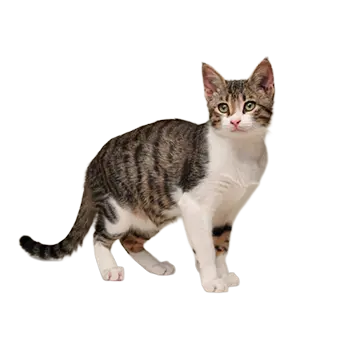

Origins & Early History

The Cyprus cat stands at the very beginning of the human-feline relationship. Long before ancient Egypt elevated cats to sacred status, the people of Cyprus were already living alongside tamed felines. The island of Cyprus, situated in the eastern Mediterranean between modern-day Turkey and the Levant, provided an isolated environment where cats and humans developed a bond that archaeological evidence now places among the oldest documented anywhere in the world.

The most extraordinary testament to this ancient relationship was unearthed at Shillourokambos, a Neolithic settlement near modern Limassol. In 2004, a team of French archaeologists led by Jean-Denis Vigne discovered a 9,500-year-old burial containing the remains of an adult human and an eight-month-old cat, placed approximately forty centimeters apart. The grave included seashells, polished stone tools, and other offerings, suggesting that the individual held a degree of social status and that the cat was intentionally interred alongside its companion rather than discarded as refuse. This discovery, published in the journal Science, pushed the known timeline of cat-human association back by more than four thousand years compared to the earliest Egyptian evidence.

The significance of the Shillourokambos find extends beyond mere chronology. Because cats are not native to Cyprus, Neolithic settlers must have deliberately transported them by boat from the mainland, likely from the coastal regions of the Levant or Anatolia. The cat skeleton closely resembles the African wildcat, Felis silvestris lybica, which is the recognized ancestor of all domestic cats. This intentional importation suggests that early farmers valued cats not just as incidental pest controllers around grain stores but as animals worthy of deliberate care and transport across open water.

Earlier discoveries had already hinted at this ancient bond. In the late 1980s, a cat jawbone was found at the Neolithic site of Khirokitia on Cyprus, in sediment dating to more than six thousand years before the common era. While less dramatic than the Shillourokambos burial, this find had already prompted researchers to reconsider the traditional narrative that cat domestication began exclusively in Egypt. Together, these discoveries establish Cyprus as a pivotal location in the story of how wild cats became the domestic companions known today.

Historical Roles

Throughout their long history on the island, Cyprus cats have served roles that go far beyond simple companionship. Their most celebrated historical function is rooted in a story from the fourth century, when Saint Helen of Constantinople, mother of the Roman Emperor Constantine the Great, is said to have shipped hundreds of cats to the island from Egypt and Palestine. According to tradition, a severe drought lasting seventeen years had caused venomous snakes to proliferate across the Akrotiri Peninsula, driving residents from their homes and threatening the construction of what would become the Monastery of Saint Nicholas.

Saint Helen's solution was practical and dramatic. The cats, reportedly numbering around a thousand, were dispatched to hunt the snakes and reclaim the land for human habitation. The monks at the monastery trained the animals using a system of two bells: one to signal feeding time and another to send them out on hunting duty. Accounts from later centuries describe the cats returning from their campaigns bearing the scars of battle, some missing eyes or parts of their ears and noses. The area around the monastery became known as Cape Gata, from the Greek word for cat, a name that persists to this day.

Beyond snake control, Cyprus cats filled the practical role common to felines throughout the ancient and medieval Mediterranean world. They protected grain stores and food supplies from rodents, served as ship cats aboard trading vessels, and kept households free of vermin. Their presence on trading ships likely facilitated their spread to neighboring islands, including the Cyclades, where archaeologists believe Cypriot cats may have contributed to the gene pool of the Aegean cat landrace found on the Greek islands.

The cats' role at the Monastery of Saint Nicholas continued through centuries of political upheaval. When the Ottoman Empire conquered Cyprus in 1570, the monastery was destroyed and the cats scattered across the island. Many became feral, contributing to the large free-roaming cat population that characterizes Cyprus to this day. When Orthodox nuns reinstated the monastery as a convent in 1983, they found the grounds overrun with snakes once again and resumed the centuries-old practice of keeping cats on the premises, taking in strays and caring for them in honor of the felines' long history of service.

Cultural Symbolism

The Cyprus cat occupies a unique position in the cultural imagination of the eastern Mediterranean. Unlike breeds that derive their symbolic value from aristocratic pedigrees or deliberate human design, the Cyprus cat draws its cultural weight from deep antiquity and from its association with the island's religious and mythological traditions. The very name Aphrodite, used by international cat registries for the standardized version of the breed, connects these cats to the goddess of love, who according to Greek mythology rose from the sea foam near the coast of Paphos in western Cyprus.

The story of Saint Helen and the monastery cats has become one of the defining legends of Cypriot cultural identity. It appears in local histories, guidebooks, and oral tradition, serving as a narrative that links the island's Christian heritage with its relationship to the natural world. The tale of cats battling snakes carries echoes of older mythological themes common across the Mediterranean, where serpents often symbolize chaos or danger and their defeat represents the triumph of civilization over wilderness. In this context, the Cyprus cat becomes a symbol of both practical resourcefulness and divine providence.

Nobel laureate Giorgos Seferis immortalized the legend in his poem "The Cats of St Nicholas," written during his time in Cyprus. Seferis, who received the Nobel Prize in Literature in 1963, drew upon the landscape and traditions of the island as material for his modernist verse, weaving the monastery's feline guardians into a meditation on memory, exile, and the persistence of the past in the present. The poem elevated the story from local folklore to international literary significance, introducing the cats of Cyprus to readers far beyond the Mediterranean.

For modern Cypriots, the ubiquitous presence of cats throughout the island's cities, villages, and countryside has become an informal national symbol. Visitors frequently remark on the sheer number of cats lounging in archaeological ruins, patrolling harbor fronts, and weaving between the tables of outdoor restaurants. This visible feline population has contributed to Cyprus's reputation as the Island of Cats, a designation that reflects both affection and the ongoing challenges of managing a very large free-roaming cat community.

Breed Clubs & Standards

For most of their history, Cyprus cats existed as a landrace rather than a formally recognized breed. A landrace is a locally adapted population that has developed its characteristics through natural selection and geographic isolation rather than through deliberate human breeding programs. Because Cyprus is an island, its cat population has been relatively insulated from genetic mixing with continental populations, resulting in a distinct feline type with recognizable physical traits shaped by the island's mountainous terrain and Mediterranean climate.

The movement to formalize the Cyprus cat as a recognized breed began in earnest in 2008, when a World Cat Federation judge visiting the island was struck by the distinctive qualities of the local cats. This led to the creation of a breed standard under the name Aphrodite's Giant, reflecting the larger body size typical of cats from the mountainous interior of the island. In 2009, a group of enthusiasts on Cyprus founded the Cyprus Cats National Breed Association, or CyCNBA, which became the primary organization working toward international recognition and the establishment of ethical breeding guidelines.

Genetic studies played a crucial role in advancing the breed's formal status. Research conducted by feline geneticist Leslie A. Lyons at the University of California, Davis confirmed that Cyprus cats are genetically distinct enough from other Mediterranean cat populations to justify the development of a formal breed standard. On July 1, 2012, the World Cat Federation granted full recognition to the Aphrodite's Giant Longhair, and subsequently extended recognition to the shorthaired variety as well. The World Cat Congress oversees breeding regulations for the breed across its member organizations.

The International Cat Association followed with its own recognition in September 2017, accepting the breed under the name Aphrodite as a preliminary new breed. TICA permits both shorthaired and semi-longhaired varieties and prohibits outcrossing to other breeds, ensuring that the Aphrodite remains a natural breed developed from indigenous Cypriot stock. Despite these milestones, the breed has not yet been recognized by the Cat Fanciers' Association or by the majority of other major registries, which limits its visibility on the international show circuit. A handful of breeders in Europe, Asia, and the United States have begun breeding programs under TICA guidelines, but the Aphrodite remains relatively rare outside its native island.

The Breed Today

The Cyprus cat today exists in two parallel worlds. On the island itself, these cats remain primarily a free-roaming landrace population estimated to number roughly one million animals, a figure that approaches or even matches the human population of Cyprus. They are a visible and constant presence in every Cypriot city and village, from the harbor fronts of Paphos and Limassol to the narrow streets of old Nicosia. Restaurants, shops, and archaeological sites all host resident cat colonies, and many Cypriots maintain feeding stations for neighborhood strays as a matter of daily routine.

This enormous population presents both cultural charm and significant practical challenges. Animal welfare organizations on the island, many of them founded and staffed by expatriate residents from northern Europe, operate trap-neuter-return programs and rescue operations to manage the stray population and address health concerns. The Cypriot government has allocated funding for sterilization programs, though advocates argue that the resources remain far short of what is needed to meaningfully reduce the number of unowned cats. The tension between the island's identity as a cat-loving culture and the welfare realities of an uncontrolled feline population is an ongoing public conversation.

In the formal breeding world, the Cyprus cat's profile has been growing steadily since its recognition by the WCF and TICA. Breeders working with the Aphrodite standard emphasize the breed's natural characteristics: a strong, muscular body with longer hind legs adapted for climbing mountainous terrain, a coat that varies seasonally in density, and a temperament that combines high energy with a calm, affectionate disposition toward humans. The breed is noted for maturing slowly, often taking up to three years to reach full adult size, and for displaying an almost dog-like loyalty to its family members.

The 2023 outbreak of feline infectious peritonitis caused by a novel recombinant coronavirus brought the Cyprus cat population to international attention for reasons far removed from breed shows. The outbreak, which spread rapidly through both stray and owned cat populations across the island, drew concern from veterinary researchers and animal welfare organizations worldwide and highlighted the vulnerabilities inherent in managing a dense, largely unvaccinated feline population. The crisis prompted increased international cooperation on feline health research and renewed calls for systematic population management on the island.

Notable Individuals

Unlike breeds with long pedigree histories, the Cyprus cat's most notable individuals are defined less by show ring achievements and more by their roles in history, science, and cultural memory. The most famous Cyprus cat of all is also the most ancient: the unnamed feline buried beside its human companion at Shillourokambos approximately 9,500 years ago. This single animal, an eight-month-old African wildcat, has become the most widely cited evidence in discussions of early cat domestication and appears in textbooks, museum exhibits, and documentaries around the world.

The cats of the Monastery of Saint Nicholas of the Cats have achieved a collective fame that transcends any individual animal. For over sixteen hundred years, the monastery's feline residents have served as guardians of the grounds, and their story has been told by visitors, historians, and poets across the centuries. A Venetian monk who visited the monastery during the fourteenth century left a vivid written account of cats scarred from their battles with snakes, describing animals missing eyes and bearing wounds across their faces and bodies. These unnamed warriors became part of the enduring legend of the monastery and of Cyprus itself.

In the world of feline genetics, individual Cyprus cats have contributed to landmark research. The cats sampled for Leslie Lyons's genetic studies at UC Davis provided the data that confirmed the distinctiveness of the Cypriot cat population and supported the case for breed recognition. Similarly, cats from Cyprus have been central to the study of the novel feline coronavirus that caused the 2023 FIP outbreak, with samples from both island cats and two cats exported to the United Kingdom contributing to the sequencing and characterization of the recombinant virus strain.

The nuns who care for the cats at the modern Monastery of Saint Nicholas of the Cats, reinstated as a convent in 1983, have become figures of public interest in their own right. The small community of sisters tends to dozens of resident cats while also painting icons and producing preserves and other goods for sale to visitors. Their quiet dedication to continuing the monastery's centuries-old tradition of feline stewardship has drawn media attention from outlets around the world, and the monastery has become a popular destination for tourists and cat enthusiasts visiting the Limassol area.

Always consult a qualified professional before making any health-related decisions. This content is provided for informational reference only and should not replace professional guidance specific to your animal.