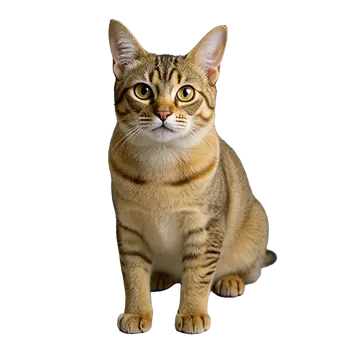

Origins & Development

The Asian Semi-longhair, also known as the Tiffanie in the United Kingdom, emerged during the 1980s as a result of breeding programs involving Burmese cats crossed with Persian-type longhairs. The breed was not the product of a deliberate effort to create an entirely new variety but rather arose from experimental pairings that aimed to introduce new color patterns and coat lengths into the existing Asian group of cats. Breeders in Britain quickly recognized the appeal of these kittens, which carried the muscular, compact body of the Burmese alongside a flowing, silky coat that set them apart from their shorthaired relatives.

Early development of the breed centered on establishing consistency in type, coat texture, and temperament. Breeders worked to ensure that the semi-long coat remained fine and silky rather than developing the dense, woolly undercoat seen in some other longhaired breeds. Selective pairings over several generations helped stabilize the look and personality traits that define the breed today. The goal was always a cat that combined Burmese elegance and sociability with the visual drama of a longer coat.

By the late 1980s and into the 1990s, the breed had gained enough traction among British cat fanciers to warrant formal recognition efforts. Breeding clubs began to draft standards that distinguished the Asian Semi-longhair from both the Burmese and the Persian, emphasizing its unique combination of body structure, coat quality, and expressive eyes. The breed's development stands as a testament to the careful, patient work of a relatively small group of dedicated enthusiasts.

Although the breed's gene pool was initially quite limited, breeders maintained rigorous health testing and thoughtful outcross strategies to preserve genetic diversity. This careful stewardship helped prevent the bottleneck issues that have plagued some other pedigree breeds. Today, the Asian Semi-longhair's development history is often cited as an example of responsible breeding practices within the cat fancy community.

Historical Roles

Unlike many ancient cat breeds that trace their lineage back centuries and served distinct working roles in human societies, the Asian Semi-longhair is a thoroughly modern companion breed. Its creation in the 1980s means it has no historical association with pest control, temple guardianship, or maritime duty. From the very beginning, these cats were bred for companionship, beauty, and temperament rather than any utilitarian function.

That said, the breed inherits a rich historical legacy through its Burmese ancestry. Burmese cats have deep roots in Southeast Asian culture, where they were kept in temples and royal households for centuries. The Asian Semi-longhair carries forward this heritage in its personality and physical type, even though the breed itself is a product of modern selective breeding in the United Kingdom.

In the context of the broader Asian cat group, the Semi-longhair has played an important role as a demonstration of coat variety within a single breed family. The Asian group includes shorthaired, semi-longhaired, and various color and pattern variants, all sharing a common Burmese-derived body type. The Semi-longhair helped prove that coat length could be varied without sacrificing the core qualities that define Asian cats as a group.

The breed has also contributed to conversations within the cat fancy about the value of planned breeding programs versus reliance on naturally occurring breeds. Its success as a healthy, well-tempered breed created within a few decades has encouraged thoughtful discussion about how new breeds can be developed responsibly.

Cultural Symbolism

The Asian Semi-longhair does not carry the same weight of cultural symbolism as breeds with ancient or mythological origins, such as the Siamese or the Egyptian Mau. Its relatively recent creation means it has not had time to accumulate centuries of folklore, superstition, or artistic representation. However, within the British cat fancy, the breed has come to symbolize a certain ideal of thoughtful, modern breeding — the notion that beauty, health, and temperament can be achieved through careful planning.

The breed's name itself reflects a cultural blending. The word "Asian" connects it to the Burmese heritage at the core of its genetic makeup, while "Semi-longhair" is a straightforward descriptor. In the UK, the alternative name Tiffanie evokes a sense of luxury and refinement, associating the breed with elegance and quality. This naming choice has contributed to the breed's image as a sophisticated companion animal.

Among cat enthusiasts, the Asian Semi-longhair is often regarded as a symbol of the diversity possible within a single breed group. The fact that the Asian cat family encompasses such a wide range of coat types and colors, all built on a shared foundation, resonates with broader themes of unity and variety that appeal to many fanciers.

In everyday culture, owners of Asian Semi-longhairs frequently describe their cats as embodying a balance between playful energy and calm affection. This duality has given the breed an informal reputation as the ideal household companion — active enough to entertain but gentle enough to relax alongside their owners.

Breed Clubs & Standards

Recognition of the Asian Semi-longhair has been concentrated primarily within the United Kingdom's cat registries. The Governing Council of the Cat Fancy (GCCF) formally recognized the breed and published a standard that outlines the ideal physical characteristics, including a medium-sized, muscular body, a gently rounded head, and a fine, silky semi-long coat with minimal undercoat. Eye color standards vary depending on coat color but generally call for expressive, well-set eyes in shades of gold, green, or yellow.

The breed has also been acknowledged by certain European registries and by organizations within the World Cat Congress framework. However, it remains relatively obscure outside the UK and parts of Europe. Major North American registries such as The International Cat Association (TICA) and the Cat Fanciers' Association (CFA) do not currently recognize the Asian Semi-longhair as a distinct breed, which has limited its visibility in the competitive show world on that continent.

Breed clubs devoted to the Asian group, including the Semi-longhair, have been instrumental in maintaining breeding standards and promoting responsible ownership. These clubs organize shows, share health data, and provide mentorship for new breeders. Their work ensures that the breed's development continues on a sound footing, with an emphasis on genetic health and adherence to the established type.

Efforts to expand recognition to additional registries continue, with breed club members working to compile the pedigree data and population statistics required for formal applications. These ongoing campaigns reflect both the dedication of the breed's supporters and the challenges faced by newer, less widely distributed breeds seeking global acceptance.

The Breed Today

The Asian Semi-longhair remains a relatively rare breed, even in the United Kingdom where it originated. Annual registration numbers are modest compared to mainstream breeds like the British Shorthair or the Maine Coon, but the breed enjoys a loyal and passionate following among those who have discovered it. Breeders continue to prioritize health, temperament, and coat quality, and the breed benefits from a generally sound genetic foundation.

In the show ring, Asian Semi-longhairs compete within the Asian group at GCCF-affiliated shows, where they are evaluated against a detailed standard. Judges look for the characteristic silky coat that lies close to the body without excessive volume, the well-muscled but elegant body, and the alert, friendly expression that defines the breed. Competition among Asian Semi-longhairs is often spirited, with breeders taking great pride in presenting cats that exemplify the standard.

Outside of the show world, the breed has gained a quiet but growing reputation as an outstanding companion animal. Owners praise the Asian Semi-longhair for its sociable nature, its tendency to form strong bonds with family members, and its adaptability to various living situations. The breed's moderate grooming needs — less demanding than a Persian but more involved than a shorthaired breed — make it an appealing choice for owners who enjoy the look of a semi-longhaired cat without the commitment of daily coat maintenance.

Looking ahead, the breed's future depends on continued efforts to expand its gene pool, increase awareness among prospective cat owners, and pursue recognition with additional registries. Breed enthusiasts remain optimistic, pointing to the Asian Semi-longhair's excellent health record and winning personality as qualities that should attract a broader audience over time.

Notable Individuals

Because the Asian Semi-longhair is a comparatively rare and recently developed breed, it does not have a long roster of famous individual cats in the way that more established breeds might. There are no widely known Asian Semi-longhairs from film, literature, or public life that have achieved household-name status. The breed's recognition has grown primarily through the efforts of breeders and show exhibitors rather than through celebrity association.

Within the GCCF show circuit, certain Asian Semi-longhairs have distinguished themselves by earning top honors and helping to raise the breed's profile. These cats, celebrated for their exceptional adherence to the breed standard and their outstanding temperaments, have served as ambassadors for the breed at major shows. Their wins have helped generate interest among judges and spectators who might not have previously encountered the breed.

Some breeders have also gained recognition within the cat fancy for their contributions to the breed's development. These individuals, often working with small catteries and limited resources, have dedicated years to refining the Asian Semi-longhair's type and expanding its color range. Their work, while not widely known outside the breeding community, has been essential to the breed's survival and progress.

As social media continues to reshape how people discover and learn about cat breeds, there is growing potential for individual Asian Semi-longhairs to gain public attention through online platforms. A handful of breed enthusiasts maintain social media accounts showcasing their cats, and these efforts have helped introduce the breed to audiences who might never encounter one at a show or breeder's cattery.

Always consult a qualified professional before making any health-related decisions. This content is provided for informational reference only and should not replace professional guidance specific to your animal.