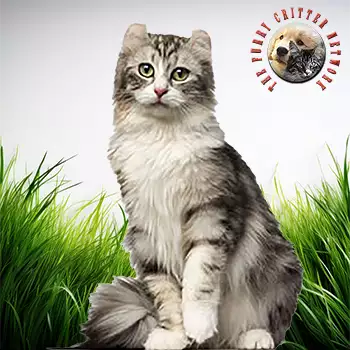

Origins & Discovery

The American Curl traces its origins to a single stray kitten discovered in Lakewood, California, in June 1981. Joe and Grace Ruga found a longhaired black kitten with unusual backward-curling ears on their doorstep, and they named her Shulamith. The couple took her in, and she became the foundation queen for the entire American Curl breed. Every pedigreed American Curl alive today can trace its lineage back to Shulamith.

Shulamith produced her first litter in December 1981, and two of the four kittens displayed the same distinctive curled ears. This confirmed that the trait was genetic rather than a one-time anomaly. The curling is caused by a spontaneous natural mutation affecting the cartilage of the ear, and it follows an autosomal dominant inheritance pattern, meaning only one copy of the gene is needed for the trait to appear.

The Rugas began sharing photos and information about their unusual cats with friends and neighbors, quickly generating local interest. Word spread through the Southern California cat fancy community, and breeders began to take notice of this entirely new ear mutation that had never been documented in domestic cats before. Unlike some mutations that come with health complications, the curled ear gene appeared to carry no associated defects, which encouraged further exploration of the breed's potential.

Early breeding efforts were deliberately careful and methodical. Breeders outcrossed to domestic cats with no pedigree to maintain genetic diversity, a practice that would later be praised by geneticists studying the breed. This broad genetic base helped ensure the American Curl remained a robust and healthy breed from the very start, setting it apart from some other breeds that suffered from narrow founding populations.

Breed Recognition & Standards

The American Curl's path to official recognition was remarkably swift by cat fancy standards. The breed was first exhibited at a cat show in 1983 in Palm Springs, California, where it drew immediate attention from judges and spectators alike. Feline geneticist Roy Robinson of London studied the breed in 1983 and published his findings, confirming that the ear-curling gene was unique and carried no harmful side effects. Robinson's analysis lent scientific credibility to the breed and accelerated its acceptance within the cat fancy.

The International Cat Association (TICA) granted the American Curl championship status in 1987, making it one of the fastest breeds to achieve full recognition from a major registry. The Cat Fanciers' Association (CFA) followed in 1993, accepting both the longhair and shorthair varieties for championship competition. This dual acceptance was somewhat unusual and reflected the breed's diverse coat types, both of which had been present since Shulamith's earliest litters.

Breed standards emphasize the distinctive ears, which should curl in a smooth arc of between 90 and 180 degrees. Kittens are born with straight ears that begin to curl within the first few days of life, reaching their permanent set by around 16 weeks of age. The degree of curl varies, and show-quality cats are expected to fall within specific parameters. Beyond the ears, standards call for a moderately sized, well-balanced cat with a silky coat, walnut-shaped eyes, and an overall elegant appearance.

The establishment of breed clubs further solidified the American Curl's place in the cat world. Organizations dedicated to the breed set ethical breeding guidelines, promoted genetic diversity through managed outcrossing programs, and organized specialty shows where breeders could showcase their finest examples. These clubs also served an educational role, helping prospective owners understand the breed's unique characteristics and care requirements.

Cultural Symbolism

The American Curl has come to symbolize the unexpected beauty that can arise from natural genetic variation. Its story resonates with the broader cultural narrative of discovery and appreciation for uniqueness. The fact that a single stray cat on a California doorstep could give rise to an entirely new recognized breed captures the imagination of cat lovers and geneticists alike, serving as a reminder that remarkable things can emerge from humble beginnings.

Within the cat fancy community, the American Curl represents a modern success story of responsible breed development. Unlike many older breeds whose origins are shrouded in myth and legend, the Curl's history is thoroughly documented from its very first generation. This transparency has made the breed a case study in how new breeds can be established ethically, with genetic health as a primary concern rather than an afterthought.

The breed also holds a special place in American cat culture as one of the few breeds that originated entirely within the United States from a documented domestic cat. While breeds like the Maine Coon and American Shorthair have deep American roots, their exact origins are debated. The American Curl's founding story is precise and verifiable, giving it a unique position as a distinctly American contribution to the world of pedigreed cats.

In a broader sense, the American Curl has become an ambassador for the idea that physical differences can be celebrated rather than viewed with suspicion. Its curled ears, far from being a defect, became the defining feature of a healthy, thriving breed. This narrative has made the Curl a favorite among those who value diversity and individuality in their feline companions.

Genetics & the Curl Gene

The genetics behind the American Curl's signature ears are among the best-studied of any cat breed trait. Roy Robinson's foundational research established that the curl is caused by a single autosomal dominant gene, meaning that a cat with just one copy of the mutation will display the curled ear phenotype. Cats that are homozygous for the gene, carrying two copies, show the same degree of curl as heterozygous cats, with no apparent increase in severity or associated health issues.

This genetic profile is notably benign compared to some other ear mutations in cats. The Scottish Fold, for example, carries a cartilage mutation that can cause painful osteochondrodysplasia when present in homozygous form. The American Curl gene affects only the firm cartilage of the ear and does not impact cartilage elsewhere in the body. Extensive veterinary studies over the decades have consistently confirmed that the Curl gene does not predispose cats to arthritis, joint problems, or any other skeletal abnormality.

The managed outcrossing program maintained by American Curl breeders has been essential to preserving this genetic health. By regularly introducing unrelated domestic cats into breeding lines, the breed maintains a remarkably diverse gene pool. This practice reduces the risk of inbreeding depression and keeps the incidence of hereditary diseases low. Geneticists have pointed to the American Curl program as a model for how new breeds can maintain long-term vitality.

Kittens born from Curl-to-non-Curl pairings typically produce litters where roughly half the kittens display curled ears and half have straight ears. Straight-eared kittens from these litters are still registered as American Curls and can be used in breeding programs to maintain genetic diversity. This inclusive approach to registration reflects the breed community's commitment to health over aesthetics.

The Breed Today

Today the American Curl enjoys a loyal following among cat enthusiasts worldwide, though it remains a relatively uncommon breed compared to more established varieties. Breeders can be found across North America, Europe, Japan, and other regions, and the breed is recognized by virtually every major cat registry in the world. Its rarity adds to its appeal for many owners who appreciate having a distinctive and conversation-starting companion.

The breed's temperament has proven to be one of its greatest assets in building a devoted fan base. American Curls are widely described as people-oriented cats that retain a kitten-like playfulness well into adulthood. They tend to be adaptable and sociable, getting along well with children, other cats, and even dogs. This easygoing personality, combined with their striking appearance, makes them appealing to a wide range of households.

Modern breeding programs continue to prioritize health and genetic diversity. The CFA and TICA both permit outcrossing to domestic longhair and shorthair cats, ensuring that the breed's gene pool remains robust. Breeders participate in health screening programs and share data on genetic conditions, maintaining the breed's reputation as one of the healthiest pedigreed cats available.

The American Curl community has also embraced digital platforms to connect breeders, owners, and admirers. Online forums, social media groups, and breed-specific websites provide spaces for sharing knowledge, celebrating the breed, and coordinating rescue efforts for Curls that find themselves in need of new homes. This digital presence has helped raise the breed's profile and connect enthusiasts across geographic boundaries.

Notable Individuals

Shulamith, the founding queen of the American Curl breed, remains the most significant individual in the breed's history. Her story has been recounted in countless breed guides, cat fancy publications, and genetic studies. Without the Rugas' decision to welcome a stray kitten into their home, the entire breed would not exist. Shulamith lived a long and healthy life, producing multiple litters that established the genetic foundation for all American Curls that followed.

Several American Curls have achieved distinction in the show ring over the decades. Grand champions and regional winners in both TICA and CFA have helped demonstrate the breed's quality and raise its visibility among judges and spectators. Show successes have been particularly important for a breed that is still building its reputation, as each win reinforces the Curl's legitimacy and appeal within the competitive cat fancy world.

Beyond the show ring, individual American Curls have served as therapy cats, social media personalities, and breed ambassadors at cat expos and educational events. Their friendly and adaptable nature makes them well-suited to public appearances, and many breeders actively participate in community outreach by bringing their Curls to schools, libraries, and senior living facilities.

The breeders and geneticists who championed the American Curl also deserve recognition as notable figures in the breed's story. Grace Ruga's dedication to the breed she discovered, Roy Robinson's scientific validation of the curl gene, and the early breeders who carefully managed the breed's development all contributed to the American Curl's success. Their collaborative effort stands as a model for how passion, science, and responsible stewardship can bring a new breed from obscurity to worldwide recognition.

Always consult a qualified professional before making any health-related decisions. This content is provided for informational reference only and should not replace professional guidance specific to your animal.