
Photography & Visual Arts

No cat breed is more closely associated with a specific visual landscape than the Aegean. The image of a bicolor or tricolor cat reclining on a whitewashed step beneath a blue-domed church has become one of the most iconic photographic compositions in travel and fine art photography. Professional and amateur photographers visiting the Cycladic islands return with thousands of images featuring these cats, and the resulting photographs have been published in travel magazines, coffee-table books, and gallery exhibitions worldwide.

Several dedicated photography collections focus exclusively on the cats of the Greek islands. These publications treat the Aegean cat not as an incidental subject but as the primary lens through which the viewer experiences island life. The cats are captured in every conceivable setting: perched on fishing boats, threading through market stalls, silhouetted against sunset caldera views, and curled beneath bougainvillea in quiet village courtyards. The consistent presence of these cats in visual media has made them inseparable from the international perception of Greece itself.

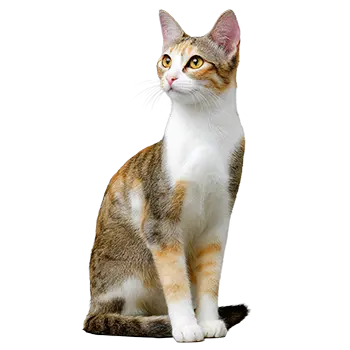
Contemporary Greek visual artists frequently incorporate the Aegean cat into paintings, illustrations, and mixed-media works. The cat's distinctive coloring, with its white base and vivid patches of color, provides a striking contrast against the blues, whites, and ochres of the island palette. Several Greek galleries maintain permanent collections of cat-themed art, and annual exhibitions in Athens and Thessaloniki regularly feature works centered on the island cats.

The rise of smartphone photography and image-sharing platforms has amplified the Aegean cat's visual presence exponentially. Every tourist who photographs a cat on Santorini or Mykonos becomes an informal ambassador for the breed, sharing images that reach audiences who may never have heard of the Aegean cat by name. This organic, crowd-sourced documentation has created a vast and continuously growing visual archive of the breed in its natural environment.

Film & Television

The Aegean cat's photogenic appearance and relaxed temperament around humans have made it a recurring presence in film and television productions set in Greece. Documentary filmmakers covering Greek culture, cuisine, or island life almost invariably include footage of the local cats, whose languid presence in village squares and fishing harbors adds atmosphere and visual texture to the narrative. Several notable travel documentaries have devoted entire segments to the relationship between Greek islanders and their resident cat populations.

Narrative films set against the backdrop of the Greek islands have frequently featured Aegean cats as ambient characters, appearing in background shots that establish the setting and mood of a scene. While these cats are rarely credited or specifically cast, their naturalistic presence contributes to the authentic feel that directors seek when shooting on location. The cats' comfort around camera crews and human activity makes them unusually cooperative subjects in a production environment where animal wrangling is often a significant logistical challenge.

Greek television has paid more direct attention to the breed. Cultural programming on Greek national channels has produced features on the history and conservation of the island cats, and news segments periodically cover animal welfare initiatives affecting free-roaming cat populations. These broadcasts have helped raise domestic awareness of the Aegean cat as a distinct breed worthy of recognition and protection rather than simply an anonymous street cat.

International nature and animal-focused television networks have also spotlighted the Aegean cat in programs exploring unusual or lesser-known cat breeds. These productions typically frame the Aegean as a rare example of a naturally evolved domestic breed, contrasting it with the highly managed pedigree breeds that dominate most cat-related programming. The breed's story of adaptation and survival in a maritime environment offers a compelling narrative that resonates with audiences interested in natural history and animal behavior.

Literature & Written Media

The cats of the Greek islands have inspired a small but devoted body of literary work spanning travel writing, poetry, and fiction. Travel writers visiting the Aegean archipelago consistently remark on the ubiquitous presence of cats and the role they play in defining the character of island communities. Accounts from authors ranging from Lawrence Durrell to contemporary travel essayists describe encounters with island cats that are by turns comic, touching, and reflective of broader themes about Greek life and hospitality.

Several nonfiction books have been written specifically about the cats of Greece, documenting their history, their relationship with local communities, and the welfare challenges they face. These works combine photographic essays with narrative text, offering readers both a visual and intellectual engagement with the subject. Some of these publications have achieved international distribution, particularly in markets where Greek culture and Mediterranean travel hold strong appeal.

In Greek poetry and literary fiction, cats appear as recurring motifs symbolizing independence, resilience, and the enduring rhythms of island life. While these literary cats are not always identified by breed name, their descriptions, particularly the references to bicolored coats, seafront habitats, and a calm familiarity with human presence, clearly evoke the Aegean type. Greek poets have drawn on the cat as a metaphor for survival in harsh landscapes and for the quiet dignity of creatures that thrive without seeking human approval.

Breed-specific literature about the Aegean remains limited compared to more established pedigree breeds, reflecting the relatively recent formalization of the breed. However, the cat appears regularly in general-interest breed encyclopedias and online breed databases, where its natural origin story and Greek island heritage are highlighted as distinguishing features. As the breed gains wider recognition, dedicated breed guides and care manuals are beginning to appear in both Greek and English.

Social Media & Digital Culture

The Aegean cat has found a natural home on social media platforms, where the breed's photogenic qualities and picturesque island settings generate consistent engagement. Instagram accounts dedicated to Greek island cats attract followers numbering in the hundreds of thousands, and individual posts featuring Aegean cats against the backdrop of Santorini's caldera or Mykonos's waterfront regularly accumulate tens of thousands of likes. The hashtags associated with Greek island cats rank among the most-used animal-related tags in travel photography.

Unlike many breeds whose social media presence is driven by individual celebrity pets and their dedicated accounts, the Aegean cat's digital footprint is largely collective and decentralized. Thousands of travelers, residents, and animal welfare volunteers contribute to the breed's online visibility through their own accounts, creating a distributed portrait of the breed that no single influencer controls. This organic, grassroots visibility gives the Aegean cat's social media presence an authenticity that curated pet influencer accounts often struggle to replicate.

Animal welfare organizations in Greece have leveraged social media effectively to advocate for the island cats. Rescue groups and trap-neuter-return programs use platforms like Facebook, Instagram, and YouTube to document their work, share adoption stories, and solicit donations from an international audience. Viral posts about specific cats, such as an injured cat nursed back to health by volunteers or a colony of cats living in a scenic monastery, have driven significant fundraising and awareness-building for these organizations.

The Aegean cat also appears regularly in the broader digital culture of cat appreciation. Cat breed quizzes, listicles of unusual or underappreciated breeds, and curated galleries of beautiful cats frequently feature the Aegean, introducing the breed to audiences who discover it through algorithmic recommendation rather than intentional search. This passive discoverability has helped expand the breed's name recognition well beyond the traditional cat fancy community.

Tourism & Commercial Media

The Greek tourism industry has embraced the Aegean cat as a marketing asset, incorporating images of island cats into promotional materials ranging from airline advertisements to municipal tourism websites. The cat-on-a-blue-doorstep motif has become so closely associated with the Greek islands that it functions as visual shorthand for the destination itself, communicating warmth, relaxation, and Mediterranean charm in a single image. Tourism boards for islands including Santorini, Hydra, and Syros have all used cat imagery in their official campaigns.

Cat-themed tourism has emerged as a distinct niche within the broader Greek travel industry. Guided walking tours focused on finding and photographing island cats are offered on several islands, and cat-themed cafes and shops have opened in popular tourist areas. These enterprises cater to the growing segment of travelers who plan their itineraries partly around animal encounters, and they provide a revenue stream that indirectly supports local cat welfare through donations and awareness.

Commercial merchandise featuring the Aegean cat has become a staple of Greek souvenir culture. Postcards, prints, magnets, ceramics, and textiles depicting island cats in characteristic poses are sold in shops throughout the Cyclades and beyond. While most of this merchandise does not identify the cats by breed name, the distinctive bicolor and tricolor patterns and the quintessentially Greek settings leave little doubt about the type of cat being represented.

The breed's commercial visibility extends beyond physical souvenirs into digital products and publishing. Stock photography agencies maintain extensive collections of Greek island cat images, which are licensed for use in everything from travel guides to greeting cards to restaurant decor. The demand for these images reflects the Aegean cat's status as one of the most commercially valuable feline subjects in the visual media marketplace, even as the breed itself remains relatively unknown in the formal pedigree world.

Representation in the Cat Fancy Community

Within the international cat fancy community, the Aegean cat occupies an unusual position. It is simultaneously one of the most widely recognized cats in popular visual culture and one of the least represented in competitive showing and breed-specific media. This disconnect reflects the breed's recent formalization and its roots in a free-roaming population rather than a managed breeding program. Cat fancy publications that cover hundreds of recognized breeds often include the Aegean only in supplementary sections on natural or rare breeds.

Greek cat enthusiasts have worked to increase the breed's visibility within the fancy by presenting Aegean cats at domestic shows and by publishing articles in both Greek and international cat magazines. These efforts emphasize the breed's unique natural heritage and argue for its recognition on the basis of its long history and genetic distinctiveness rather than adherence to a narrowly defined show standard. The narrative of the Aegean as a living artifact of ancient human-feline coexistence has proven compelling to many fanciers who value breed diversity.

Online breed communities have played an important role in connecting Aegean cat enthusiasts across national boundaries. Forums, social media groups, and dedicated websites provide platforms for breeders, owners, and admirers to share information, coordinate breeding efforts, and advocate for the breed's recognition by major registries. These digital communities have grown steadily as international interest in the breed has increased, and they serve as the primary infrastructure for a breed fancy that lacks the established institutional support enjoyed by longer-recognized breeds.

The Aegean cat's media presence, though largely driven by tourism and photography rather than by the cat fancy establishment, has nonetheless benefited the breed's standing among enthusiasts. Every viral photograph of a cat on a Greek island introduces new audiences to the breed and expands the pool of potential supporters for recognition efforts. In this sense, the Aegean cat's pop culture visibility functions as an unconventional but effective form of breed promotion, reaching millions of people who might never open a cat registry catalog.

Always consult a qualified professional before making any health-related decisions. This content is provided for informational reference only and should not replace professional guidance specific to your animal.