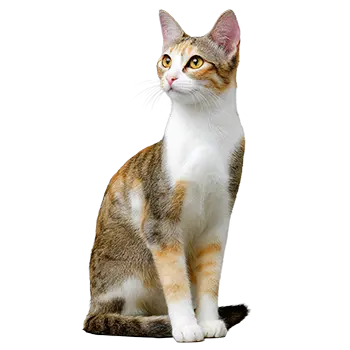

Origins & Early History

The Aegean cat is one of the oldest naturally occurring domestic cat breeds, with roots reaching back thousands of years to the Greek islands scattered across the Aegean Sea. Unlike many modern pedigree breeds that were shaped through deliberate selective breeding programs, the Aegean developed through natural selection in the coastal and island environments of Greece. Archaeological evidence from the Cycladic Islands and Crete suggests that cats have been present in these regions for at least four thousand years, living alongside fishermen, farmers, and maritime traders.

The earliest cats in the Aegean basin likely descended from the Near Eastern wildcat, Felis lybica, which spread westward along Mediterranean trade routes during the Neolithic period. As agricultural communities took hold on the Greek islands, cats found a reliable ecological niche controlling rodent populations in granaries and fishing villages. Over centuries, the cats that thrived in this environment developed physical and behavioral traits suited to island life, including a moderate build, water-friendly temperament, and a dense coat capable of withstanding the salt-laden sea air.

Historical records from classical antiquity mention cats in the Greek world, though they were far less culturally prominent than in ancient Egypt. Greek and Roman writers occasionally referenced domestic cats as household pest controllers, and archaeological finds on several Aegean islands have uncovered cat bones in contexts that suggest close cohabitation with humans. These early Aegean cats were not bred for appearance or temperament by human hands but rather adapted organically to the demands of their maritime surroundings.

The relative geographic isolation of many Greek islands helped preserve the Aegean cat's genetic integrity over millennia. While mainland cat populations mixed extensively with imported breeds through trade and conquest, island cats experienced far less genetic influx. This insularity is a key reason why the Aegean retains a remarkably consistent type despite never having been subjected to the kind of controlled breeding programs that shaped most recognized pedigree breeds.

Historical Roles

For most of its long history, the Aegean cat served an essential utilitarian role in Greek island communities. Fishing villages along the coasts of the Cyclades, the Dodecanese, and the Saronic Gulf depended on these cats to keep rats and mice out of drying fish stores, nets, and grain supplies. The cats became a fixture of harbor life, meeting incoming boats and scavenging discarded fish, a behavior pattern that persists in Greek port towns to this day.

Beyond pest control, Aegean cats held a quiet but valued place in the domestic life of island households. Greek islanders regarded them as practical companions whose presence reduced the need for other forms of vermin management. Unlike dogs, which required active feeding and supervision, the island cats were largely self-sufficient, supplementing whatever food they received from humans with their own hunting and scavenging. This independence made them well suited to the resource-constrained economies of small island communities.

The breed's affinity for water set it apart from most other domestic cats and deepened its integration into maritime culture. Aegean cats were frequently observed wading into shallow surf to catch small fish, and fishermen tolerated and even encouraged their presence around boats and docks. Some accounts from Greek sailors describe cats traveling aboard fishing vessels, serving as both companionship and onboard pest control during extended voyages among the islands.

During the Byzantine and Ottoman periods, cats throughout the Eastern Mediterranean continued to fill their traditional roles as mousers and companions. Monasteries on the Greek islands, particularly on Mount Athos and in the Cyclades, maintained large populations of cats to protect food stores and manuscripts from rodent damage. Many of these monastic cats were likely ancestors of or closely related to the modern Aegean breed, and the tradition of monastic cat-keeping continues on several Greek islands today.

Cultural Symbolism

The Aegean cat occupies a distinctive place in Greek cultural identity, serving as an informal national emblem of the country's island heritage. Visitors to the Cycladic islands of Santorini, Mykonos, and Paros immediately encounter free-roaming cats draped across whitewashed walls, sunning themselves on blue-domed church steps, and prowling through narrow village alleyways. These cats have become inseparable from the visual identity of the Greek islands, appearing in countless photographs, postcards, and travel narratives as icons of Mediterranean life.

In Greek folk tradition, cats are generally regarded as auspicious creatures whose presence near a home or business is a sign of good fortune. While this belief is not exclusive to the Aegean breed, the ubiquity of these cats in island life has made them the primary vehicle for such superstitions. Fishermen in particular have long held that a cat frequenting the docks brings luck to the day's catch, a belief that reinforces the practical relationship between cats and the fishing economy.

The Aegean cat also carries symbolic weight as a living example of natural resilience and adaptation. In a world increasingly dominated by designer breeds and selective breeding, the Aegean represents an alternative model of feline identity, one shaped not by human aesthetic preferences but by the environmental demands of island survival. Greek cat enthusiasts take pride in the breed's unmanufactured authenticity, viewing it as a counterpoint to the highly engineered pedigree breeds that dominate international cat shows.

Artistically, the Aegean cat has inspired Greek painters, poets, and photographers for generations. The image of a cat perched on a sun-bleached wall overlooking the sea has become one of the most widely reproduced visual motifs in Greek art and tourism marketing. Contemporary Greek artists frequently incorporate cats into their depictions of island life, and several photography collections dedicated specifically to the cats of the Aegean islands have been published to international acclaim.

Breed Recognition & Standards

Despite its ancient heritage, the Aegean cat received no formal breed recognition until the 1990s, when Greek cat fanciers began the first systematic efforts to document and standardize the breed. The initiative was driven by a desire to preserve the genetic heritage of Greece's native cats at a time when imported pedigree breeds were becoming more fashionable among Greek pet owners. Breeders and researchers at the University of Thessaloniki contributed to early efforts to catalog the physical characteristics and genetic profile of the island cat population.

The breed is recognized by several Greek and European cat organizations, though it has not yet achieved recognition from the largest international registries such as the Cat Fanciers' Association or The International Cat Association. This limited recognition reflects the relatively recent formalization of the breed rather than any deficiency in its characteristics. Advocates for the Aegean continue to work toward broader international acceptance, compiling pedigree records and developing a formal breed standard that captures the cat's natural type without imposing artificial refinements.

The emerging breed standard describes a medium-sized cat with a muscular, well-proportioned body, a broad chest, and moderately long legs. The coat is semi-long with minimal undercoat, making it well adapted to the warm Mediterranean climate, and it typically displays a bicolor or tricolor pattern with white as the dominant base color accented by patches of black, blue, red, or cream. The eyes are almond-shaped and may be any shade of green, though blue and amber also occur.

Breed clubs in Greece have emphasized that the standard should reflect the Aegean cat's natural type rather than impose an idealized show phenotype. This philosophy distinguishes the Aegean breeding community from many other breed organizations, where refinement toward a specific aesthetic ideal drives selection decisions. Greek breeders argue that preserving the breed's functional qualities, including its robust health, balanced build, and adaptable temperament, is more important than producing exaggerated features for competitive exhibition.

The Breed Today

The Aegean cat remains the most common domestic cat found throughout Greece, where it outnumbers all imported pedigree breeds combined. On the islands, free-roaming Aegean cats are an integral part of community life, cared for collectively by residents and tourists alike. Many island municipalities and nonprofit organizations run trap-neuter-return programs to manage free-roaming cat populations humanely, ensuring that the cats remain healthy without overwhelming local ecosystems.

Interest in the Aegean as a formal breed has grown steadily beyond Greece's borders. Small breeding programs have been established in several European countries and in North America, where enthusiasts are drawn to the breed's natural beauty, robust constitution, and friendly disposition. These international breeders face the challenge of building a genetic base from a relatively small number of imported cats while maintaining the diversity that has kept the breed healthy in its native environment.

The breed's sociable and adaptable temperament has helped it gain a following among owners seeking a low-maintenance yet engaging companion. Aegean cats are known for their willingness to coexist peacefully with other pets, their comfort around children, and their retention of strong but non-destructive hunting instincts. Their affinity for water remains a distinctive trait that surprises and delights many first-time owners, particularly those accustomed to the typical feline aversion to getting wet.

Conservation-minded breeders and geneticists have increasingly recognized the Aegean as a valuable reservoir of natural genetic diversity. Because the breed was never subjected to the genetic bottlenecks that accompany intensive selective breeding, its gene pool remains broad and relatively free of the inherited disorders that plague many pedigree breeds. Ongoing genetic studies aim to characterize this diversity more fully and to develop breeding guidelines that protect it as the breed gains international popularity.

Notable Individuals & Community Impact

Unlike breeds with long histories of competitive showing, the Aegean cat world does not have a roster of famous grand champions whose pedigrees dominate the gene pool. Instead, the breed's notable individuals tend to be community figures: particular cats associated with specific islands, villages, or cultural landmarks. On Santorini, for example, certain cats that frequent the clifftop walkways of Oia have become minor celebrities, recognized by returning visitors year after year and photographed by thousands of tourists.

Several Greek animal welfare organizations have used the Aegean cat as a flagship species in their advocacy work. Groups such as the Greek Cat Welfare Society and various island-based rescue networks have campaigned to improve the treatment of free-roaming cats, leveraging the breed's international recognition to raise funds and awareness. These organizations have helped shift public attitudes in Greece, moving the cultural conversation from viewing street cats as a nuisance to recognizing them as a valued part of the national heritage.

The Aegean cat has also made a meaningful impact on feline genetics research. Researchers studying the genetic history of domestic cat dispersal through the Mediterranean have used Aegean cat DNA samples to trace migration patterns and assess genetic diversity in naturally evolved populations. These studies have contributed to a broader understanding of how domestic cats spread from their Near Eastern center of origin throughout Europe, and the Aegean cat's genetic data has been cited in several peer-reviewed publications on feline population genetics.

In the realm of tourism, the Aegean cat has become an economic asset for the Greek islands. Cat-themed tourism, including guided cat walks, cat cafes, and photography tours focused on the island cats, has emerged as a niche but growing sector of the Greek travel industry. This development has created a positive feedback loop in which the economic value of the cats incentivizes better care and management of free-roaming populations, benefiting both the animals and the communities that host them.

Always consult a qualified professional before making any health-related decisions. This content is provided for informational reference only and should not replace professional guidance specific to your animal.