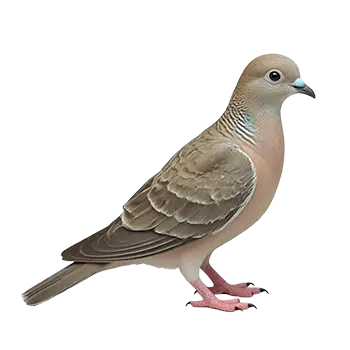

Representation in Traditional Art & Craft

The Zebra Dove has been a recurring motif in the traditional arts of Southeast Asia for centuries. In Javanese and Balinese visual culture, small doves appear in carved wooden panels, batik textile designs, and the decorative elements of ceremonial architecture. While not always depicted with strict ornithological accuracy, the barred breast pattern and slender profile of the Zebra Dove are recognizable in many of these artistic representations, reflecting the bird's familiarity and cultural resonance within the communities that produced them.

The craft of cage making itself represents a significant artistic tradition closely tied to the Zebra Dove. Throughout Thailand, Malaysia, and Indonesia, artisans have developed highly refined styles of bamboo and hardwood cages that are as much works of decorative art as functional enclosures. In southern Thailand, dove cages are elaborately carved and sometimes inlaid with bone or shell, with regional styles carrying distinct aesthetic signatures. These cages are exhibited at competitions alongside the birds they house, and master cage makers are respected figures within the songbird community. The tradition elevates the humble dove cage into a medium of artistic expression with its own history, conventions, and standards of excellence.

In the broader context of Southeast Asian decorative arts, the dove occupies a symbolic niche associated with peace, domesticity, and the pleasures of rural life. Painted screens, lacquerware, and embroidered textiles from across the region frequently include small doves among scenes of gardens, courtyards, and village landscapes. These depictions position the Zebra Dove as an element of an idealized natural world, one that is cultivated, harmonious, and intimately connected to human habitation.

The influence of the Zebra Dove on traditional arts also extends to the performing arts in certain regions. In Malay and Thai folk music, the rhythms and tonal qualities of the dove's cooing have occasionally been cited as inspiration for melodic patterns in traditional instrumentation. While these connections are more evocative than direct, they speak to the degree to which the Zebra Dove's song has permeated the aesthetic consciousness of the cultures that have lived alongside it for generations.

In Literature & Folklore

The Zebra Dove appears in the oral and written literary traditions of several Southeast Asian cultures, typically cast in roles that reflect its perceived qualities of gentleness, constancy, and unassuming beauty. In Malay folk tales, doves frequently serve as symbols of fidelity and domestic harmony, and the Zebra Dove's habit of foraging in pairs reinforces these associations. Stories featuring doves often carry moral lessons about the virtues of patience and quiet perseverance over flashy ambition, themes that mirror the values embedded in the songbird competition tradition.

In Thai literary culture, the dove has appeared in classical poetry and courtly literature as a figure of tranquility and refined taste. The act of listening to a dove's call is sometimes employed as a literary device to signal moments of contemplation or aesthetic appreciation, drawing on the real-world practice of competitive dove listening as a source of metaphor. These literary references, while not always specific to the Zebra Dove as distinct from other local species, reflect a broader cultural framework in which the dove's song is treated as an art form worthy of serious attention.

Javanese literary traditions also contain references to dove keeping as a marker of civilized living. Classical Javanese texts that describe the ideal qualities of a gentleman sometimes include the keeping and appreciation of songbirds among the cultivated pastimes expected of the aristocratic class. The Zebra Dove, as the most culturally prominent small dove in the region, is implicitly central to these references, even when not named explicitly.

In more recent literature, the Zebra Dove has occasionally appeared in the work of Southeast Asian writers exploring themes of tradition, modernity, and cultural identity. Short stories and essays by Malaysian and Indonesian authors have used the image of the caged dove and the culture of songbird competitions as lenses through which to examine questions of heritage, urbanization, and the changing relationship between people and the natural world. These contemporary treatments bring a critical and sometimes ambivalent perspective to a tradition that older literary sources tend to celebrate uncritically.

Outside Southeast Asia, the Zebra Dove's literary footprint is minimal. The species lacks the mythological resonance of the turtle dove in European culture or the symbolic weight of the mourning dove in American literature. Its cultural meaning remains rooted in the specific traditions of the Malay world and mainland Southeast Asia, lending it a regional specificity that is part of its distinctive character.

Wildlife Documentaries & Broadcast Media

The Zebra Dove has featured in a number of wildlife documentaries and natural history programs focused on the biodiversity of Southeast Asia and the Pacific Islands. Programs produced by international broadcasters covering the ecology of tropical lowlands frequently include footage of Zebra Doves foraging on the ground in parks, gardens, and temple grounds, using the species as an accessible and visually appealing representative of the region's avian diversity. The bird's calm behavior and tolerance of human proximity make it a cooperative subject for filmmakers working in urban and semi-rural environments.

The songbird competition tradition has attracted dedicated media attention in its own right. Documentary segments and short films exploring the culture of dove-singing contests in southern Thailand and peninsular Malaysia have been produced by both regional and international media outlets. These features typically examine the social dynamics of the competition circuit, the economic significance of the trade in high-quality birds, and the cultural values that sustain the tradition. The visual spectacle of competition days, with rows of ornate cages hoisted on tall poles and judges moving methodically among hundreds of cooing birds, provides compelling material for visual storytelling.

Television coverage of Zebra Dove competitions is particularly extensive in Thailand, where major tournaments receive broadcast attention comparable to regional sporting events. Local and national Thai television networks have covered competition days as cultural features, interviewing breeders, judges, and enthusiasts, and profiling champion birds and their owners. This broadcast coverage has helped raise the profile of the Zebra Dove beyond the immediate community of bird keepers, introducing the tradition to urban audiences who may have little direct experience with songbird culture.

Radio has also played a role in the Zebra Dove's media presence, particularly in Malaysia and Indonesia, where programs dedicated to bird keeping have long been a feature of regional broadcasting. These programs discuss topics ranging from dove husbandry and training techniques to competition results and market trends, serving as an information network for the songbird community. The persistence of radio as a medium for bird-keeping content reflects the grassroots, community-driven nature of the tradition, which has always relied on interpersonal networks and shared expertise rather than centralized media platforms.

Social Media & Online Communities

The rise of social media and digital communication platforms has transformed the Zebra Dove community in significant ways, extending networks that were once limited by geography and creating new channels for the exchange of knowledge, commerce, and cultural expression. Facebook groups, YouTube channels, and Instagram accounts dedicated to Zebra Dove keeping and competition have proliferated across Southeast Asia, connecting enthusiasts from rural villages in southern Thailand to urban apartments in Jakarta and Kuala Lumpur.

YouTube has become a particularly important platform for the Zebra Dove community. Channels dedicated to recording and sharing the songs of individual birds attract substantial viewership, with videos of champion singers accumulating hundreds of thousands of views. These recordings serve multiple purposes: they allow breeders to evaluate the vocal quality of birds offered for sale, provide training material for conditioning doves to sing in specific patterns, and document competition performances for enthusiasts unable to attend in person. The comment sections of these videos function as informal forums where keepers discuss technique, share opinions, and debate the merits of different bloodlines.

Facebook groups dedicated to Zebra Dove keeping in Thailand, Malaysia, and Indonesia number in the hundreds, with the largest groups hosting tens of thousands of members. These groups facilitate the sale and trade of birds, the sharing of husbandry advice, and the organization of local competitions. The commercial dimension of these online communities is significant; high-quality birds are regularly bought and sold through social media, with video recordings of a bird's song serving as the primary sales tool. This shift toward online commerce has expanded the market for competition-quality doves beyond traditional geographic boundaries.

The digital transformation of the Zebra Dove community has also introduced new tensions and challenges. Concerns about misrepresentation in online bird sales, the spread of unverified husbandry advice, and the potential for social media to drive unsustainable demand for wild-caught birds have all surfaced within the community. At the same time, digital platforms have enabled conservation-minded keepers and organizations to reach wider audiences with messages about sustainable practices, captive breeding, and the importance of protecting wild populations. The online Zebra Dove community, like many digitally mediated subcultures, is a space of both opportunity and friction.

Photography & Visual Culture

The Zebra Dove is a frequent subject of bird photography in Southeast Asia and the Pacific Islands, where its ground-dwelling habits, approachable nature, and finely patterned plumage make it an accessible and rewarding target for photographers of all skill levels. In birding and wildlife photography communities, the species often serves as an early subject for newcomers learning to photograph birds in natural settings, given its willingness to remain on the ground and tolerate close approach. The detailed barring of its breast and the subtle gradations of brown, gray, and white in its plumage present an appealing technical challenge for photographers seeking to capture fine feather detail.

Within the competitive songbird community, photography plays a specific and important role. High-quality photographs of individual birds are used in sales listings, social media profiles, and competition records, and a distinct aesthetic has developed around the presentation of Zebra Doves in these contexts. Birds are typically photographed in their competition cages or on perches against clean backgrounds, with careful attention to lighting that reveals the quality of their plumage and physical condition. This functional photography has its own conventions and standards, shaped by the practical needs of the bird trade and the aesthetic preferences of the community.

Nature and wildlife photography books covering the avifauna of Southeast Asia, Hawaii, and the Indian Ocean islands routinely include images of the Zebra Dove. In field guides, the species is illustrated in both photographic plates and hand-painted artwork, with accurate depictions of its barred plumage pattern serving as a key identification feature. The bird's inclusion in these reference works, while routine, ensures its continued visibility within the broader birding and natural history community.

In the realm of fine art photography, the Zebra Dove has occasionally appeared in collections focused on urban wildlife, tropical landscapes, or the intersection of nature and human habitation. Photographers working in cities like Singapore, Honolulu, and Bangkok have captured images of Zebra Doves navigating sidewalks, temple courtyards, and outdoor dining areas, using the species as a visual metaphor for the coexistence of wildlife and urban life. These images contribute to a broader visual narrative about the permeability of the boundary between natural and built environments in tropical cities.

Cultural Festivals & Public Events

The Zebra Dove is the centerpiece of a vibrant calendar of cultural festivals and public events across Southeast Asia, most of which revolve around the tradition of competitive dove singing. The largest and most prestigious of these events are held in southern Thailand, where annual tournaments in provinces such as Yala, Pattani, and Narathiwat draw thousands of participants from across the country and the broader Malay world. These competitions are significant social and economic events, with prize pools, sponsorship deals, and media coverage that reflect the deep cultural investment in the tradition.

In Malaysia, Zebra Dove competitions are organized at the state and national level, with events held in both rural communities and urban centers. The Malaysian competitions share the core format of their Thai counterparts, with birds judged on the quality, rhythm, and endurance of their cooing, but they carry their own distinct social and cultural flavor. Competition days serve as community gatherings where families and friends come together, food vendors set up stalls, and the atmosphere blends competitive intensity with the relaxed sociability of a village fair.

Indonesian songbird festivals, while encompassing a wider range of species than the Thai and Malaysian competitions, also feature the Zebra Dove prominently. Events in Java and Sumatra attract large crowds and significant commercial activity, with bird markets operating alongside competition rings. The Indonesian songbird festival circuit has grown substantially in recent decades, driven by increasing urban interest in traditional bird-keeping practices and the organizational capacity of regional bird clubs and associations.

Beyond the competition circuit, Zebra Doves appear at broader cultural festivals and agricultural fairs across Southeast Asia, where they are exhibited alongside other traditional crafts and practices. These appearances help situate the Zebra Dove within a wider framework of cultural heritage, connecting the tradition of dove keeping to other expressions of regional identity such as traditional music, textile arts, and cuisine. The presence of Zebra Doves at these events underscores the bird's role not merely as a hobby species but as a living element of the cultural landscape, a thread in the broader fabric of community life in the tropical world.

Always consult a qualified professional before making any health-related decisions. This content is provided for informational reference only and should not replace professional guidance specific to your animal.