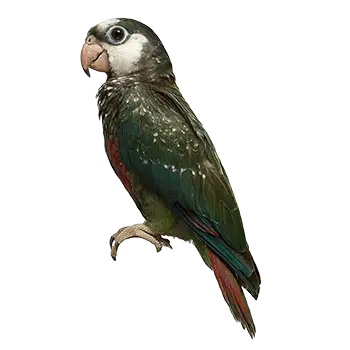

CITES & International Trade Regulations

The White-Capped Pionus (Pionus senilis) is listed under Appendix II of the Convention on International Trade in Endangered Species of Wild Fauna and Flora, commonly known as CITES. This listing applies to all species within the Psittaciformes order, reflecting the international community's recognition that the global trade in parrots has historically placed significant pressure on wild populations. Appendix II status does not prohibit international trade outright but requires that any cross-border movement of the species be accompanied by valid export permits issued by the CITES Management Authority of the country of origin, certifying that the trade is not detrimental to the survival of the species in the wild.

For White-Capped Pionus parrots bred in captivity, the CITES framework provides for a somewhat streamlined process, as captive-bred specimens are generally subject to less restrictive documentation requirements than wild-caught birds. However, the distinction between captive-bred and wild-caught individuals must be supported by verifiable records, including closed leg bands or microchip identification and documentation of the breeding facility's registration with the relevant national CITES authority. Countries that serve as major markets for companion parrots, including the United States, the European Union member states, and the United Kingdom, maintain their own implementing legislation that incorporates and in some cases exceeds the baseline requirements of the CITES convention.

The practical implications of the CITES listing are significant for anyone involved in the international trade or movement of White-Capped Pionus parrots. Breeders, dealers, and private owners who wish to transport a bird across international borders must obtain the appropriate permits in advance, a process that can involve considerable lead time and paperwork. Failure to comply with CITES requirements can result in confiscation of the bird, financial penalties, and in some jurisdictions, criminal prosecution. The complexity of the permit process has prompted many avicultural organizations to provide guidance and support to their members on navigating the regulatory landscape.

It is worth noting that CITES regulations are subject to periodic review and amendment. The Conference of the Parties, which meets approximately every three years, evaluates species listings and may adjust the appendix placement of species in response to new population data, trade trends, or conservation assessments. While the White-Capped Pionus's Appendix II status has remained stable, prospective owners and breeders should remain aware that regulatory changes can occur and should consult the most current CITES documentation and their national management authority when planning any international transaction involving the species.

National Wildlife Protection Laws

Within the countries that make up the White-Capped Pionus's native range, national wildlife protection laws provide an additional layer of legal regulation governing the capture, trade, and keeping of the species. Mexico, for example, classifies all native parrot species under its General Law on Wildlife and maintains strict prohibitions on the capture and domestic sale of wild-caught parrots. Enforcement of these laws has intensified over the past two decades, with Mexican authorities conducting regular operations to intercept illegally trapped birds and prosecute traffickers. The White-Capped Pionus, as a species found in the southern and eastern regions of the country, is directly subject to these protections.

Guatemala and Honduras have enacted similar legislation prohibiting the capture and trade of native wildlife, including parrots. However, enforcement capacity in these countries varies considerably, and illegal trapping of wild parrots for the domestic and cross-border pet trade persists in some rural areas where economic incentives and limited regulatory oversight combine to sustain the practice. Conservation organizations working in these countries have partnered with government agencies to strengthen enforcement, raise public awareness, and develop alternative livelihood programs for communities that have historically relied on wildlife trapping as a source of income.

Costa Rica, which harbors some of the healthiest remaining populations of the White-Capped Pionus, has established a comprehensive legal framework for wildlife protection through its Wildlife Conservation Law and supporting regulations. The country's national system of protected areas encompasses significant portions of the cloud forest habitat on which the species depends, and Costa Rican authorities actively enforce prohibitions on the capture and sale of native parrots. Costa Rica's relatively strong institutional capacity for environmental governance has made it a regional leader in parrot conservation, and the country's example has influenced policy development in neighboring states.

In Panama, the westernmost extent of the White-Capped Pionus's range, national wildlife laws similarly prohibit the capture and trade of native parrot species. Panama's protected area system, which includes significant tracts of highland forest in the western provinces of Chiriqui and Bocas del Toro, provides important habitat protections for the species. As across the region, the effectiveness of these legal protections depends on the capacity and willingness of national and local authorities to enforce them, and conservation outcomes vary accordingly.

Domestic Ownership Laws & Permits

In the United States, the legal framework governing the ownership of White-Capped Pionus parrots is shaped primarily by federal legislation, most notably the Wild Bird Conservation Act of 1992. This landmark law effectively ended the mass importation of wild-caught parrots into the United States, redirecting the domestic market toward captive-bred birds. For prospective White-Capped Pionus owners, this means that legally acquired birds in the United States are virtually always captive-bred, either domestically or imported under the limited exemptions available for approved cooperative breeding programs and certain scientific or zoological purposes.

Beyond federal law, state and local regulations add additional layers of legal complexity to parrot ownership. The majority of U.S. states do not require a specific permit to keep a White-Capped Pionus as a personal pet, but some states and municipalities impose restrictions on the keeping of exotic or non-native animals that may apply to parrots. In jurisdictions where permits are required, the process typically involves an application, an inspection of the intended housing conditions, and payment of a fee. Prospective owners should consult their state wildlife agency and local animal control office to determine the specific requirements that apply in their area.

In the European Union, ownership of captive-bred White-Capped Pionus parrots is generally permitted under the EU Wildlife Trade Regulation, which implements CITES within the bloc. Birds legally bred within the EU must be identified with closed leg bands or microchips and accompanied by documentation confirming their captive-bred status. Some member states impose additional national requirements, such as registration of the bird with a government agency or notification of ownership to a local authority. The United Kingdom, following its departure from the EU, has established its own implementing framework that closely mirrors the EU system but operates independently.

Prospective owners outside of North America and Europe should investigate the specific legal requirements applicable in their country, as regulations governing parrot ownership vary widely across jurisdictions. In some countries, particularly those in Asia and the Middle East where the companion parrot market has grown rapidly, regulatory frameworks are still evolving, and the legal status of species such as the White-Capped Pionus may not be clearly defined. Consulting with a knowledgeable avian veterinarian, avicultural society, or legal professional can help ensure that ownership is established on a sound legal footing.

Breeding Regulations & Standards

Breeding White-Capped Pionus parrots in captivity is subject to a range of regulatory requirements that vary by jurisdiction but share a common goal of ensuring that breeding activities are conducted responsibly and documented accurately. In the United States, commercial breeders may be required to obtain a federal license from the U.S. Department of Agriculture under the Animal Welfare Act, depending on the scale of their operation and their method of sale. The USDA licensing process involves facility inspections, compliance with animal care standards, and ongoing reporting requirements that are designed to ensure minimum welfare standards for animals in commercial breeding establishments.

In the European Union, breeders of CITES-listed species are generally required to register with their national CITES management authority and to maintain records documenting the parentage, identification, and disposition of all birds bred in their facility. Closed leg bands, applied to chicks within the first days of life, serve as the primary means of individual identification and are a legal requirement for demonstrating the captive-bred status of birds intended for sale or transfer. Some EU member states impose additional breeding-specific regulations, such as minimum facility standards, veterinary inspection requirements, or limits on the number of birds that may be bred without a commercial license.

Avicultural societies and breed clubs often establish their own voluntary standards for responsible breeding that go beyond the minimum legal requirements. Organizations such as the American Federation of Aviculture and the Parrot Society of the United Kingdom promote breeding practices that prioritize genetic diversity, appropriate pair management, proper nutrition, and the socialization of young birds. These voluntary standards, while not legally binding, carry significant weight within the avicultural community and help to distinguish reputable breeders from those operating at or below the regulatory minimum.

The regulatory environment for Pionus breeding also intersects with animal welfare legislation, which in many jurisdictions imposes general obligations regarding the care, housing, and treatment of animals kept in captivity. Breeders who fail to provide adequate veterinary care, appropriate living conditions, or sufficient nutrition may face enforcement action under animal cruelty or welfare statutes, independent of any wildlife-specific regulations. The cumulative effect of these overlapping regulatory frameworks is a system that, while imperfect, provides multiple points of accountability for individuals engaged in the breeding and sale of White-Capped Pionus parrots.

Import & Export Requirements

The importation and exportation of White-Capped Pionus parrots involve a complex intersection of wildlife trade regulations, veterinary health requirements, and customs procedures that prospective importers and exporters must navigate with care. At the international level, CITES export permits are required from the country of origin, and import permits may also be required by the destination country, depending on its implementing legislation. The United States, for example, requires a CITES import permit for all Appendix II parrots imported for commercial purposes, while personal imports may be subject to different documentation requirements under the Wild Bird Conservation Act and its implementing regulations.

Veterinary health certificates represent a separate but equally important layer of import and export regulation. Most countries require that imported birds be accompanied by a health certificate issued by an accredited veterinarian in the country of origin, attesting that the bird is free from specified diseases and has been examined within a defined period prior to travel. The specific disease testing requirements vary by destination country but commonly include testing for avian influenza, Newcastle disease, psittacosis (chlamydiosis), and proventricular dilatation disease. Some countries require birds to undergo a quarantine period upon arrival, during which additional health testing may be performed.

The European Union's import requirements for live parrots are among the most stringent in the world, reflecting the bloc's precautionary approach to animal health and disease prevention. Birds imported into the EU from third countries must originate from approved facilities and countries, be accompanied by a health certificate conforming to a specified format, and undergo a mandatory quarantine period at an approved quarantine facility upon arrival. These requirements apply to both commercial shipments and personal imports, and non-compliance can result in refusal of entry, confiscation, or return of the birds to the country of origin.

For breeders and private owners who wish to move a White-Capped Pionus across international borders, the practical advice is to begin the permit and documentation process well in advance of the intended travel date. Processing times for CITES permits can range from several weeks to several months, depending on the issuing country, and veterinary health certificate requirements may impose their own timelines for testing and examination. Working with an experienced animal transportation agent or customs broker who specializes in live animal shipments can significantly reduce the risk of delays, errors, and compliance failures.

Ethical Considerations & Enforcement

The legal framework surrounding the White-Capped Pionus exists within a broader context of ethical considerations that shape the way responsible owners, breeders, and advocates engage with the species. The history of the parrot trade, which for decades relied heavily on the capture of wild birds under conditions that resulted in significant mortality and population declines, has left a lasting imprint on the culture of parrot keeping. The shift toward captive breeding, driven in large part by legislation such as the Wild Bird Conservation Act and the EU Wildlife Trade Regulation, represents a fundamental change in the ethics of the trade, but ongoing vigilance is required to ensure that legal standards are maintained and that illegal activity does not undermine conservation gains.

Enforcement of wildlife trade laws remains a challenge in many parts of the world. In the White-Capped Pionus's native range, illegal trapping and trafficking of parrots continue to occur despite the existence of legal prohibitions. The drivers of this illegal trade are complex, encompassing poverty, lack of awareness, weak institutional capacity, and persistent demand from consumers who are either unaware of or indifferent to the legal and ethical dimensions of their purchases. International enforcement cooperation, facilitated by organizations such as INTERPOL and the World Customs Organization, has improved in recent years, but significant gaps remain.

In consumer countries, enforcement focuses primarily on verifying the documentation and identification of birds offered for sale, ensuring that breeders and dealers comply with licensing and record-keeping requirements, and investigating reports of illegal activity. Government agencies responsible for wildlife trade enforcement, such as the U.S. Fish and Wildlife Service and the European Union's national CITES authorities, conduct inspections, audits, and criminal investigations targeting individuals and organizations suspected of violating trade regulations. Penalties for violations can be substantial, including fines, confiscation of animals, and imprisonment.

For individual White-Capped Pionus owners, engaging ethically with the species means purchasing birds from reputable, licensed breeders who can provide verifiable documentation of the bird's captive-bred status and legal provenance. It also means maintaining accurate records of ownership, complying with all applicable registration and permit requirements, and supporting conservation initiatives that protect wild populations and their habitats. The legal and ethical dimensions of parrot ownership are inseparable, and owners who take their responsibilities seriously contribute to a culture of stewardship that benefits both the species and the broader avicultural community.

Always consult a qualified professional before making any health-related decisions. This content is provided for informational reference only and should not replace professional guidance specific to your animal.