
Representation in Avicultural Literature

The Waterslager Canary has been a prominent subject in European avicultural literature for well over two centuries. Belgian and Dutch authors produced some of the earliest detailed accounts of the breed's song characteristics, breeding methods, and competitive traditions, and these texts remain foundational references for modern fanciers. Publications such as De Vogelliefhebber and its successors documented the evolving song standard in meticulous detail, providing written descriptions of each recognized tour alongside breeding advice and competition reports. These journals served not only as technical resources but as community records, preserving the names, methods, and achievements of generations of Waterslager breeders.

In the broader world of bird-keeping literature, the Waterslager has received substantial coverage in comprehensive canary handbooks published in English, German, French, and Italian. Authors writing for general avicultural audiences have consistently highlighted the breed's distinctive water notes as among the most refined and pleasing of any domesticated songbird. These treatments typically contextualize the Waterslager alongside the German Roller and the Spanish Timbrado, comparing the three major song canary breeds in terms of vocal repertoire, training methodology, and competitive judging standards. The Waterslager's emphasis on soft, melodious water tours is frequently contrasted with the Roller's closed-beak delivery and the Timbrado's brighter, more metallic timbre.

Specialized monographs devoted entirely to the Waterslager have also been published, particularly in Belgium and the Netherlands. These volumes delve deeply into the breed's history, the acoustic analysis of its song, and the practical details of breeding and training for competition. Some include accompanying audio recordings or references to archival recordings, bridging the gap between the written description of a song tour and the auditory experience itself. For serious breeders, these monographs represent essential technical literature, distilling decades of practical experience into a format that can be studied and applied.

The literary record of the Waterslager also includes contributions from veterinary and scientific authors. Research papers examining the breed's hearing, neuroanatomy, and genetics have been published in peer-reviewed journals, adding a scientific dimension to the broader body of Waterslager literature. While these academic publications reach a different audience than the hobbyist press, they have informed popular writing about the breed and contributed to public awareness of the Waterslager as a subject of legitimate scientific interest.

Song Recordings & Audio Archives

The Waterslager Canary's song has been captured on recordings since the early days of commercial audio media. Vinyl records featuring champion Waterslager singers were produced in Belgium and the Netherlands from the mid-20th century onward, marketed both to fanciers seeking training aids for young birds and to listeners who simply enjoyed the aesthetic pleasure of canary song. These recordings often featured individual birds identified by name or registry number, lending them a documentary quality that has made surviving copies prized among collectors and breed historians.

The transition from vinyl to cassette tape and eventually to compact disc expanded the availability of Waterslager recordings. Belgian bird clubs and commercial producers issued compilation albums showcasing top competition birds, sometimes accompanied by liner notes explaining the song standard and identifying the specific tours being performed. These releases served a dual purpose, functioning as training tools within the breeding community and as promotional materials that introduced the Waterslager's song to a broader audience of bird enthusiasts and nature sound collectors.

The digital era has dramatically transformed access to Waterslager song recordings. Online platforms host vast libraries of canary song recordings, including hundreds of clips featuring Waterslager birds from multiple countries and breeding lines. Breeders upload recordings of their own birds for peer evaluation and discussion, creating an informal but extensive archive of contemporary Waterslager song. Dedicated websites maintained by breed clubs and individual fanciers offer curated collections of high-quality recordings, sometimes organized by tour type or competition year, providing an invaluable resource for training and study.

The availability of high-fidelity digital recordings has also enabled new forms of acoustic analysis. Hobbyists with access to spectrographic software can visualize the frequency structure and temporal patterns of Waterslager song with a precision that was formerly available only to researchers. This democratization of analytical tools has enriched discussion within the breeding community, allowing breeders to supplement subjective listening impressions with objective acoustic data. The resulting fusion of traditional connoisseurship and modern technology represents a distinctive feature of the contemporary Waterslager culture.

The Waterslager in Visual Art & Photography

Canaries have appeared in European visual art since at least the 17th century, when Dutch and Flemish painters occasionally included the birds in domestic interior scenes and still-life compositions. While these early depictions rarely distinguished between canary varieties, the tradition of painting songbirds as symbols of domesticity, beauty, and the pleasures of the natural world established a visual context within which the Waterslager would later be represented. As breed distinctions became more formalized in the 19th century, avicultural illustrators began producing more specific depictions of recognized canary types, including the Waterslager.

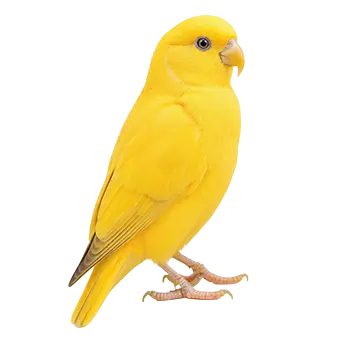
Avicultural illustration reached a high point in the 19th and early 20th centuries, when detailed color plates accompanied the breed standards published by bird societies. These illustrations aimed to capture the physical appearance and posture associated with the ideal Waterslager specimen, serving as visual references for breeders and judges. While the Waterslager is fundamentally a song breed and is not judged primarily on appearance, its physical standard calls for a well-proportioned, medium-sized bird with a smooth, tight plumage and an alert, upright posture. Illustrators working in this tradition sought to convey these qualities with scientific precision and artistic sensitivity.

Photography has largely supplanted illustration as the primary medium for depicting the Waterslager in modern avicultural media. Bird magazines, club newsletters, and breed association websites regularly feature photographs of champion Waterslagers, often taken at competition venues or in carefully arranged studio settings. The best avicultural photographers capture not only the bird's physical form but something of its personality and vitality, qualities that static images can only suggest but that experienced viewers learn to read in posture, feather condition, and the brightness of the eye.

In the digital age, photography and videography of Waterslager canaries have proliferated across social media platforms and video-sharing sites. Breeders document their birds in informal settings, sharing images and short video clips that offer glimpses into the daily reality of Waterslager keeping. These user-generated images, while varying widely in technical quality, have collectively expanded the visual record of the breed and made it accessible to a global audience that might never encounter a Waterslager in person.

Online Communities & Digital Culture

The internet has fundamentally reshaped the social landscape of Waterslager keeping, creating virtual communities that transcend the geographic boundaries that once defined the breed's culture. Online forums dedicated to canary breeding emerged in the early 2000s and quickly became important meeting places for Waterslager enthusiasts. These forums host discussions on every aspect of the breed, from genetics and nutrition to song training technique and competition strategy. The collective knowledge accumulated in forum archives represents a substantial and searchable body of practical expertise that complements the more formal literature.

Social media platforms have further accelerated the formation of Waterslager communities across national and linguistic boundaries. Groups and pages devoted to the breed operate on major platforms in multiple languages, connecting breeders in Belgium, the Netherlands, Spain, Brazil, Indonesia, and many other countries. These groups facilitate the exchange of breeding stock, the sharing of training methods, and the discussion of competition results in near real time. The visual and audio capabilities of social media are particularly well suited to a breed whose primary appeal is acoustic, and short video clips of Waterslagers singing have become a popular format for sharing and promoting the breed.

Video-sharing platforms have emerged as especially important media for the Waterslager community. Breeders upload recordings of their birds' songs, competition footage, and instructional content covering topics such as cage setup, diet preparation, and song training. Some of these channels have attracted substantial followings, with individual videos accumulating tens of thousands of views. The most popular Waterslager content tends to feature birds performing high-quality water tours, and comment sections beneath these videos often contain detailed discussions among knowledgeable viewers evaluating the song being performed.

The digital culture surrounding the Waterslager has also produced new forms of competition and peer evaluation. Informal online song contests, in which breeders submit recordings of their birds for remote judging, have become increasingly common, particularly in regions where access to formal competition venues is limited. While these events lack the controlled acoustic environment of a traditional song contest, they have broadened participation in the competitive tradition and introduced the Waterslager to hobbyists who might not otherwise have engaged with the breed's competitive culture.

Messaging applications and private groups have further deepened the connections among Waterslager breeders, enabling real-time consultation between mentors and novices, the coordination of breeding partnerships across distances, and the rapid dissemination of news about competition results, health alerts, and changes to breed standards. The result is a breeding community that, while still rooted in the local club traditions of Belgium and the Netherlands, now operates with a global reach and immediacy that would have been unimaginable to earlier generations of fanciers.

Presence in Broadcast & Documentary Media

The Waterslager Canary has appeared in documentary and broadcast media primarily in the context of European cultural programming. Belgian television has produced segments and short documentaries exploring the tradition of song canary breeding in Flanders, featuring interviews with veteran breeders, footage of competition judging, and closeup recordings of Waterslager song. These productions have introduced the breed to domestic audiences who may be unfamiliar with the depth and sophistication of competitive canary culture, and they have served as valuable archival documents of a tradition that is increasingly dependent on the efforts of an aging cohort of dedicated practitioners.

Radio, a medium particularly well suited to the appreciation of birdsong, has also featured the Waterslager on occasion. Belgian and Dutch radio programs devoted to nature, rural life, and traditional crafts have aired segments on canary breeding that include recorded examples of Waterslager song. The intimate, audio-only format of radio allows listeners to focus entirely on the acoustic qualities that define the breed, and producers have sometimes used Waterslager recordings as atmospheric or thematic elements in broader programming about the natural world and cultural heritage.

Beyond Belgian and Dutch media, the Waterslager has received more limited but still noteworthy attention in international documentaries about aviculture, pet culture, and animal intelligence. Programs exploring the science of birdsong have occasionally featured the Waterslager as an example of how selective breeding can shape vocal behavior, drawing parallels with research on other songbird species and raising questions about the interplay between genetics, learning, and environment in the development of complex vocalizations.

Podcasts and online audio programs have become a growing medium for Waterslager content in recent years. Niche shows devoted to aviculture, birdwatching, and animal behavior have dedicated episodes to the song canary tradition, with hosts interviewing experienced breeders and playing recordings of competition-quality Waterslager song. These programs, while reaching smaller audiences than traditional broadcast media, offer the advantage of depth and specificity, allowing listeners with a genuine interest in the breed to engage with detailed discussions that mainstream media formats rarely accommodate.

Cultural Footprint & Popular Perception

The Waterslager Canary occupies an unusual position in popular culture. It is widely recognized within the specialized world of aviculture, where it stands alongside the Roller and the Timbrado as one of the pillars of the song canary tradition. Outside that world, however, the breed's name and distinctive qualities are far less familiar. The general public tends to think of canaries as a single undifferentiated type, the small yellow songbird of cultural cliché, and the existence of highly specialized breeds developed over centuries for specific vocal characteristics comes as a revelation to many people encountering the Waterslager for the first time.

This gap between specialist renown and general obscurity has shaped the breed's cultural footprint in distinctive ways. Within the avicultural community, the Waterslager is the subject of intense devotion, detailed technical literature, and a competitive tradition with its own vocabulary, rituals, and hierarchies. Breeders speak of their birds with a passion and specificity that parallels the language of wine connoisseurship or jazz criticism, evaluating individual birds in terms of the purity, depth, and emotional expressiveness of their song. This subculture has its own media ecosystem, its own social institutions, and its own standards of excellence, all largely invisible to the broader public.

Efforts to raise the Waterslager's profile beyond the avicultural community have taken several forms. Breed clubs and individual enthusiasts have used social media, public demonstrations, and educational outreach to introduce the breed's song and history to new audiences. Some breeders have participated in cultural festivals, heritage events, and school programs, bringing their birds into public settings where listeners can experience the Waterslager's distinctive water notes firsthand. These outreach efforts serve both to promote the breed and to recruit potential new fanciers at a time when the hobby faces demographic pressures.

The broader cultural perception of canary keeping has also influenced the Waterslager's public image. In some circles, keeping caged songbirds is viewed with ambivalence or concern, and advocates for the breed have found it necessary to address questions about animal welfare, enrichment, and the ethics of selective breeding for aesthetic traits. Thoughtful breeders engage with these questions openly, emphasizing the high standards of care that characterize responsible Waterslager keeping and the deep bond that many fanciers develop with their birds. The breed's cultural future will depend in part on the success of these conversations in establishing common ground between the avicultural community and the broader public.

The Waterslager Canary's cultural footprint, while modest in absolute terms, is remarkably deep within its sphere of influence. Few companion animal breeds can claim a tradition as richly documented, as technically exacting, and as emotionally resonant as the Waterslager's. Whether heard in a competition hall in Mechelen, a breeding room in Sao Paulo, or a living room in Jakarta, the Waterslager's song carries with it a cultural weight that far exceeds the small bird producing it.

Always consult a qualified professional before making any health-related decisions. This content is provided for informational reference only and should not replace professional guidance specific to your animal.