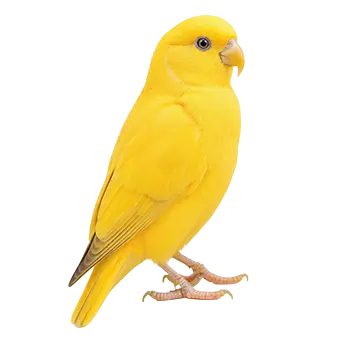

The Waterslager Canary traces its roots to the Flemish-speaking regions of Belgium, particularly the area surrounding the city of Mechelen, known in French as Malines. It is from this city that the breed derives its alternate name, the Malinois Canary, a designation still widely used across continental Europe. The breed emerged during a period when canary keeping had become deeply woven into the social fabric of the Low Countries, with working-class households and aristocratic estates alike maintaining collections of singing birds. The Waterslager's story is inseparable from this broader cultural context, in which the quality of a canary's song was a matter of genuine civic pride.
The domestic canary itself descends from the wild Atlantic canary (Serinus canaria), native to the Canary Islands, Madeira, and the Azores. Spanish and Portuguese sailors first brought these birds to Europe in the late 15th and early 16th centuries, where their pleasant song quickly attracted the attention of breeders. Over the following centuries, selective breeding in different regions of Europe produced distinct strains optimized for color, posture, or song. In the Flemish lowlands, breeders focused almost exclusively on song, and by the 17th century, a recognizable tradition of song canary breeding had taken hold in and around Mechelen.
What distinguished the emerging Waterslager strain from other song canaries was its emphasis on a particular repertoire of notes described by breeders as water notes. These vocalizations, characterized by their liquid, rolling, bubbling quality, were said to resemble the sound of water flowing over stones or dripping into a basin. The name Waterslager itself is a compound of the Dutch words for water and singer, directly referencing this defining acoustic trait. Belgian breeders developed exacting standards for these water notes, grading them according to their purity, depth, and musical structure.
The geographic concentration of early Waterslager breeding in the Mechelen region was no accident. The area's mild climate, its proximity to major trade routes, and the dense network of local bird-keeping clubs all contributed to an environment where selective breeding could flourish. Flemish breeders exchanged birds and techniques through informal networks long before formal breed registries existed, creating a living tradition of avicultural knowledge that was passed down through families and guilds for generations.