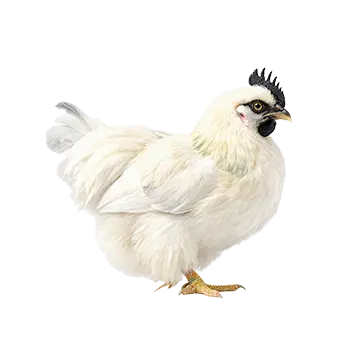

The Silkie Chicken is widely believed to have originated in China, where it has been documented for well over a thousand years. The breed's precise point of origin remains a subject of scholarly discussion, but most historical and genetic evidence points to southeastern China, likely in the regions that now encompass Jiangxi, Fujian, and Guangdong provinces. Some researchers have also suggested possible early development in India or Southeast Asia, though Chinese sources provide the oldest and most detailed written records of the breed's existence and characteristics.
Chinese texts dating to the Tang Dynasty (618 to 907 CE) contain references to chickens with fur-like plumage, dark skin, and unusual temperaments that align closely with the Silkie as it is known today. By the time of the Ming Dynasty (1368 to 1644), the breed was well established in Chinese agricultural and medical literature. The Bencao Gangmu, the celebrated pharmacological compendium compiled by Li Shizhen in the 16th century, describes the black-skinned chicken in detail and attributes numerous medicinal properties to its flesh and bones, a tradition that persists in Chinese medicine to this day.
The breed's distinctive physical traits, including its fluffy, hair-like feathering, blue-black skin, dark bones and muscles, and five-toed feet, suggest a long period of selective breeding and genetic isolation. The gene responsible for the Silkie's fibromelanosis, the condition that produces its dark pigmentation of skin, connective tissue, and periosteum, has been traced to a complex rearrangement on chromosome 20. This mutation likely arose once and was subsequently selected for by breeders who valued its unusual appearance and, in the Chinese tradition, its perceived health benefits.
Archaeological evidence from poultry remains at historical Chinese sites has provided supporting context for the breed's antiquity, though definitive identification of Silkie-type birds from bone fragments alone remains challenging. What is clear from the convergence of textual, genetic, and material evidence is that the Silkie Chicken is among the oldest recognized chicken breeds in the world, with a lineage that reaches deep into the agricultural history of East Asia.