
Origins & Native Range

The Senegal Parrot (Poicephalus senegalus) is native to a broad swath of western Africa, ranging from Senegal and The Gambia in the west through Guinea-Bissau, Guinea, Mali, and into parts of Nigeria and Cameroon. It inhabits open woodland, savanna edges, and cultivated areas where scattered trees provide roosting and nesting sites. The species thrives in a variety of semi-arid to moderately humid landscapes, favoring areas where fruit-bearing trees and grain crops are available.

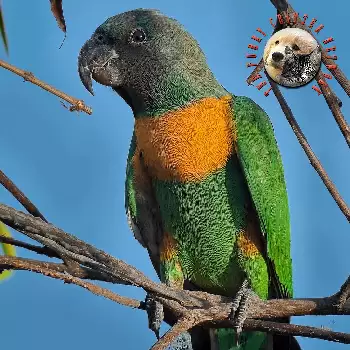
Within its native range, three recognized subspecies are distinguished primarily by the color of their ventral plumage. The nominate subspecies, P. s. senegalus, displays a yellow belly and is found in the western portion of the range. P. s. mesotypus, from eastern portions of the range, shows an orange belly, while P. s. versteri, found in the southeastern reaches, tends toward a deeper red-orange. These subspecies intergrade where their ranges overlap, creating birds with intermediate coloration that have long fascinated aviculturists and taxonomists alike.

European naturalists first described the Senegal Parrot in the eighteenth century during a period of intense exploration and cataloging of African wildlife. French and Portuguese traders operating along the West African coast encountered the species regularly and noted its relative docility compared to larger parrot species. Early scientific descriptions placed it within the broader Poicephalus genus, a group of stocky, short-tailed African parrots that share a number of anatomical and behavioral traits.

The species name "senegalus" directly references Senegal, the country from which the first formally described specimens were collected. This geographic naming convention, common in the Linnaean tradition, cemented a lasting association between the bird and a single nation despite the parrot's far wider distribution across the continent.

Historical Roles in Human Society

For centuries, Senegal Parrots have occupied a place in the daily life and economies of West African communities. Rural populations in the bird's native range have long had a complex relationship with the species—farmers regard them as occasional crop raiders that descend on millet, maize, and fruit orchards, while simultaneously appreciating them as intelligent and personable animals. In some communities, young Senegal Parrots taken from nests were hand-raised as household companions, valued for their calm demeanor and moderate noise level.

The colonial period brought the Senegal Parrot to the attention of European bird enthusiasts. By the nineteenth century, live specimens were being exported to Europe in growing numbers, where they were kept as parlor pets by the upper classes. Their manageable size, attractive plumage, and willingness to bond with individual caretakers made them well-suited to life in European homes. Unlike the larger macaws and cockatoos that required extensive space and produced considerable noise, the Senegal Parrot fit comfortably into modest living quarters.

Throughout the twentieth century, the Senegal Parrot became increasingly established in the global pet trade. Importation of wild-caught birds peaked in the 1970s and 1980s before international wildlife trade regulations began to restrict the flow. During this era, thousands of Senegal Parrots were captured and shipped to markets in Europe, North America, and Asia. The scale of this trade raised early conservation concerns, though the species' large native range and adaptable nature meant that wild populations remained comparatively stable compared to more habitat-specialized parrots.

In traditional West African settings, parrots including the Senegal species sometimes held roles in local folklore and healing practices. Feathers and other parts occasionally appeared in traditional medicine preparations, though the Senegal Parrot was not singled out for exploitation to the degree that some rarer African species were. Its commonness in the landscape made it a familiar rather than exotic presence in the cultural life of rural communities.

Cultural Symbolism & Folklore

Across West Africa, parrots in general carry symbolic weight as creatures associated with intelligence, speech, and the ability to cross boundaries between the human and natural worlds. The Senegal Parrot, as one of the most frequently encountered parrot species in the region, naturally features in this broader cultural tapestry. In some traditional stories, parrots serve as messengers or trickster figures whose ability to mimic human speech places them in a unique position among animals.

In parts of Mali and Guinea, parrots appear in oral traditions as characters who overhear human conversations and reveal secrets, a motif that reflects the real-world observation of parrots repeating sounds from their environment. This association with speech and hidden knowledge gives the parrot a somewhat ambivalent status—admired for cleverness but also treated with a degree of wariness. The Senegal Parrot's relatively quiet nature compared to larger African parrots like the Grey Parrot sometimes positions it as the more modest and trustworthy figure in these narratives.

In Western aviculture, the Senegal Parrot has come to symbolize the accessible, apartment-friendly companion parrot. Marketing and community discourse around the species frequently emphasize its suitability for first-time bird owners, its lower noise output, and its manageable size. This branding as the practical parrot has shaped how the species is perceived in pet-keeping circles, distinguishing it from the flash of macaws or the vocal prowess of African Greys.

The distinctive V-shaped green vest and yellow-to-orange belly of the Senegal Parrot have also made it a recognizable icon in avian art and craft communities. Breeders and bird clubs often use the species' silhouette and color pattern in logos and promotional materials, cementing its visual identity within the companion bird world.

Aviculture & Breed Standards

Unlike domesticated animals with formal breed registries, the Senegal Parrot does not have breed standards in the traditional sense. Instead, avicultural organizations and parrot societies classify the species according to its recognized subspecies and evaluate birds on overall health, feather condition, and behavioral temperament. The three subspecies—senegalus, mesotypus, and versteri—are the primary categories that breeders and exhibitors use when discussing lineage and coloration.

Captive breeding of Senegal Parrots became widespread in the 1980s and 1990s as importation restrictions tightened under the Convention on International Trade in Endangered Species (CITES) and national legislation such as the United States Wild Bird Conservation Act of 1992. Breeders developed reliable techniques for pairing and rearing Senegal Parrots in captivity, and domestically bred birds gradually replaced wild-caught imports in the pet market. This transition improved the overall health and temperament of available birds, as captive-bred Senegal Parrots tend to be better socialized and less prone to the stress-related behaviors common in wild-caught individuals.

Avicultural societies around the world, including national chapters of groups like the International Parrotlet Society and various regional aviculture federations, include the Senegal Parrot in their exhibition categories. Judges at bird shows typically assess Senegal Parrots for clean, well-maintained plumage; bright and clearly defined coloration; alert posture; and evidence of good physical health. While there is no single global standard document for the species, experienced judges draw on widely shared expectations about what a well-kept Senegal Parrot should look like.

Breeder networks and online communities have also played a significant role in tracking bloodlines and sharing husbandry knowledge. Forums and social media groups dedicated to Poicephalus parrots allow breeders to exchange information about genetics, diet, behavioral enrichment, and veterinary care, creating an informal but effective system of collective knowledge that supports the species' continued success in aviculture.

The Senegal Parrot Today

In the contemporary pet market, the Senegal Parrot occupies a strong niche as a mid-sized companion bird that balances personality with practicality. It is widely available through breeders and occasionally through rescue organizations, and it remains one of the most commonly kept Poicephalus species worldwide. Its reputation as a quieter, more self-contained parrot continues to attract owners who live in apartments or shared housing where noise is a significant concern.

Conservation assessments by the International Union for Conservation of Nature (IUCN) currently list the Senegal Parrot as a species of Least Concern, reflecting its broad native range and stable wild populations. However, localized pressures from habitat loss and ongoing illegal trapping persist in some parts of its range. CITES Appendix II listing regulates international trade, requiring export permits and documentation to ensure that commercial activity does not threaten wild populations. These regulatory frameworks have helped maintain a balance between the species' popularity in aviculture and the health of its wild counterparts.

The bird's role in avian veterinary science has also grown as the captive population has expanded. Veterinarians specializing in avian medicine have developed a substantial body of knowledge about Senegal Parrot health concerns, including aspergillosis, bornavirus, and nutritional deficiencies related to seed-heavy diets. This species-specific veterinary expertise has improved outcomes for pet Senegal Parrots and contributed to the broader understanding of Poicephalus health.

Advocacy organizations and rescue groups focused on parrots have also turned attention to the Senegal Parrot, recognizing that its long lifespan and bonding tendencies mean that rehoming situations arise with some frequency. Birds that outlive their owners or are surrendered due to lifestyle changes require knowledgeable adopters, and dedicated Poicephalus rescue networks have emerged to address this need.

Notable Senegal Parrots & Community Figures

While the Senegal Parrot has not produced the kind of individual celebrity birds associated with some larger parrot species, the species has a devoted following whose notable members have shaped public awareness and avicultural practice. Several well-known aviculturists and parrot behavior consultants have championed the Senegal Parrot as an ideal companion species, writing extensively about its care requirements and behavioral characteristics in books and online publications.

Online platforms have given rise to a number of Senegal Parrots with dedicated followings. Social media accounts featuring Senegal Parrots demonstrating tricks, vocalizations, and daily routines have attracted substantial audiences, helping to raise the species' profile among prospective bird owners. These accounts often serve a dual purpose, entertaining viewers while also educating them about proper parrot care, diet, and enrichment.

Within the breeding community, certain lineages of Senegal Parrots have gained recognition for producing birds with particularly vivid coloration or exceptionally calm temperaments. While these are not formal breed lines in the way that dog or cat breeds are defined, experienced breeders track and value these qualities, and buyers seeking specific traits may seek out particular breeding programs.

Parrot rescue organizations have also highlighted individual Senegal Parrots whose stories illustrate broader issues in companion bird welfare. Birds rescued from neglect or hoarding situations and successfully rehabilitated serve as ambassadors for adoption-first principles and responsible ownership. These stories, shared through rescue newsletters and social media, have helped shift perceptions and encourage more people to consider adopting rather than purchasing from breeders.

Always consult a qualified professional before making any health-related decisions. This content is provided for informational reference only and should not replace professional guidance specific to your animal.